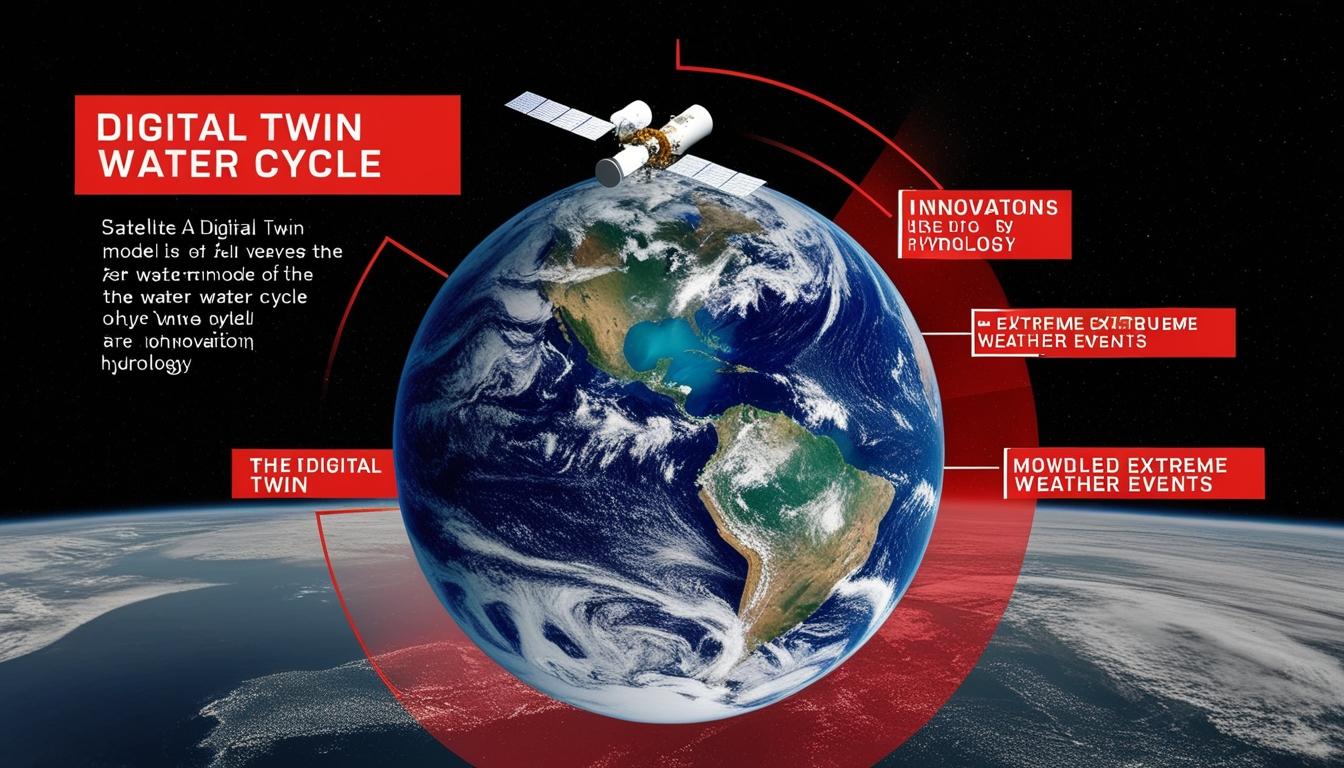
Research focused on the water cycle is increasingly critical in the face of environmental challenges such as floods and droughts, which are becoming more frequent and severe due to climate change. As understanding of the water cycle and the impacts of extreme weather events become increasingly vital, advanced technologies like satellite observations and remote sensing are revolutionising the field. These innovations facilitate the development of sophisticated virtual models that simulate global hydrological processes, thereby enhancing insights into human influences on this essential resource.
One of the leading figures in this evolving landscape is Luca Brocca, Research Director at the National Research Council of Italy – Research Institute for Geo-Hydrological Protection (CNR-IRPI). Brocca's leadership is characterised by his dedication to scientific discovery, innovation, and collaboration. His work in pioneering algorithms for satellite-based precipitation and irrigation estimates exemplifies his capacity to spearhead challenging research initiatives. Speaking to CIO Look, Brocca articulated about his research management philosophy, saying, “Research is the ideal job and is deeply passionate about it,” indicating his commitment to continual learning and scientific advancement.
Under Brocca’s direction, CNR-IRPI has made significant progress in advancing water research through initiatives such as the Digital Twin Earth Hydrology project. This initiative, funded by the European Space Agency, seeks to establish the most advanced virtual models of the water cycle over a projected period of 2.5 years, with a budget of over EUR 2 million. The project involves a consortium of 11 partners across Europe and focuses on enhancing global water management while anticipating extreme hydrological events. Brocca emphasises the importance of making these advanced resources accessible not only to fellow scientists but also to policymakers and the public alike.
Luca Brocca’s career trajectory demonstrates his evolving focus in scientific inquiry. His journey began shortly after he earned his master’s degree, which saw him engage in hydrological research immediately, where his passion for tackling the complexities of the water cycle soon flourished. "The focus is on studying the water cycle, particularly the extremes—floods and droughts," he explained. He underscored the necessity to predict such phenomena and develop effective monitoring tools as key components of his research objectives.
In recent years, Brocca’s approach has transitioned from analytical research to more involved research management, citing the collaborative nature of science as essential for driving innovation. He notes that while individual efforts are important, the need for interdisciplinary teamwork is crucial to advancing knowledge that tackles real-world challenges.
Brocca highlights the innovative strides made by his research group, particularly in the context of satellite technology. The algorithms they’ve developed for remote estimations of precipitation and irrigation have positioned them at the forefront of global research in hydrology and agriculture. “The core value is their capability to develop new ideas, and they hope to continue to do this in the future,” he remarked.
He recognises the challenges inherent in scientific collaboration, where competition can complicate teamwork efforts. Balancing mutual progress with individual career ambitions is a complex dance that demands careful management. Brocca advises those in the field to remain committed to continuous learning—reading papers, attending conferences, and fostering discussions with colleagues are crucial strategies for staying abreast of the latest scientific trends.
Although Brocca’s primary focus remains on research, he has contemplated the potential for commercialising the technologies developed at CNR-IRPI. He believes that business objectives may become more pertinent as the institute scales its contributions to water cycle solutions.
As climate change escalates the severity and frequency of droughts and extreme precipitation events, Brocca insists that the urgency for effective water management systems grows. He advocates for enhanced decision support systems that integrate diverse methodologies, including remote sensing, AI, and high-performance computing, to improve predictions of hydrological disasters and optimise resource management.
Looking ahead, Brocca remains engaged in 17 research projects as Principal Investigator, all targeting improvements in water cycle modelling capabilities and the understanding of extreme events. He anticipates that ongoing advancements in high-resolution satellite data, coupled with the integration of machine learning and AI into hydrological modelling, will substantially elevate the institute’s future work. Excited about the potential outcomes, Brocca is particularly enthusiastic about contributing to the digital twin project which promises to refine our understanding and management of the terrestrial water cycle in unprecedented ways.
Source: Noah Wire Services