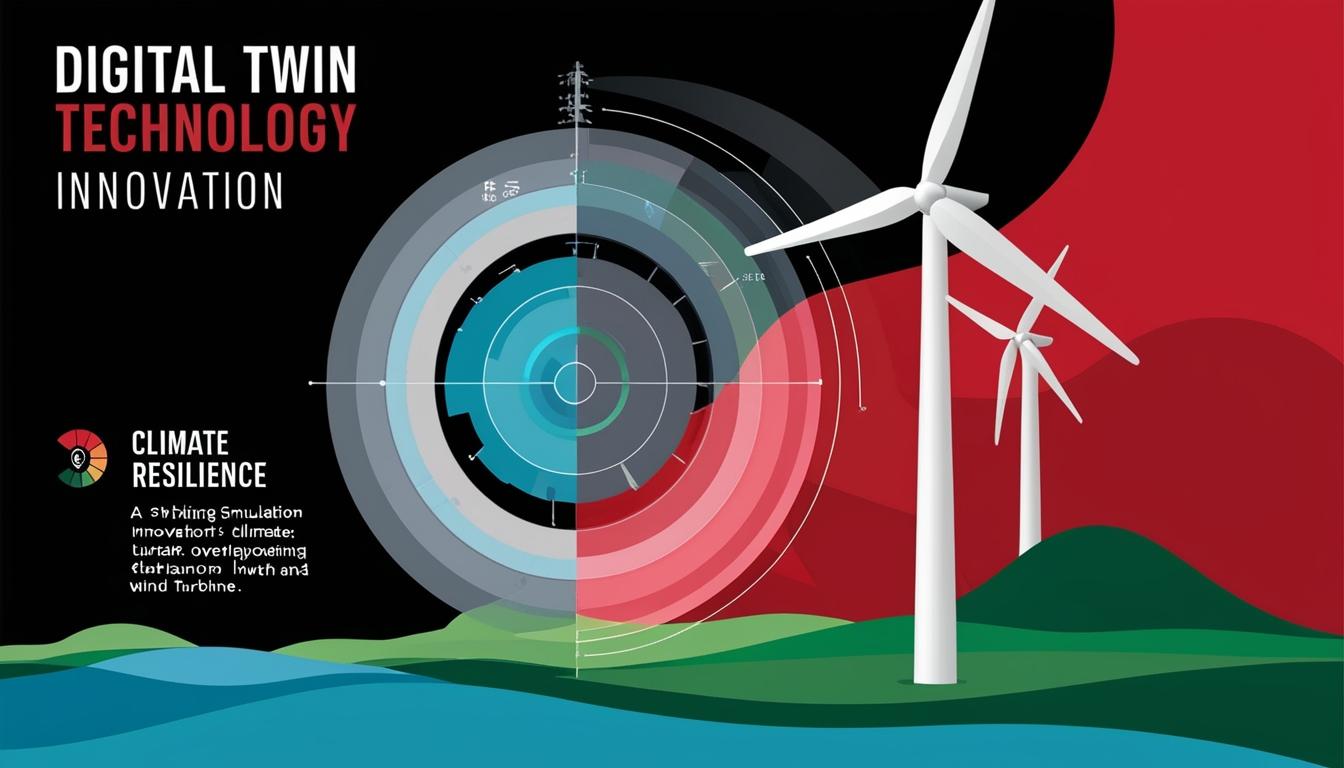
Microsoft Corp has announced its commitment to fostering innovation in the climate resilience sector through the launch of its Digital Twins Accelerator program, backed by a $50,000 investment from its TechSpark initiative. This initiative aims to support early-stage startups focused on digital twin technology, enabling them to expedite their growth and enhance their contributions to the digital twins ecosystem.
According to Emily Wilson, the administrator of the Colorado-Wyoming Climate Resilience Engine (CO-WY Engine), “Microsoft’s involvement will provide critical resources and bolster the accelerator’s capacity to support startup ventures that are poised to make a significant impact on the digital twins ecosystem.” The financial boost from Microsoft is expected to significantly advance the development and application of digital twin technology in various industries, while also contributing to regional economic growth.
Digital twins represent a vital technological innovation, functioning as virtual simulations of physical objects or systems. These simulations allow businesses to evaluate how various inputs may affect real-world outcomes. For instance, a digital twin could simulate the operational performance of a wind turbine under differing climatic conditions, thus providing insights into its efficiency and potential improvements.
The Digital Twins Accelerator is scheduled to run from March to August 2025, with applications currently open until January 24, 2025. Further details are available on the accelerator's official website.
Microsoft TechSpark senior director Mike Egan elaborated on the initiative's objectives by stating, “Working with organizations like the CO-WY Engine will help realize the potential of technology and foster greater economic opportunity in Colorado, Wyoming, and beyond.” The aim of the accelerator is to expedite the commercial pathways of startups that are utilising digital twinning within their solutions.
The CO-WY Engine, designated as a Regional Innovation Engine by the National Science Foundation in 2023, is positioned to access up to $160 million in federal funding over the next decade. This collaboration is led by the Fort Collins-based accelerator program Innosphere, alongside Colorado State University and the University of Colorado. The initiative is geared towards creating essential technologies and tools to address global climate change challenges, while also developing a sustainable climate economy.
Key elements of the CO-WY Engine initiative include the identification of specific climate challenges, addressing measurement and standardisation needs, overcoming barriers to technology adoption, and aligning regional workforce capabilities with emerging technologies. This cooperative effort aims to advance climate resilience strategies locally and nationally, establishing partnerships and funding opportunities for selected technologies developed through practical research.
Source: Noah Wire Services