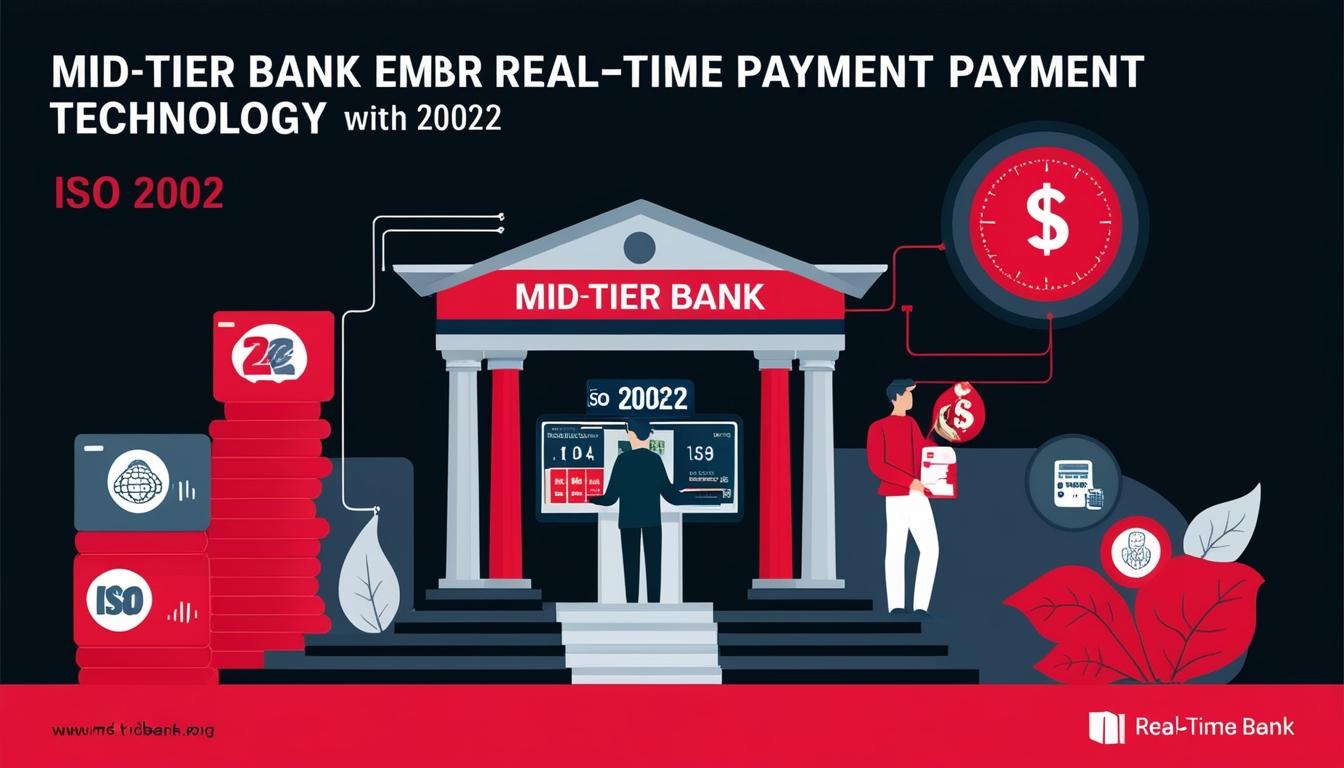
Recent developments in real-time payment systems highlight the challenges and opportunities facing mid-tier banks in the United States as they prepare to meet increasing customer demands for efficient and modern banking solutions. According to the Payments Journal, more than half (59%) of business clients served by mid-tier banks anticipate a rise in their usage of real-time payment services over the coming year. In response, these banks are planning to invest significantly in their payment technology infrastructure.
Data from Volante’s Mid-Tier Bank Payments Report indicates that many mid-tier banks, defined as those with assets ranging from $3 billion to $100 billion, are committed to investing between $5 million and $20 million to enhance their payment capabilities. This move is seen as essential for them to effectively compete with larger financial institutions that typically have the capacity to allocate billions towards technological advancements.
Real-time payment systems promise to deliver more agile money management options, which align with the expectations of modern banking customers. When integrated with the ISO 20022 messaging standard, mid-tier banks are also positioned to provide enriched analytics and insights tailored to their customers' specific payment needs.
The ongoing discourse about which real-time payment systems to adopt has revealed a significant shift in preferences. The survey found that mid-tier banks are increasingly favoring the FedNow system, with 43% planning to implement it within the next year, a jump from 29% the previous year. In contrast, the inclination to use The Clearing House’s Real-Time Payments (RTP) network has declined, with only 28% planning to adopt it, down from 41% last year.
A separate report from SRM shows the landscape of participation among U.S. financial institutions is still relatively fragmented. Only 6% are currently engaged solely with FedNow, 3% exclusively with RTP, and 4% are participating in both networks. As these smaller banks explore the realm of real-time payments, they face critical decisions regarding their operational models—whether to operate in a receive-only capacity or offer both sending and receiving payment functionalities. Volante suggests that most banks are likely to navigate towards a dual offering.
The ISO 20022 messaging standard plays a pivotal role in this evolution of payment systems. Currently, 17% of mid-tier bank clients are utilising this framework, with an additional 45% planning to adopt it in the near future. This standard allows for the transmission of detailed, structured information alongside payment instructions, which significantly enhances automated processing, reconciliation, and advanced analytic capabilities. Both the FedNow and RTP systems rely on ISO 20022 messaging, enabling greater interoperability, not just within the U.S. but also with international real-time payment systems.
As mid-tier banks advance in this competitive landscape, their embrace of real-time payment technologies, powered by ISO 20022, will be crucial in catering to their evolving customer base and ensuring their relevance in an increasingly digital financial environment.
Source: Noah Wire Services