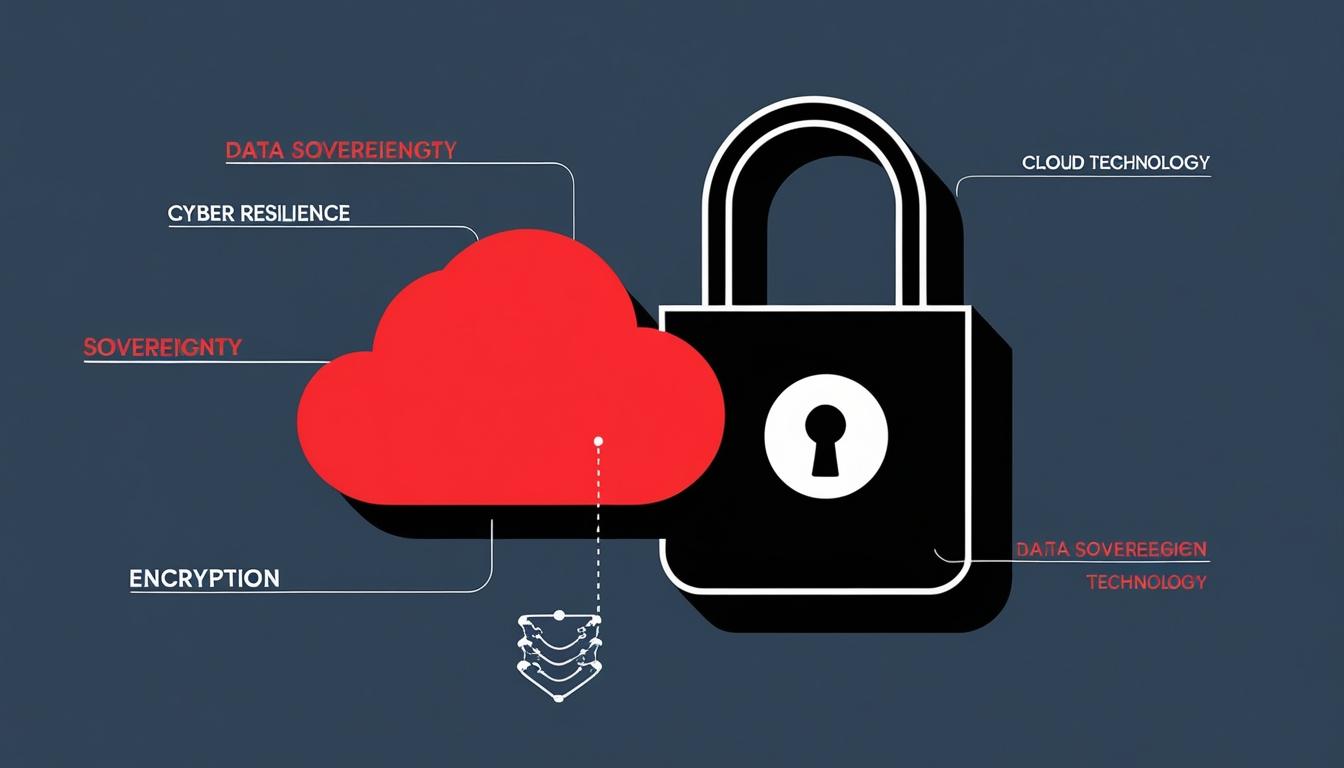
In an era where businesses increasingly rely on cloud technology, the intricacies of data sovereignty, cyber resilience, and encryption have become critical considerations for organisations across various sectors. These topics are especially pertinent in light of regulatory frameworks and evolving cyber threats.
Data sovereignty is defined as the principle that digital information remains subject to the laws and governance structures of the locality in which it is collected or stored. However, when organisations utilise cloud services, data frequently traverses international borders, complicating compliance with local laws. Businesses operating from Germany, for example, might store their data on cloud servers located in the United States. This situation introduces challenges, particularly given that U.S. laws, such as the Cloud Act, could permit authorities to access sensitive data even when GDPR protections are in place. Concerns regarding the confidentiality of health records, financial data, and intellectual property are paramount in discussions surrounding data sovereignty.
To navigate these complexities, organisations are urged to ensure transparency with cloud service providers. This includes establishing clear agreements regarding data storage locations and the circumstances under which data might be relocated. The demand for cloud platforms that comply with local regulations is growing, yet the multifaceted nature of global data governance remains a significant hurdle for achieving complete data sovereignty.
Moreover, cyber resilience is emerging as an essential strategy for organisations facing the inevitability of cyberattacks. As organisations cannot afford to underestimate their vulnerabilities, they need to adopt a proactive stance. IBM's 2024 report, "The Cost of a Data Breach," highlights that the average cost of a breach globally now stands at $4.45 million, a figure that warrants serious attention.
Organisations are developing robust strategies to build cyber resilience that encompass several layers, including conducting regular risk assessments of their networks and cloud environments, drafting incident response plans for rapid recovery, and implementing continuous monitoring through advanced security tools. Furthermore, employee training is critical in fostering awareness regarding cyber threats such as phishing and reinforcing adherence to secure practices.
Amidst the discussions on data sovereignty and cyber resilience, the significance of effective encryption key management emerges as another vital aspect of cloud security. Encryption protects data by rendering it unreadable to anyone without the proper keys; however, mismanagement of these keys can lead to severe consequences, including data breaches.
Key management strategies recommended for organisations include employing a Hold Your Own Key (HYOK) strategy, utilising Hardware Security Modules (HSMs) for secure key generation and storage, and adopting a Zero-Trust framework to ensure stringent access controls. Additionally, implementing Multi-Factor Authentication further enhances key access security.
In a competitive marketplace, the ramifications of failing to address these critical elements—data sovereignty, cyber resilience, and encryption—extend beyond regulatory fines and financial losses. The potential erosion of trust with customers, partners, and employees represents not only an operational risk but also a reputational one.
The ongoing dialogue surrounding these trends is bolstered by expert opinions, such as those shared by Agnieszka Bruyère, VP Cloud Growth & Public Sector at Oracle EMEA, and Sebastien Cano, SVP of Cloud Protection & Licensing Business Line, in the Thales Security Sessions podcast episode entitled, "The Three Dimensions of Data Sovereignty."
As the landscape of cloud technology continues to evolve, the need for organisations to implement comprehensive strategies that address these pressing issues is evident. The complexity of these challenges underscores the importance of being well-informed and prepared for the future of AI automation and digital governance in business practices.
Source: Noah Wire Services