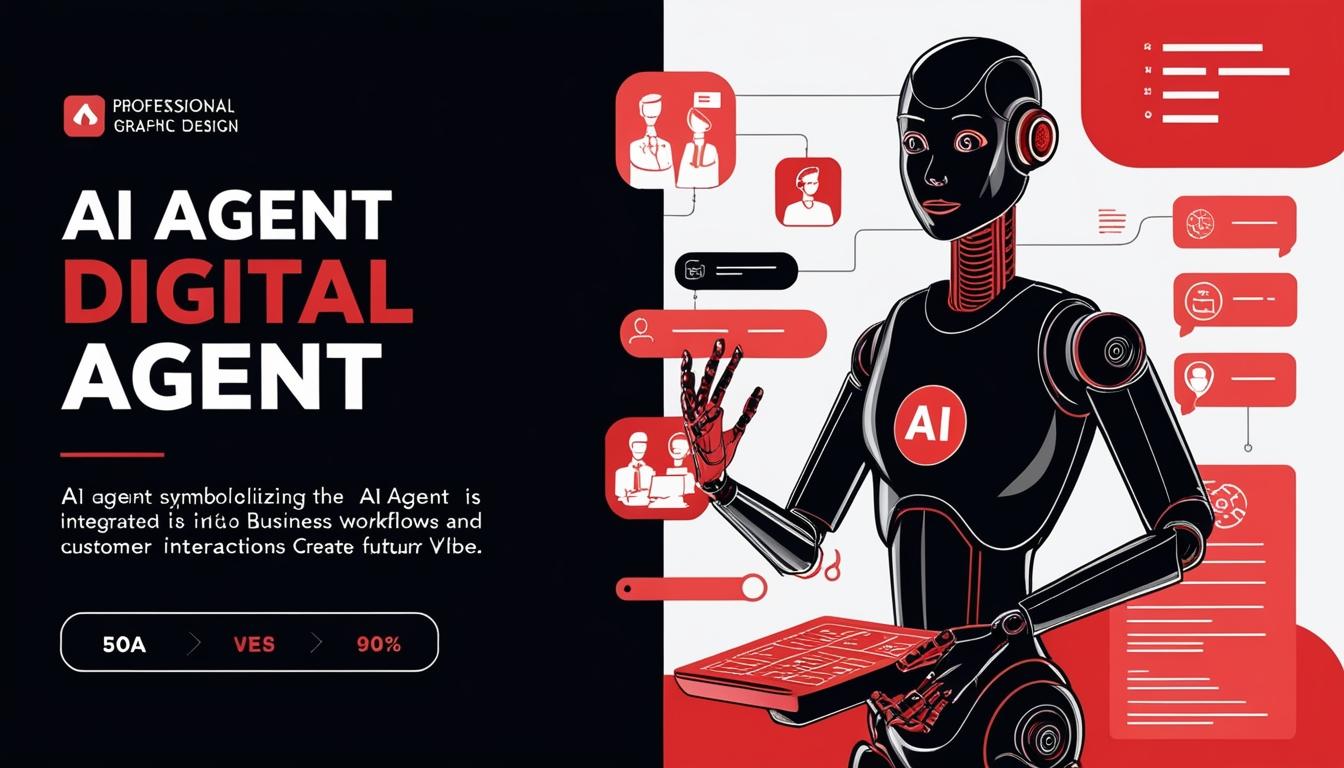
Salesforce has unveiled its latest iteration of the digital labour platform Agentforce, known as Agentforce 2.0, which is positioned as a pivotal technological advancement in the growth of AI automation for businesses. The announcement was made by Salesforce CEO Marc Benioff during a keynote delivered in San Francisco on December 17, 2024. According to Benioff, the Total Addressable Market (TAM) for digital labour exceeds traditional estimates, suggesting it is “not in the millions or billions of dollars, but in the trillions.”
The concept of digital labour, as articulated by Benioff, indicates that businesses have entered a new paradigm wherein human interactions with AI agents significantly enhance customer success. He stated, “I’m not sure when we started this journey, or even [if] we fully understand where we are going. But there is a vision that humans with agents can drive customer success.” This vision has practical implications, as Salesforce has reported a 50% reduction in the number of customer inquiries requiring human intervention, with customer service interactions falling from 10,000 to approximately 5,000 per week.
Agentforce 2.0 introduces a suite of new functionalities aimed at enhancing operational workflows. These include a library of pre-built skills and integrated workflows that leverage autonomous AI agents. One noteworthy feature is the ability to deploy Agentforce within Slack, enabling businesses to harness digital labour capabilities seamlessly across their operations. Benioff pointed out the advancements in agentic reasoning and retrieval-augmented generation (RAG), which underpin the successful interaction between customers and AI agents.
In addressing competition, particularly from Microsoft, Benioff remarked, “Unlike Salesforce... You can’t find it. It’s the same as it was two years ago.” This comparison highlights Salesforce's commitment to continual improvement and the innovative utilisation of AI technologies.
A critical aspect of Agentforce 2.0 is its emphasis on data privacy. Benioff asserted that many companies use client data to improve their AI models while stressing that Salesforce refrains from this practice, stating, “Your data is their product. We’re not doing that.” The platform aims to foster a trustworthy environment for businesses looking to integrate AI into their practices.
The updated Agentforce offers businesses the capability to scale their workforce with tailored agents better equipped to handle intricate, multi-step tasks. Additionally, enterprises can leverage Mulesoft to extend Agentforce’s functionalities across various systems and workflows. The enhanced Agent Builder feature enables the automatic creation of new agents based on natural language instructions, facilitating the effective combination of existing skills with customised logic.
Organisations such as the Adecco Group and Accenture are already harnessing Agentforce to improve specific functions. For example, Adecco has achieved personalised recruiting through the use of digital labour, while Accenture has integrated Agentforce to enhance sales productivity.
Moreover, the versatility of Agentforce 2.0 extends across multiple industries, providing solutions ranging from instant medical guidance in healthcare to personalised shopping assistance in retail, as well as on-demand advisory services in the banking sector. As artificial intelligence continues to evolve and integrate into business operations, the developments at Salesforce may signify a substantial shift in how companies approach automation and digital labour.
Source: Noah Wire Services