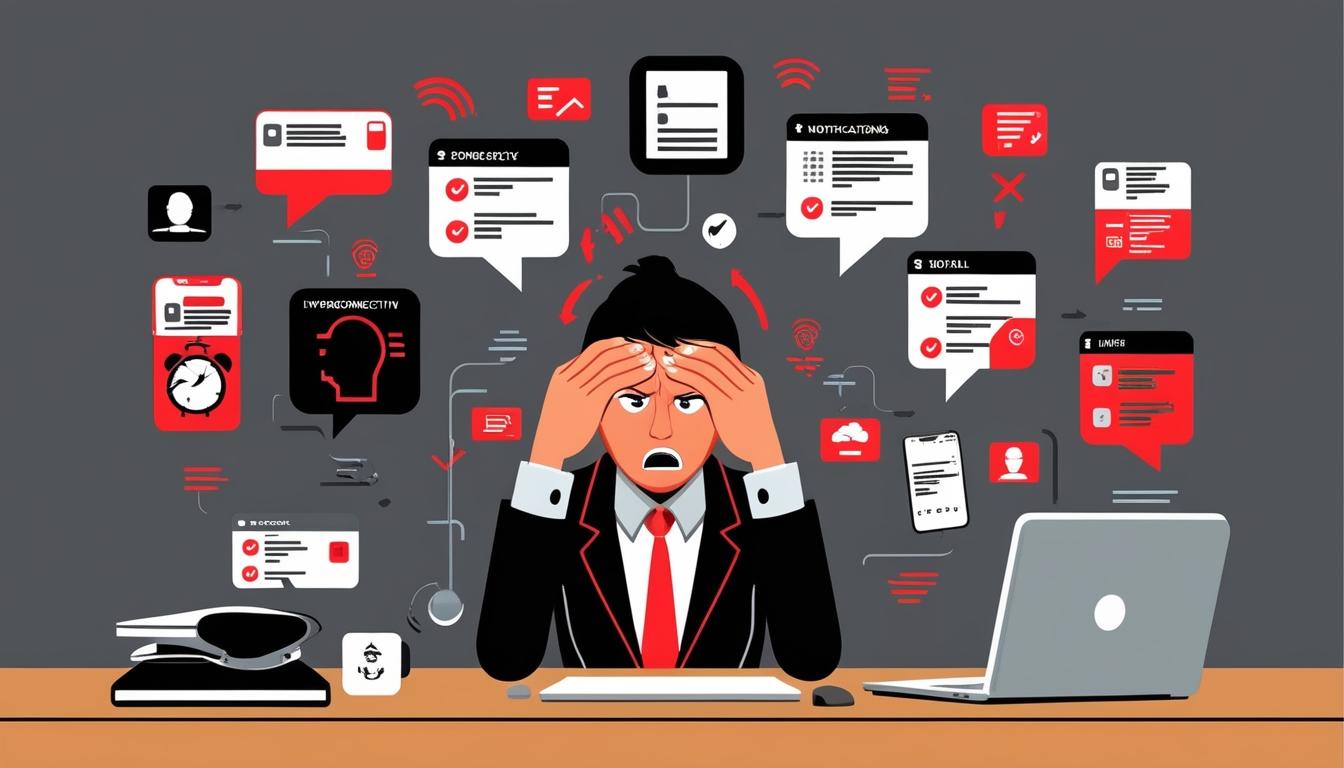
A recent study by researchers from the University of Nottingham's Schools of Psychology and Medicine has brought to light significant challenges faced by employees in the digital workplace, particularly due to the phenomenon of 'hyperconnectivity.' This research reveals that continuous connectivity to digital technology is contributing to mental and physical strain amongst employees, making it increasingly difficult for them to disconnect from work responsibilities.
The findings, published in the journal Frontiers in Organizational Psychology, mark the completion of a comprehensive research project that examined the adverse effects of digital working. The study identified key issues such as stress, overload, anxiety, and a pervasive fear of missing out. The overarching theme identified by the researchers is 'digital workplace technology intensity' which is shaped by high work demands associated with digital communications and tools.
In their research, fourteen employees from varied professions were interviewed to gauge their perceptions and experiences regarding the demands of digital jobs and how these impacted their health. The study highlighted feelings of overload, as many employees expressed concerns regarding the overwhelming volume of messages, applications, and meetings that characterise the digital work environment. The incessant need to remain connected and updated contributed significantly to stress levels, with many participants reflecting on their inability to detach mentally from work.
Elizabeth Marsh, an ESRC PhD student from the School of Psychology, spearheaded the qualitative study. She noted, "Digital workplaces benefit both organisations and employees, for example by enabling collaborative and flexible work. However, what we have found in our research is that there is a potential dark side to digital working, where employees can feel fatigue and strain due to being overburdened by the demands and intensity of the digital work environment." Marsh emphasised that there is a prevalent pressure among employees to remain perpetually available online.
Employees shared a range of sentiments during the interviews, expressing how the digital format blurs the lines of work-life balance. One participant indicated, "[It's] just more difficult to leave it behind when it's all online and you can kind of jump on and do work at any time of the day or night." Another added, “You kind of feel like you have to be there all the time. You have to be a little green light,” showcasing the anxiety surrounding the expectation of constant availability.
Dr Alexa Spence, a professor of psychology involved in the study, commented on the implications of the research, stating, “This research extends the Job Demands-Resources literature by clarifying digital workplace job demands including hyperconnectivity and overload.” The study introduces the concept of digital workplace technology intensity, shedding light on the potential health impacts—both mental and physical—associated with digital work.
The research underscores the importance of addressing these work demands to safeguard the wellbeing of digital workers. Suggestions for employers include enhancing employees' digital skills and supporting them in establishing boundaries in the digital environment. Additionally, the findings may guide technology departments to improve the usability and accessibility of digital tools while curtailing the overwhelming array of applications available to workers.
The study highlights a growing concern regarding the psychological toll of digital work, especially in a landscape that continues to evolve in the wake of the pandemic. Understanding the dynamics of hyperconnectivity and its effects on employee health remains critical for organisations aiming to foster a healthier work environment in the digital age. The research was funded by the Economic and Social Research Council - Midland Graduate School.
Source: Noah Wire Services