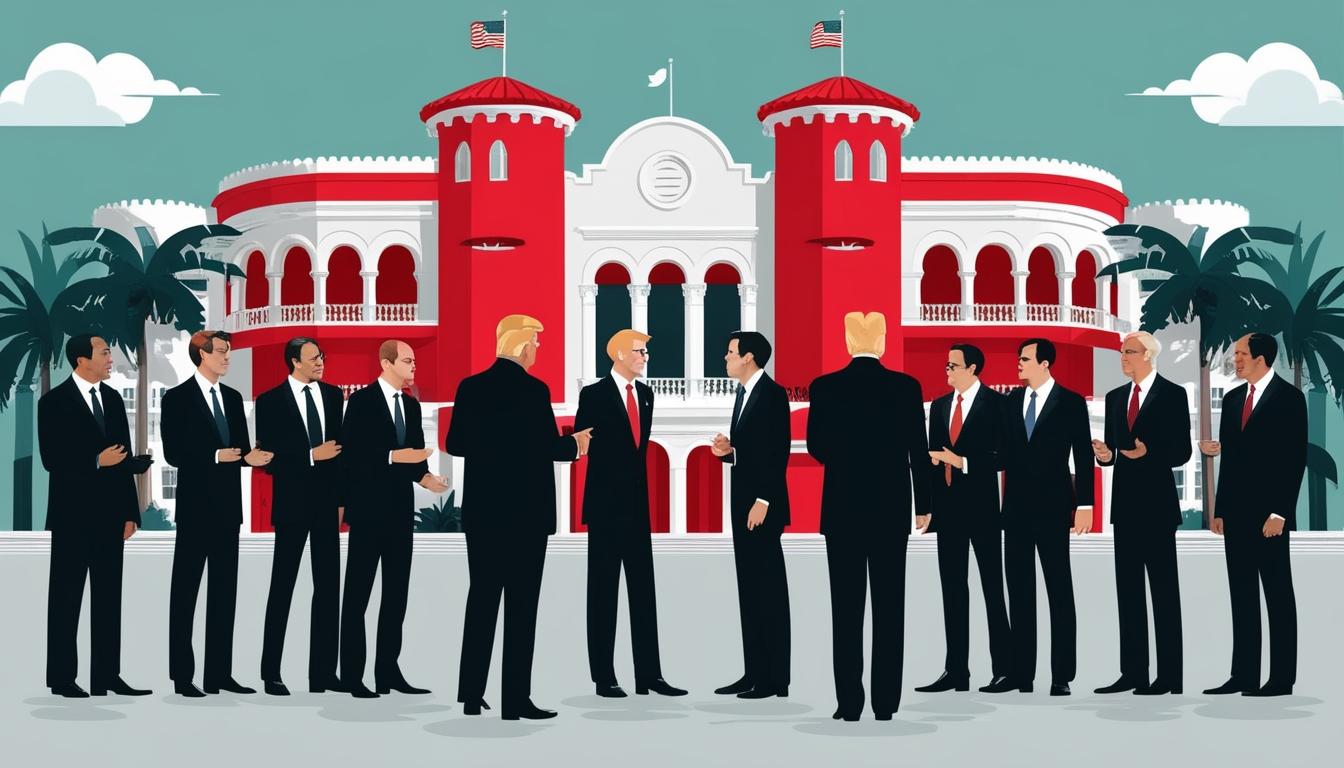
In a series of high-profile engagements, leading technology executives from major firms such as Apple, OpenAI, Meta, SoftBank, and Amazon are actively building relationships with President-elect Donald Trump as he prepares to take office in January. With a combination of visits, fundraising efforts, and social media outreach, figures including Tim Cook, Sam Altman, Mark Zuckerberg, Masayoshi Son, and Jeff Bezos are seeking to enhance their standing with the incoming administration.
Speaking at his private Mar-a-Lago residence, Trump remarked, “The first term, everybody was fighting me. In this term, everybody wants to be my friend.” This sentiment reflects a shifting dynamic between the tech industry and the administration, as many executives have made substantial financial contributions to Trump's inauguration fund, surpassing previous pledges to incoming presidents.
A central interest of the tech industry appears to be in the area of artificial intelligence (AI) development. Just days before the election, Microsoft executives, alongside venture capitalist Marc Andreessen, published a blog post advocating for a laissez-faire approach to AI regulation. They stated, “Regulation should be implemented only if its benefits outweigh its costs,” and urged the government to refrain from imposing stricter copyright laws that could hinder the utilisation of public data for training AI technologies.
Additionally, Trump has indicated intentions to revoke President Joe Biden’s expansive AI executive order, which aims to safeguard rights and safety while promoting innovation. Although specifics on Trump’s alternative plans remain unspecified, his campaign has suggested that AI development should be “rooted in Free Speech and Human Flourishing.”
There is also a growing focus on infrastructure to support the burgeoning demand for data centres, a critical element of AI and cloud computing. North Dakota Governor Doug Burgum, recently appointed to lead the Interior Department, acknowledged this need, stating, “The AI battle affects everything from defence to healthcare to education to productivity as a country.” He emphasised the urgency to enhance electricity production in response to the expanding demands of data centres.
The landscape of antitrust discussions may also shift under Trump’s second term. Legal expert Paul Swanson commented on Big Tech’s potential strategies, suggesting that the industry may leverage negotiation skills to foster more agreeable outcomes. While federal regulators have pursued antitrust actions against companies like Google and Facebook during both the Trump and Biden administrations, experts anticipate a less aggressive stance towards mergers and acquisitions under Trump’s leadership.
A history of conflict exists between tech leaders and regulatory bodies in Europe, highlighted by Apple’s ongoing battles over tax rulings from Brussels. Cook has been vocally critical of the EU’s tax assessments, referring to a significant ruling as “total political crap.” Despite past confrontations, Cook, like others, appears to be working towards a reconciliation with the incoming administration.
Financial contributions to the inauguration effort have included pledges of $1 million each from Amazon, Meta, and OpenAI. Bezos has shifted his tone towards a more optimistic outlook regarding Trump’s return to power, despite previous tensions. Zuckerberg’s private meeting with Trump and his subsequent donations suggest a strategic recalibration, although public criticisms from Trump persist.
Elon Musk, with his extensive influence and connections, is also positioned as a key player in the administration's dynamics. Analysts note that his access to the White House could significantly impact policy discussions across various sectors, including energy, transportation, and technology. Musk's ability to make headlines with his unique public persona adds another layer to his influence.
As the business landscape evolves with increasing automation and advancements in AI, these high-powered relationships between tech leaders and the administration signal a potential shift in business practices and regulatory environments moving forward.
Source: Noah Wire Services