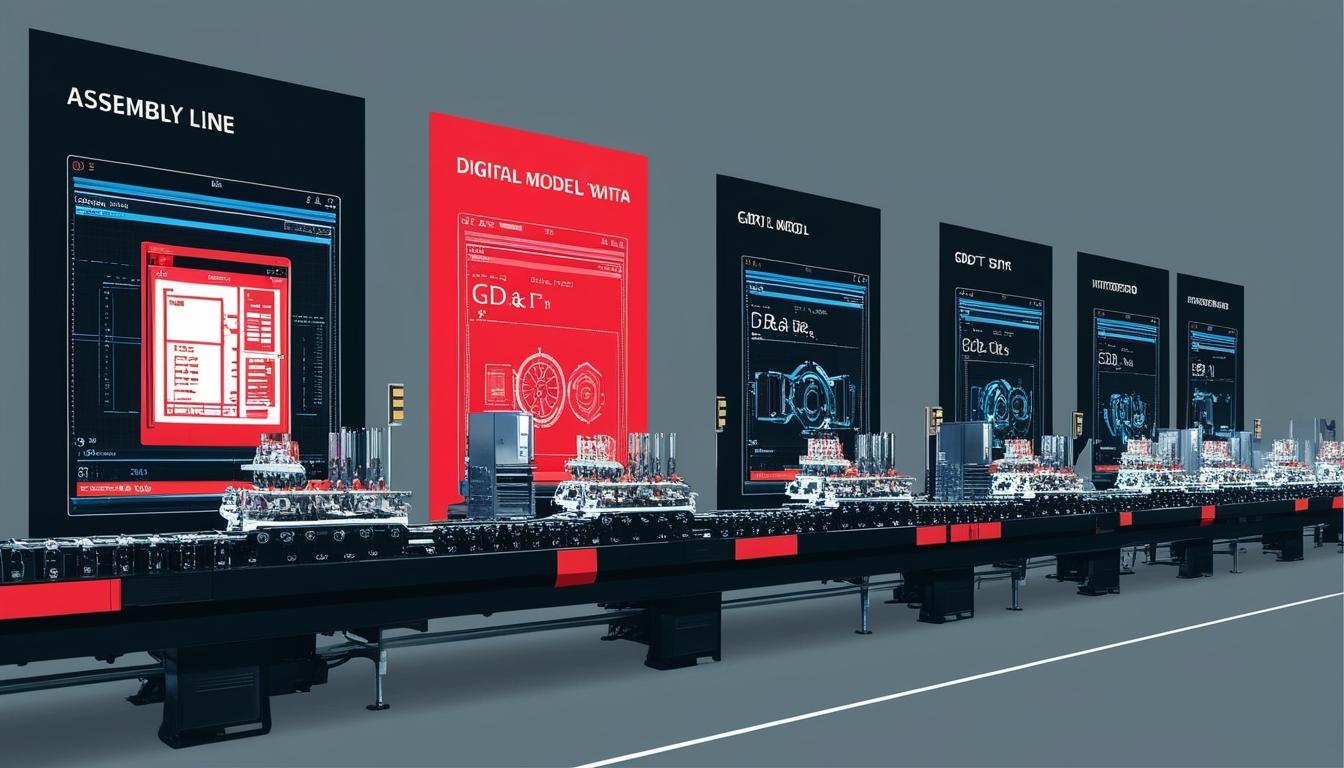
As the landscape of manufacturing continues to evolve with the integration of digital technologies, the importance of geometric dimensioning and tolerancing (GD&T) remains paramount for ensuring high quality and profitability. Israr Kabir, the Director of Emerging Technology at the American Society of Mechanical Engineers (ASME), remarked on the enduring relevance of GD&T, stating, “The fundamental principles of GD&T apply regardless of advances in manufacturing processes or automation technologies.” This observation underscores the necessity for manufacturers and mechanical engineers to adapt their GD&T practices in tandem with technological advancements.
The current manufacturing environment necessitates a transition towards more digitised systems, where GD&T data must be seamlessly integrated into digital models. To facilitate this transition and enhance operational efficiency, organisations are encouraged to address a series of critical questions regarding their GD&T practices.
Firstly, consistent standards across an organisation are crucial for collaboration. Inconsistencies in GD&T application can lead to misunderstandings. There are two primary standards being applied in the industry: the ASME Y 14.5-2018, which is predominantly used in about 86% of U.S. manufacturing, and the ISO Geometrical Product Specifications (GPS), which offers a different approach toward part geometry. Addressing the standardisation of these practices can greatly enhance clarity in technical communications.
Secondly, the incorporation of GD&T data directly into digital models, known as model-based definitions or digital twins, is recommended. A hybrid approach that uses both 2D and 3D models without comprehensive digital integration risks introducing errors during manual changes. By embedding GD&T data in digital twins, organisations mitigate the risks associated with such changes, maintaining a single source of accurate information throughout the manufacturing process.
Moreover, positioning GD&T data consistently within digital models is essential. Despite digital twins not being the predominant method used, establishing robust routines for GD&T integration into 3D models can prevent inefficient practices from becoming ingrained. Data from Engineering.com indicates that 23% of engineers incorporate GD&T data directly into the syntax of 3D models, while 15% use the semantic model. The key is establishing a consistent method that can be adhered to across the board.
Another significant consideration is strategising how to maximise the benefits derived from GD&T data. The integration of Internet of Things (IoT) technologies, such as sensors in calibration and inspection processes, offers a promising avenue for enhancing efficiency by automating data collection. This integration allows organisations to perform inspections with minimal manual data entry, thereby streamlining operations.
Lastly, addressing potential errors within GD&T data is vital for maintaining efficiency. The essence of GD&T is to identify discrepancies in designs or products swiftly. Establishing a systematic approach for addressing issues when they arise, particularly during the GD&T verification phase, helps in averting costly rework and delays. This proactive approach enables quicker iterations and refinements in response to identified errors.
As manufacturing continues to advance towards an increasingly digitised future, organisations must ensure that their GD&T methodologies and practices not only keep pace with these changes but are also adaptable to further advancements in technology. Staying current with the latest standards and training opportunities, such as those offered by the ASME GD&T Course Collection, is imperative for companies looking to thrive in this evolving landscape.
Source: Noah Wire Services