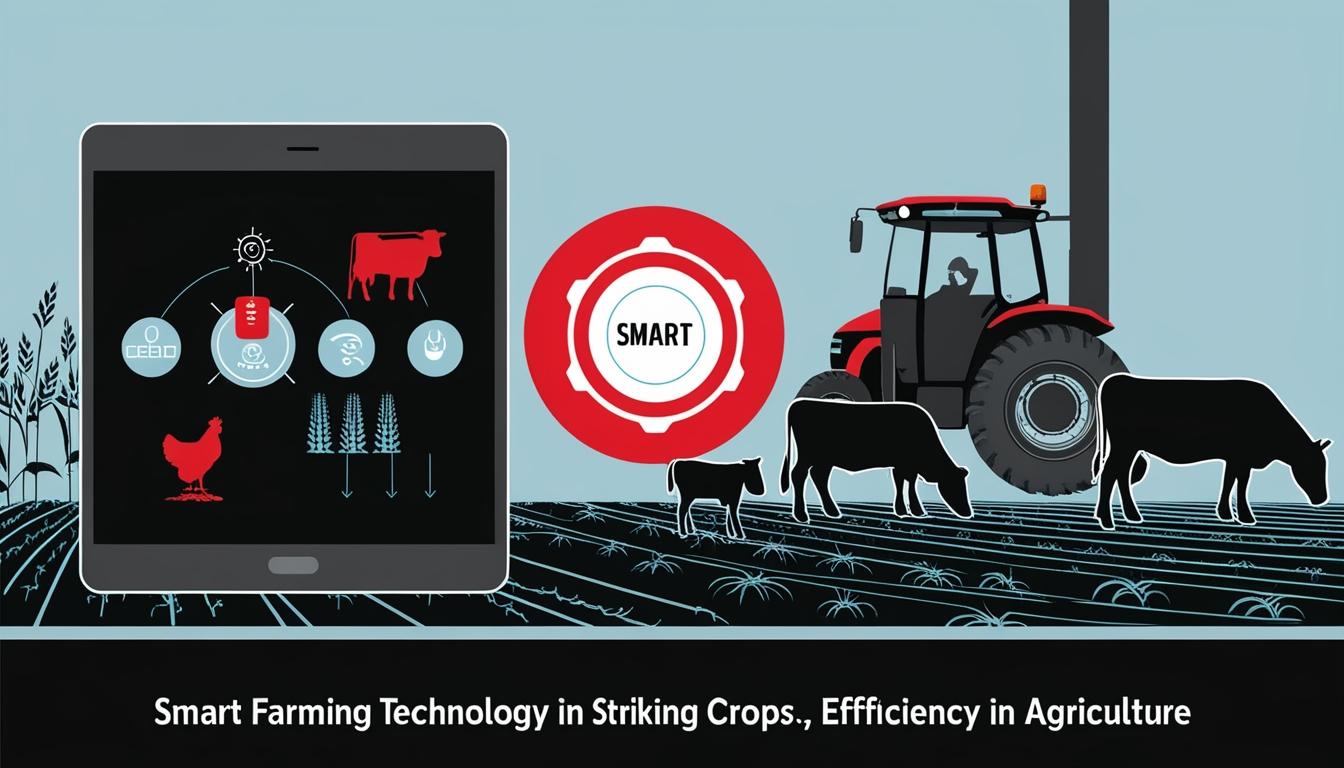
The incorporation of intelligent technologies into agriculture, often termed smart farming or smart agriculture, is rapidly evolving as farmers seek innovative solutions for data collection and management. This trend, highlighted in recent coverage by "Electronic Products," reflects a growing need within the industry to enhance efficiency and productivity through advanced monitoring systems.
At the forefront of smart farming are data analytics that inform decision-making processes concerning land management. By utilising real-time information about plant and soil conditions, farmers can employ precision agriculture techniques. This approach leverages variable rate technologies (VRTs), which can be subdivided into two primary categories: map-based and sensor-based systems. The former relies heavily on satellite imagery, while the latter collects immediate data directly from the field via sensors positioned on or near farm machinery. Both systems, commonly used in conjunction, provide a comprehensive view, with sensor-based technology offering detailed insights that facilitate optimal agricultural practices.
Beyond crop cultivation, smart farming extends to livestock management. Monitoring animal health and behavioural patterns is crucial, as any deviations may signal infections or communicable diseases. To achieve this, farmers utilise various sensors capable of tracking parameters such as temperature and moisture content, which are indicative of animal welfare and environmental conditions.
For effective monitoring, diverse sensor types are essential. Temperature variations can be assessed using resistance temperature detectors, while soil health encompasses several metrics, including salinity, pH levels, and essential nutrients like nitrogen and potassium. Such measurements enable farmers to apply fertilizers judiciously, cutting down on waste and environmental impact. Additionally, real-time data helps in early detection of pest infestations and weed pressure, allowing for timely interventions.
The deployment of IoT technology plays a critical role in this data collection process. Sensors can operate autonomously in remote agricultural locations, gathering information at intervals or in response to specific queries before relaying it to cloud-based platforms for analysis. The resultant data not only aids in immediate decision-making but also streamlines processes within the broader supply chain, including scheduling inputs and determining the optimal times for harvest.
According to the reporting, effective communication within these IoT systems is vital, particularly given the environmental factors associated with remote farming operations. The data transfer requirements can be minimal; for basic parameters, such as temperature and moisture, the information can be transmitted efficiently with only 8 bits of data. Connections are often established using Zigbee technology, enabling communication over distances of approximately 100 metres. Once aggregated, this data is transmitted via 4G LTE networks, including Narrowband IoT (NB-IoT) designed for low-data-rate applications.
To sustain power efficiency, these systems typically rely on battery power complemented by photovoltaic cells, ensuring they remain operational in off-grid settings. The integration of microcontrollers (MCUs) with low power consumption capabilities is key to optimal performance. Newer devices, including position and humidity sensors, are tailored specifically for battery-powered applications and are designed to perform effectively in these energy-restricted environments.
As outlined in "Electronic Products," the use of wireless technology also extends to tracking livestock movements. RFID technology exemplifies this, where identification chips are employed in tags to monitor cattle, utilising contactless read/write capabilities at specific frequency bands. These advancements are not just limited to livestock but can also enhance in-field agricultural operations, such as ensuring crops receive appropriate fertilisation and water supply based on sensor data.
While the benefits of smart farming technologies are extensive, installation, commissioning, and ongoing maintenance of these systems pose logistical challenges due to their remote nature. A thoughtfully designed system can mitigate some of these challenges, ensuring that upkeep is minimal and practical over time.
With the increasing prominence of IoT in smart farming applications, robust cybersecurity measures must also be prioritised. Protecting the data transmitted between connected sensors and cloud infrastructures is vital for the continued integrity and functionality of these innovative solutions. Strengthening security measures need not be prohibitively expensive, and doing so can significantly reduce potential risks.
In summary, the landscape of smart farming continues to evolve with the integration of IoT technologies, demonstrating significant advancements in crop management, livestock supervision, and overall operational efficiency in agriculture. The innovative applications of these technologies underlie a transformative phase in farming practices, driven by data and automation.
Source: Noah Wire Services