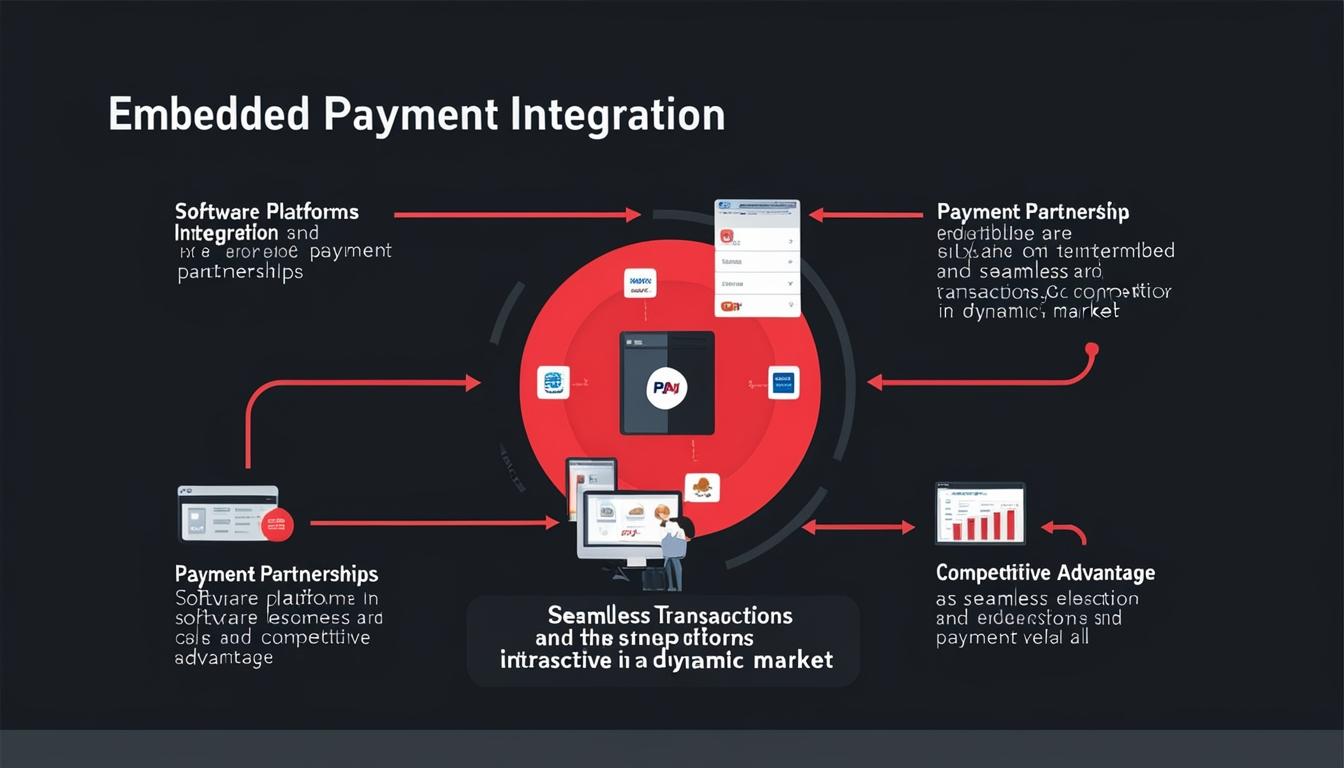
The landscape of embedded payments is rapidly evolving, with predictions indicating that this segment will constitute nearly 63% of the substantial $800 billion embedded finance market by 2030. The increasing demand for quick transactions and enhanced customer interactions has positioned embedded payments as a vital solution for software platforms aiming to boost customer retention and achieve a competitive advantage in an increasingly crowded market. The insights into current trends and future scenarios present a comprehensive overview of how embedded payments may transform business practices.
Embedded payments involve the integration of payment processing capabilities directly into a company’s software or platform. There are generally two pathways for businesses looking to embed payments: they can opt to become a payment facilitator (payfac) managing all aspects of the payment process in-house, or they can partner with a third-party payment provider to use white-label solutions. Both methods allow for access to the benefits associated with embedded payments, including enhanced revenue from monetisation, streamlined customer experiences, and greater control over the payment process. However, becoming a payfac often imposes additional complexity and risk.
According to recent data, 89% of companies choose to align with established payment providers instead of developing and maintaining their own systems. This choice highlights the preference for a simpler, less burdensome solution that simultaneously delivers a seamless and branded payment experience. As companies continue to gravitate towards white-label payments, they benefit from global scalability, facilitating expansion into diverse markets and navigating various regulatory environments effortlessly.
As embedded payments gain momentum, software platforms are urged to stay alert to emerging trends in order to maintain their competitive edge. Many companies initially approached embedded payments reactively, responding to market demands or competitor activities. However, as they recognise the value in these payment solutions, firms are now seeking to enhance their offerings.
For businesses that have embedded payments by assuming the role of a payment facilitator, a reassessment is often necessary. Data indicates that the registered payfacs in North America are already experiencing a 6% annual attrition rate, with the EU and UK noting even higher attrition of 14%. This trend has prompted many platforms to reconsider the complexities and financial implications of establishing themselves as payfacs, leading them to opt for partnerships with payment providers. Such alliances not only enable platforms to generate additional revenue and foster customer loyalty, but they also alleviate the high overhead costs tied to being a payment facilitator.
Choosing the right payment partner is crucial for optimising embedded payment programmes. The ideal partner should provide comprehensive support in critical areas such as merchant onboarding, monetisation strategies, and risk management. An effective partner doesn't merely highlight problems; instead, they proffer solutions, facilitating a more informed and strategic approach to payment processing.
In scenarios where platforms first approached payments simply as a feature responding to customer demand, a deeper exploration is warranted now, particularly as the embedded B2B payments market is projected to reach $2.6 trillion by 2026, equating to significant revenue potential of $6.7 billion for platforms and enablers. Therefore, understanding the business of payments as a standalone lucrative segment can lead to enhanced pricing strategies and increased profitability.
Furthermore, selecting a suitable payment partner is pivotal. Many platforms, lacking the requisite industry experience, find themselves choosing providers based on brand prominence or perceived revenue share percentages without a strategic approach to long-term objectives. The selection process should involve careful consideration of how the partnership aligns with the company's broader embedded payment strategy.
Lastly, the onboarding experience stands as a crucial factor in the success of embedded payments. A robust partner should be able to manage anti-money laundering (AML) and know your customer (KYC) compliance requirements expeditiously, ensuring a swift market entry without compromising regulatory obligations.
As businesses eye the future of embedded payments, it is imperative that they establish robust partnerships with payment providers adept at navigating the evolving landscape. The momentum behind embedded payments represents not just a trend, but a pivot point for software platforms aiming for higher returns on investment through streamlined, compliant, and customer-oriented payment solutions.
Source: Noah Wire Services