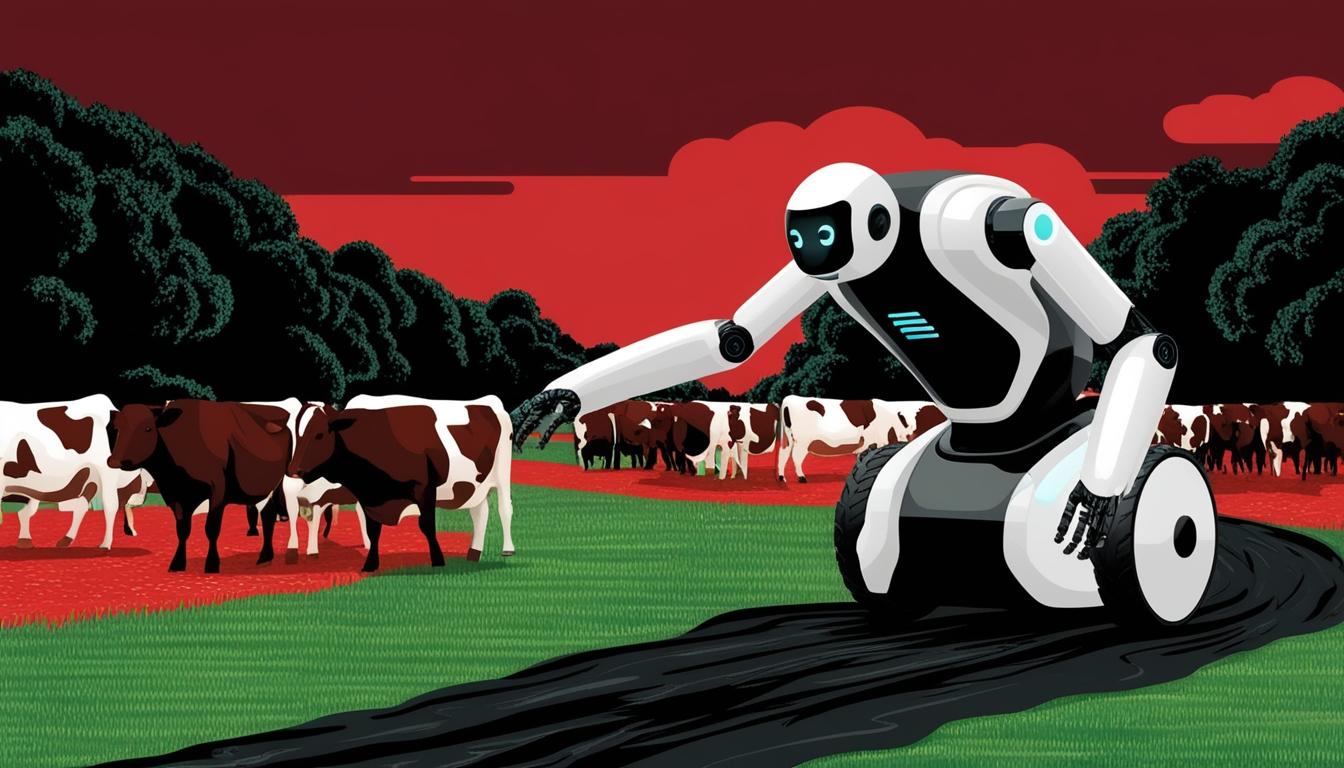
Researchers in Australia are advancing agricultural practices through the development of an artificial intelligence-powered robot designed to aid cattle farming. The robot, named SwagBot, is equipped with autonomous driving capabilities and is specifically engineered to enhance the management of grazing cattle by evaluating the conditions of the soil and vegetation.
Born out of the University of Sydney, SwagBot stands as a pioneering example of what researchers refer to as the world’s first “smart cow.” This development aims to create a more efficient cattle farming process that minimally impacts the environment. First introduced in 2016, the robot’s initial design allowed it to navigate grazing fields; however, improvements over the years have seen the integration of advanced sensors and AI systems. These innovations enable SwagBot to assess the health, type, and density of various grasses and plants, as well as monitor the wellbeing of the cattle.
Utilising this data, SwagBot directs the cattle to the most suitable grazing areas, moving them before overgrazing occurs, which helps preserve the grass and maintain soil quality. This technological provision also grants farmers real-time insights into the conditions of their fields. Professor Salah Sukkarieh, who leads the project at the University of Sydney, explained the interaction between the cattle and the robot: "Once cattle feel at ease near the robot, they follow it around." He further elaborated on the robot’s purpose, stating, "You want to move the animals to the right part of the pasture where there is good protein, good carbs," emphasising the need for efficient cattle movement without relying on traditional fencing.
Australia holds a significant position in the global beef market, housing an estimated 30 million cattle distributed across vast, often arid landscapes. Given the varying quality of pastures—many of which lack sufficient grass—farmers must closely monitor how many animals their land can support. However, managing grazing over extensive areas can prove challenging, with overgrazing leading to deteriorated soil and diminished biodiversity.
The utility of SwagBot was underscored during a demonstration observed by Erin O'Neill, a part-time farmer in the region. O'Neill acknowledged the robot's potential in providing crucial data regarding pasture nutrition, especially for cattle needing specialized care, such as pregnant cows. "The robot can tell farmers what bits of pasture are most nutritious, particularly if you've got cattle like we do that are pregnant," she stated, highlighting the importance of quality pasture for livestock health.
As SwagBot continues its development, it represents a growing trend within the agricultural sector towards the utilisation of robotics to streamline production and alleviate labour shortages, particularly in rural areas of Australia where a sparse population can make workforce recruitment difficult. The ongoing research signals a potential shift in traditional farming methodologies, centring on the integration of technology to foster sustainability and efficiency in cattle farming practices.
Source: Noah Wire Services