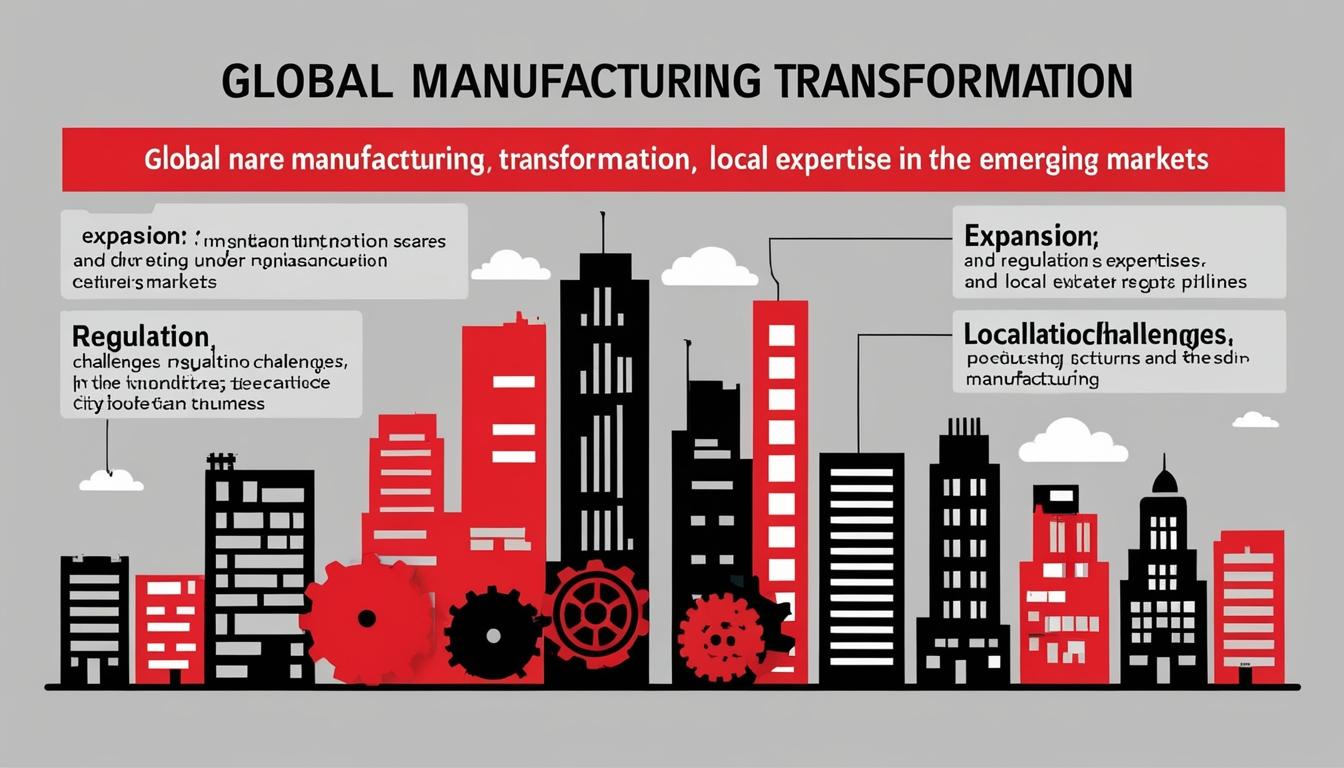
In recent years, the global manufacturing landscape has undergone significant transformation, primarily driven by international expansion initiatives. According to Shinichiro Nakamura, President of one to ONE Holdings, global expansion has accounted for more than half of all corporate growth over the past decade, as manufacturers increasingly seek to penetrate emerging markets. The rise of these markets, coupled with sustainability efforts and the drive to localise production, has catalysed this shift.
The challenges associated with entering new markets, however, remain formidable. Manufacturers often encounter a myriad of obstacles, including regulatory hurdles, tariffs, talent shortages, cultural differences, and varying levels of technological access. Nakamura highlights that understanding and navigating these risks is crucial for any organisation aiming for successful global expansion.
Key among the complexities of entering new markets is the regional variability in regulations. Each market presents a unique set of laws, ranging from industry-specific requirements to general business operation laws that include compliance, data protection, tariffs, and employment regulations. The impact of political and economic changes can further complicate this landscape. Notably, speculation around potential changes in international trade tariffs under a possible Donald Trump presidency poses a significant concern for manufacturers, particularly those with operations in the United States.
Nakamura emphasizes the importance of investing in local expert guidance to navigate these complexities effectively, allowing organisations to ensure compliance and avoid legal pitfalls. Additionally, logistics presents another considerable challenge. Finding reliable suppliers and vendors can be a daunting task, particularly without an established network, which may lead to inefficiencies and increased operational costs. To mitigate these logistics issues, manufacturing firms are encouraged to leverage their existing networks or proactively seek out connections before entering a new market.
Geopolitical instability can also adversely affect trade and supply chains. Recent tensions, such as the Houthi attacks on vessels in the Red Sea, have resulted in significant congestion in vital maritime routes, impacting global trade flows. Nishimura suggests that developing a comprehensive risk management plan, alongside an assessment of potential threats, is essential for sustaining supply chain resilience and minimising disruption.
Technological limitations within a region can also impose challenges during market entry. Regulations and the availability of skilled talent to operate advanced technologies can influence manufacturers’ operational capabilities. As such, performing a preliminary assessment of available resources and technology in the target region is vital. This allows leaders to align operational practices with the specific conditions of each market, especially as data-driven decision-making continues to gain importance.
Cultural differences, too, play a critical role in successful market expansion. Companies must establish a unifying corporate identity to foster collaborative work environments across various locations. Investing in communication tools, such as Slack, and encouraging regular interactions between teams and management can help combat the potential isolation that may arise from geographical dispersion. Nakamura points out that employing generative AI can further support understanding of linguistic and cultural nuances, thereby mitigating the risks associated with miscommunication.
Recognising and addressing the challenges posed by varying regional regulations, logistics, cultural differences, and technology access is essential for global manufacturers. By embracing these educational insights and preparing tailored risk management plans, organisational leaders can enhance their operational agility in accordance with the unique demands of each market.
Nakamura concludes that each obstacle represents a potential opportunity for growth, provided that leaders remain vigilant and adaptable to the evolving global landscape.
Source: Noah Wire Services