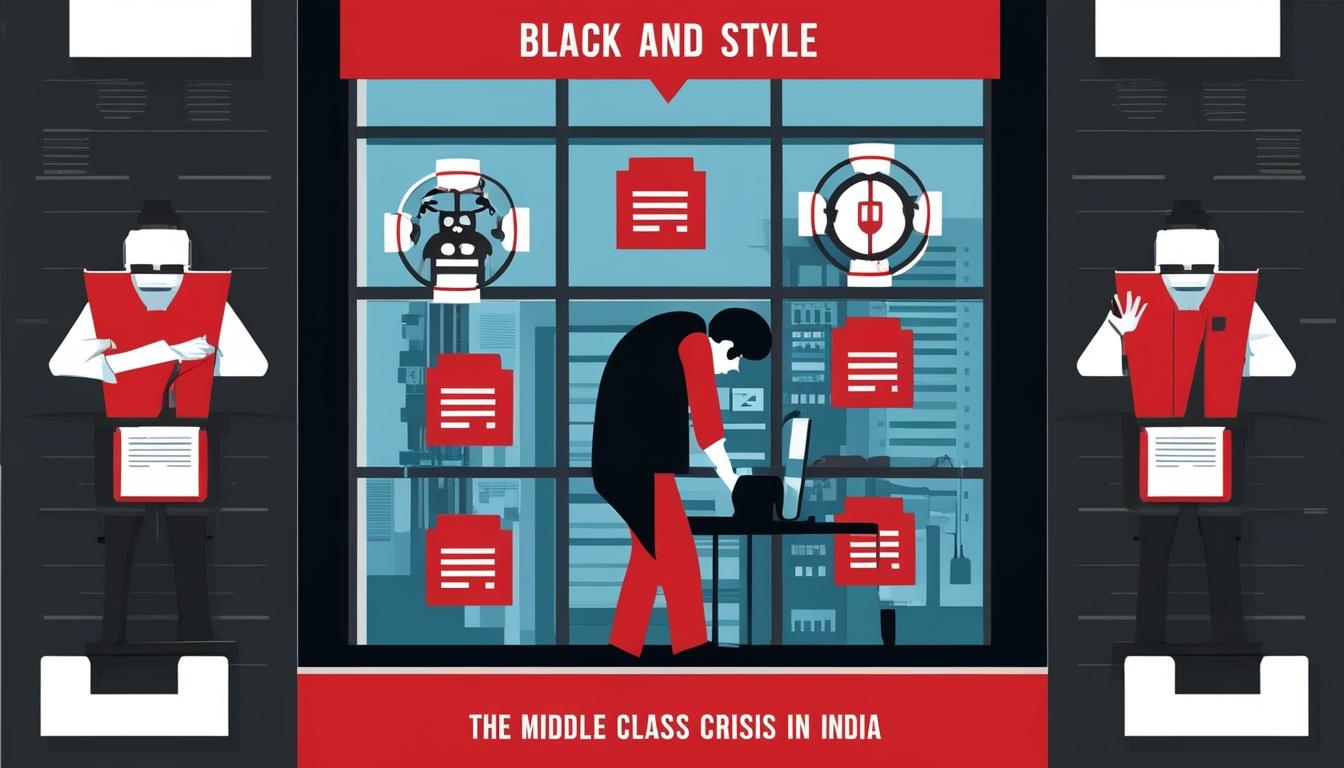
India’s middle class, historically considered the engine of the nation’s economy, is now experiencing a significant crisis attributed to the pressures of automation and technological innovation. Saurabh Mukherjea, the founder of Marcellus Investment Managers, expressed concern during a podcast with Bharatvarta, stating, “The middle class is coming under the pump. This constituency is becoming a casualty of automation and technological change.”
Current observations indicate a worrying trend: there is a noticeable decline in sales of fast-moving consumer goods (FMCG) and entry-level vehicles, stagnation in employment opportunities within the IT services sector, and a drop in campus placements for engineering graduates. Mukherjea warned, “AI could become a middle-class job killer unless handled carefully,” highlighting the urgent need for strategic responses to these challenges.
Further analysis by Marcellus Investment Managers reveals that traditional roles, especially routine clerical and supervisory positions, are disappearing as companies turn to outsourcing and automation as cost-saving measures. The sentiment was echoed by Wipro Chairman Rishad Premji, who indicated that some jobs in the economy will inevitably vanish, particularly those within white-collar sectors.
This technological disruption is exacerbated by broader economic difficulties. A recent report indicated that corporate earnings in the second quarter of FY25 experienced their most significant decline in two decades, similar to downturns observed during previous financial crises, including that of 2008. Concurrently, household debt in India has surged to concerning levels, with net savings as a percentage of GDP plummeting to a 50-year low. Despite gross savings remaining relatively stable, increasing rates of unsecured loans are exerting pressure on disposable income, leaving families with minimal financial resilience.
The implications of these economic shifts are evident in consumer behaviour. Leading FMCG companies such as Nestlé India and Hindustan Unilever have noted substantial slowdowns in consumer spending in urban areas. Nestlé's Managing Director, Suresh Narayanan, attributed the deceleration in growth of the food and beverages sector to a “shrinking middle class.” Similarly, Hindustan Unilever CEO Rohit Jawa observed that “urban growth has trended downward, especially in larger cities,” pointing to a substantial change in market dynamics.
Amidst these challenges, political and corporate leaders in India are facing increasing pressure to confront the circumstances affecting the middle class. Mukherjea cautioned that this demographic is being overlooked, as electoral focus shifts predominantly to supporting more disadvantaged groups. He remarked, “The middle class is becoming an orphaned child,” advocating for urgent strategies to curtail the adverse effects of both AI and broader economic trends on this vital sector of the population.
Source: Noah Wire Services