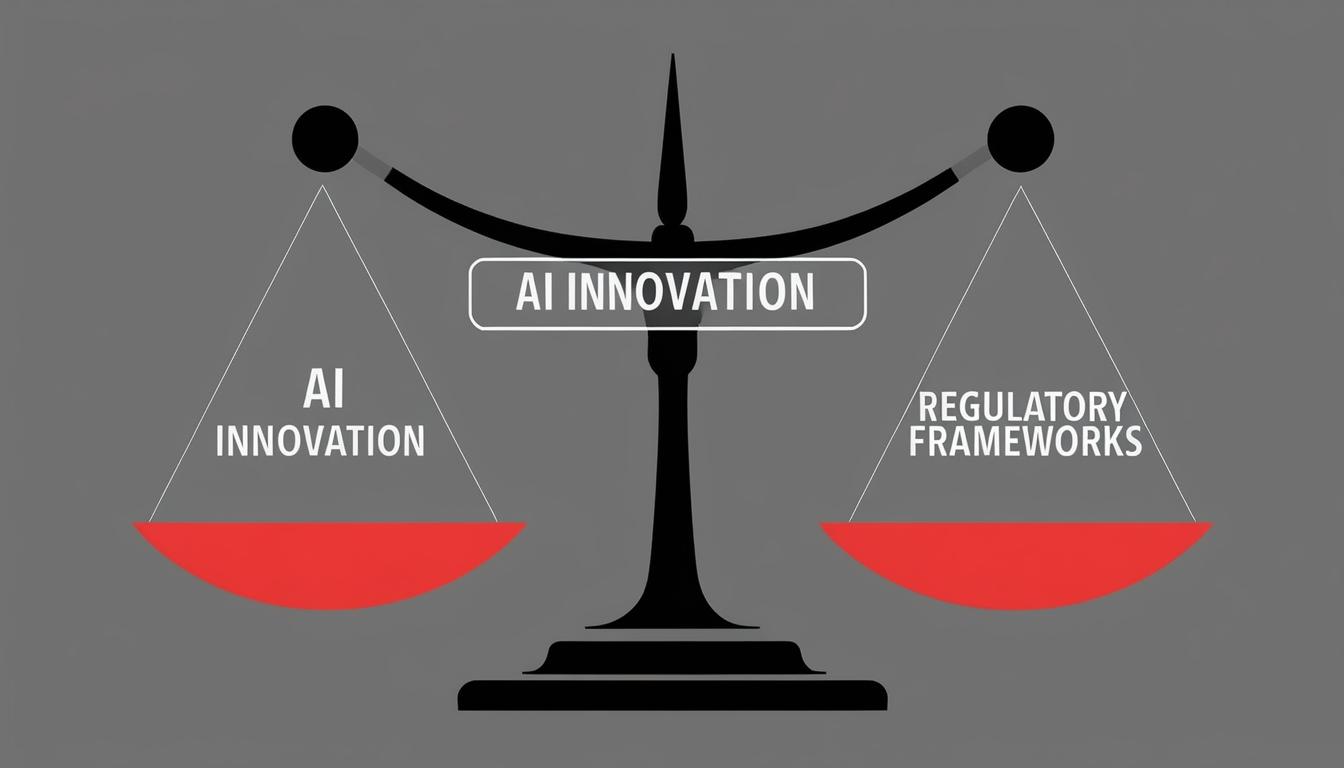
The ongoing development and implementation of artificial intelligence (AI) technologies has prompted urgent discussions regarding regulation, innovation, and security across both the United States and Europe. Key figures in governmental leadership are expressing concerns over the divergent paths being taken in the regulation of AI, particularly as the potential for both transformation and risk increases.
Alejandro Mayorkas, the outgoing head of the US Department of Homeland Security (DHS), has voiced apprehension about Europe's more adversarial stance towards tech companies, which he believes hinders a coordinated global regulatory framework. Speaking to the Financial Times, Mayorkas asserted that the US, home to leading AI companies such as OpenAI and Google, and Europe are not aligned in their regulatory approaches. He warned that “disparate governance of a single item creates a potential for disorder,” which can lead to vulnerabilities from a safety and security standpoint.
The EU has recently enacted its AI Act, seen as the most stringent set of regulations for managing AI technologies globally. This legislation places restrictions on so-called “high-risk” AI systems and aims to increase transparency regarding data usage by AI firms. Concurrently, the UK government is moving forward with plans to legislate requirements for AI companies, including mandates for safety assessments of their models.
In contrast, the US under the incoming Trump administration may see a shift in regulatory philosophy. The president-elect has indicated intentions to overturn the current administration's executive order on AI, which aimed at establishing safety protocols through voluntary testing. Mayorkas expressed concern that overly strict laws could hinder US leadership in the rapidly evolving AI sector, remarking, “I worry about a rush to legislate at the expense of innovation and inventiveness.”
Compounding these regulatory challenges, a bipartisan task force in the US Congress has released a report aimed at enhancing national safety against AI-related threats while also ensuring the continuation of American innovation. The report advocates for a flexible sectoral regulatory framework, which has drawn commendations from academics and industry experts alike. Dr. Vahid Behzadan, a professor at the University of New Haven, noted that the framework “balances AI's transformative economic potential with the imperative to address legitimate safety concerns,” although he highlighted the necessity for clearer priorities.
This sentiment was echoed by the Center for AI Policy, which commended the report but called for more details on execution and solid frameworks for addressing "catastrophic risks" associated with AI. Yaron Litwin from Canopy recommended the need for swifter and stronger protections than currently proposed, suggesting that the report leans towards being business-friendly, potentially at the expense of comprehensive safety measures.
While the federal approach remains cautious, several states have begun to take the lead in AI regulation. Colorado has passed a comprehensive AI law targeting high-risk AI systems, and California has initiated its own regulatory measures specifically concerning AI in healthcare. These state-level initiatives may pave the way for a more robust legal framework as Congress deliberates.
As these regulatory frameworks continue to develop, there seems to be a consensus among experts about the need for a nuanced approach. Dakota State University's President José-Marie Griffiths described the report as a step in the right direction, indicating the necessity for regulation to evolve in tandem with technological advancements. JD Harriman from Foundation Law Group highlighted the importance of taking an incremental approach to policy without stifling innovation prematurely.
In a sector marked by rapid change and uncertainty, the question of governance remains complex, with many stakeholders grappling with how to manage a technology that is as unpredictable as it is transformative. The discussions surrounding AI regulation underscore the critical balance that must be struck between fostering innovation and ensuring safety amidst an evolving technological landscape.
Source: Noah Wire Services