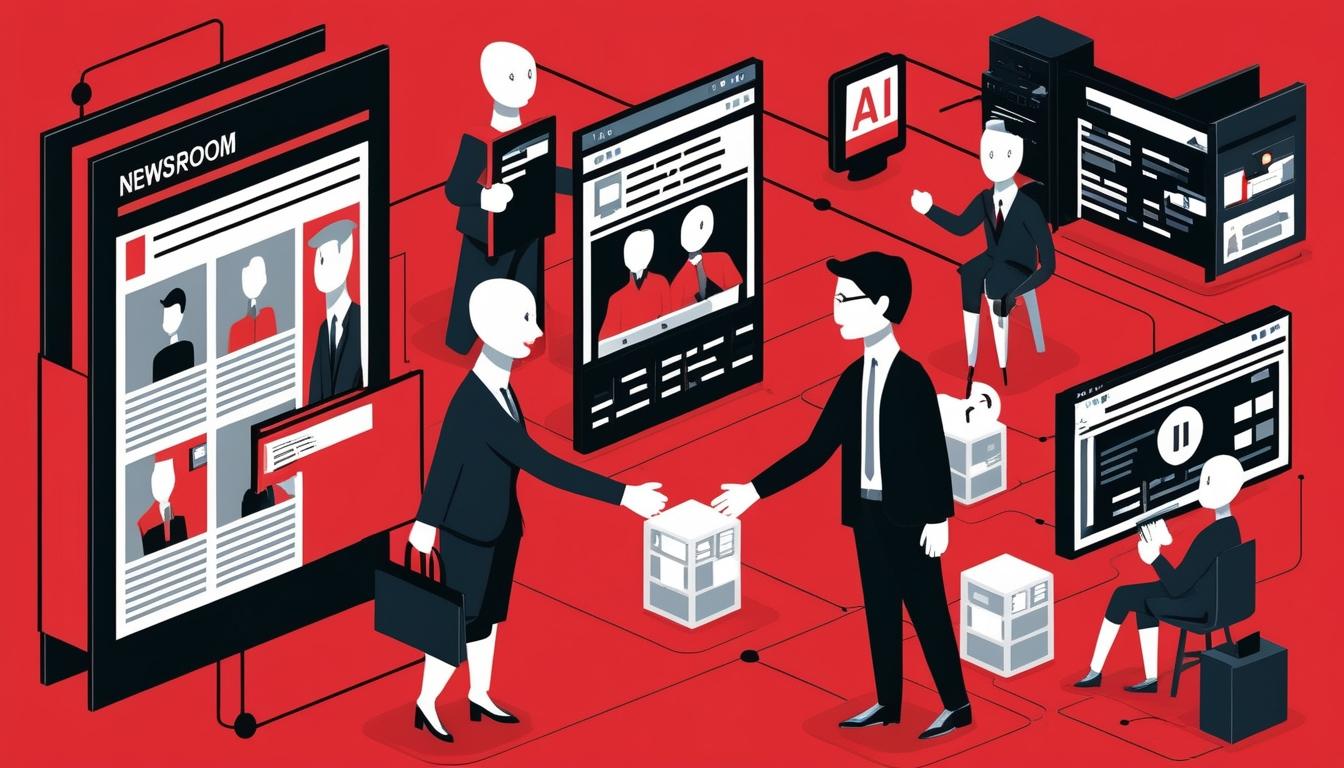
As the integration of artificial intelligence (AI) into the media landscape continues to evolve, major publishers have taken significant steps this year to formalise their relationships with AI companies. This shift has led to a series of content licensing agreements aimed at leveraging emerging technologies while addressing the financial interests of the publishers involved.
A notable development was the partnership established between the Associated Press and OpenAI in July 2023, which set a precedent for numerous subsequent agreements. Other substantial deals followed, including partnerships involving Politico, Business Insider, and Axel Springer, highlighting the growing trend of publishers collaborating with AI firms.
These agreements primarily focus on content licensing, allowing AI companies to utilise publishers' materials to enhance their large language models—often encompassing paywalled content. In return, publishers secure attribution for the material leveraged on various AI platforms while also gaining access to technological tools that can assist in the development of AI-oriented products and features.
However, not all publishers have opted for collaboration. Some have pursued legal avenues against AI companies. The New York Times filed a lawsuit against Microsoft and OpenAI in December 2023, alleging improper usage of its copyrighted articles in AI training. Similar legal actions have been initiated by various media outlets, including Raw Story, AlterNet, The Intercept, and a consortium of Canadian news publishers throughout 2024, indicating a division in strategy among industry players.
A detailed chronology of key agreements indicates the extensive reach of AI partnerships formed in 2024. On March 13, French newspaper Le Monde and Spanish company Prisa Media entered into a licensing deal with OpenAI, wherein summaries of their news content will be attributed within the ChatGPT interface. This agreement allows both publishers to utilise OpenAI's technology to innovate their own products. Louis Dreyfus, CEO of Le Monde, noted that this partnership would contribute significantly to their business model by generating additional revenue linked to neighbouring rights.
Further significant agreements materialised on April 29, with the Financial Times entering a deal worth between $5 million to $10 million annually. FT's CEO John Ridding emphasised the importance of AI platforms compensating publishers for their content, asserting that reputable sourcing is essential for AI products.
The collaboration between Axel Springer and Microsoft on the same day aimed to create AI-enhanced products across various sectors, while Dotdash Meredith secured a deal with OpenAI later that week, reportedly worth a minimum of $16 million. Neil Vogel, CEO of Dotdash Meredith, expressed that the agreement affirmed the necessity for AI platforms to appropriately credit publishers for their contributions.
The trend continued with further partnerships, including a notable $250 million, five-year agreement between News Corp and OpenAI, which was announced on May 22. Robert Thomson, News Corp’s CEO, stated that the agreement would set new standards for accuracy and value in the digital domain.
Other publishers, such as The Atlantic and Vox Media, signed separate deals with OpenAI at the end of May to improve user experiences and enhance data platforms, indicating a broader acceptance of AI technologies across the sector. In June, Time also entered into a multi-year agreement that would grant OpenAI access to its expansive archive.
By the end of the year, numerous publishers, including Condé Nast, Hearst, and Reuters, had further expanded their collaborations with various AI entities, reflecting a clear recognition of AI's potential to shape the future of media consumption and content monetisation.
In summary, the landscape for publishers in the age of AI is rapidly transforming, characterised by a mix of cooperative agreements and litigation. As organisations grapple with the implications of AI technology on their business models, the partnerships formed in 2024 may well dictate the future of content creation and consumption across the digital media sphere.
Source: Noah Wire Services