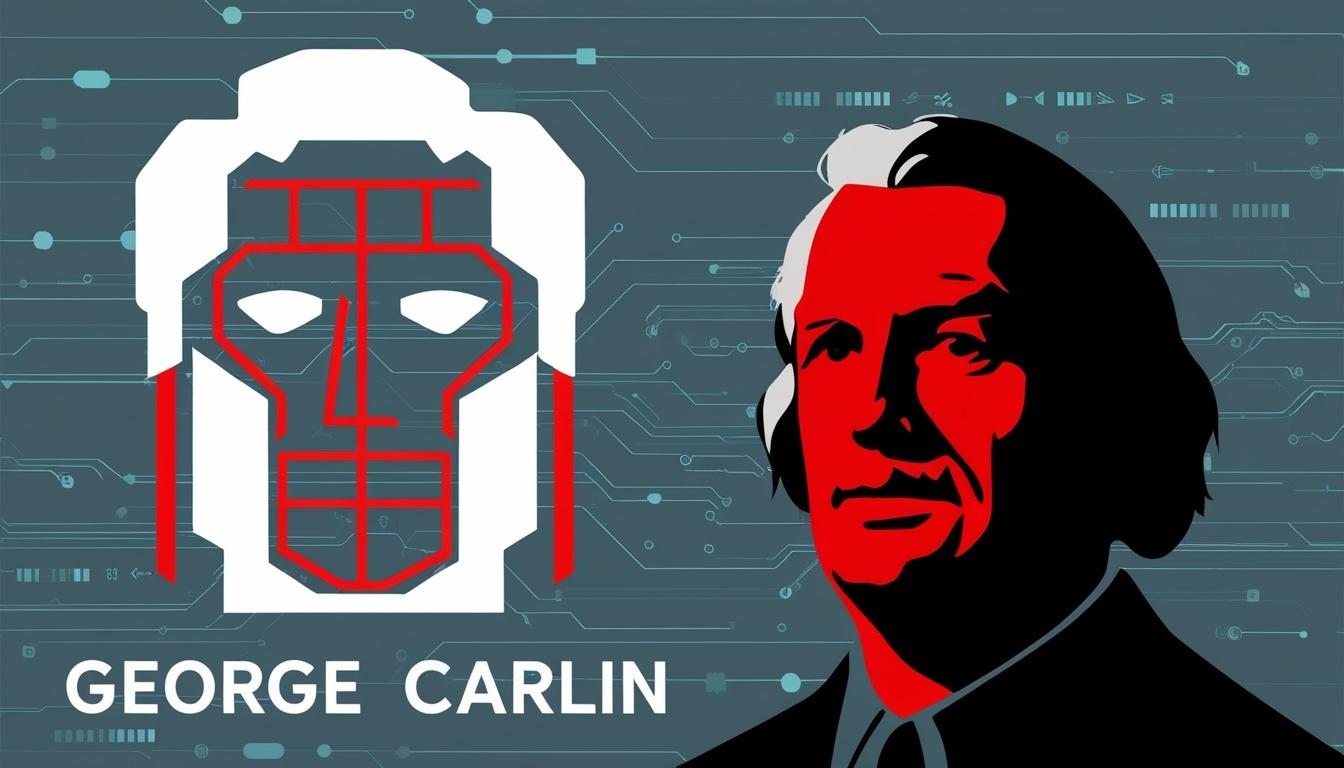
The rapidly evolving landscape of artificial intelligence (AI) technology is raising critical questions about ownership rights regarding digital likenesses, particularly as these technologies are becoming increasingly adept at capturing and recreating the appearances and voices of individuals. This issue has become remarkably pertinent in the wake of recent developments involving celebrities and their estates, highlighting the blurred lines between creativity and copyright infringement in an age of automation.
A poignant example is found in the 2024 incident involving the late George Carlin, whose likeness was used without permission in a 'comedy' special titled “George Carlin: I’m Glad I’m Dead,” produced by the hosts of the “Dudesy” podcast. The digital performance, generated using AI, provoked a legal response from Carlin’s estate, which filed a copyright infringement lawsuit in federal court. One of the podcast hosts later disclosed to The New York Times that the jokes in the special were scripted not by an AI iteration of Carlin but rather by the podcast's other host.
This scenario raises several legal questions about the rights associated with a deceased individual's likeness. Specifically, it challenges existing frameworks surrounding property rights, publicity rights, and the rights of heirs. While the case concluded with a settlement before a legal judgement could be made, it prompted significant discourse surrounding the need for legislative clarity in this area.
In response to such emerging challenges, the Screen Actors Guild-American Federation of Television and Radio Artists (SAG-AFTRA) has undertaken efforts to advocate for stronger protective measures regarding the exploitation of digital replicas of performers. Notably, California's Assembly Bill 1836, set to take effect on January 1, 2025, will establish a legal basis for individuals or estates to sue over the unauthorized use of digital likenesses in expressive audiovisual works or sound recordings. This new legislation is aimed at ensuring that the rights surrounding a performer’s image and voice are upheld, even posthumously.
Further reinforcing this trend, two additional laws coming into effect on the same date aim to protect minors exploited in the digital age. Senate Bill 764 mandates that any financial gains generated by parents through vlogs featuring their children must be partially reserved in a trust account for the child. In a related vein, Assembly Bill 1880 expands the responsibilities laid out in the previously established Coogan Act, historically focused on child stars, to also encompass ‘influencers’.
These legislative measures signal California’s proactive stance in grappling with the complex challenges posed by AI and digital replication technologies. By addressing the potential for financial exploitation of likenesses, both alive and deceased, California lawmakers are navigating the intersection of innovation, creativity, and legal rights in this rapidly advancing landscape of AI automation. As the boundaries of ownership and creative rights continue to evolve, the implications for businesses and individuals alike are poised to be profound, potentially reshaping norms and practices across various sectors.
Source: Noah Wire Services