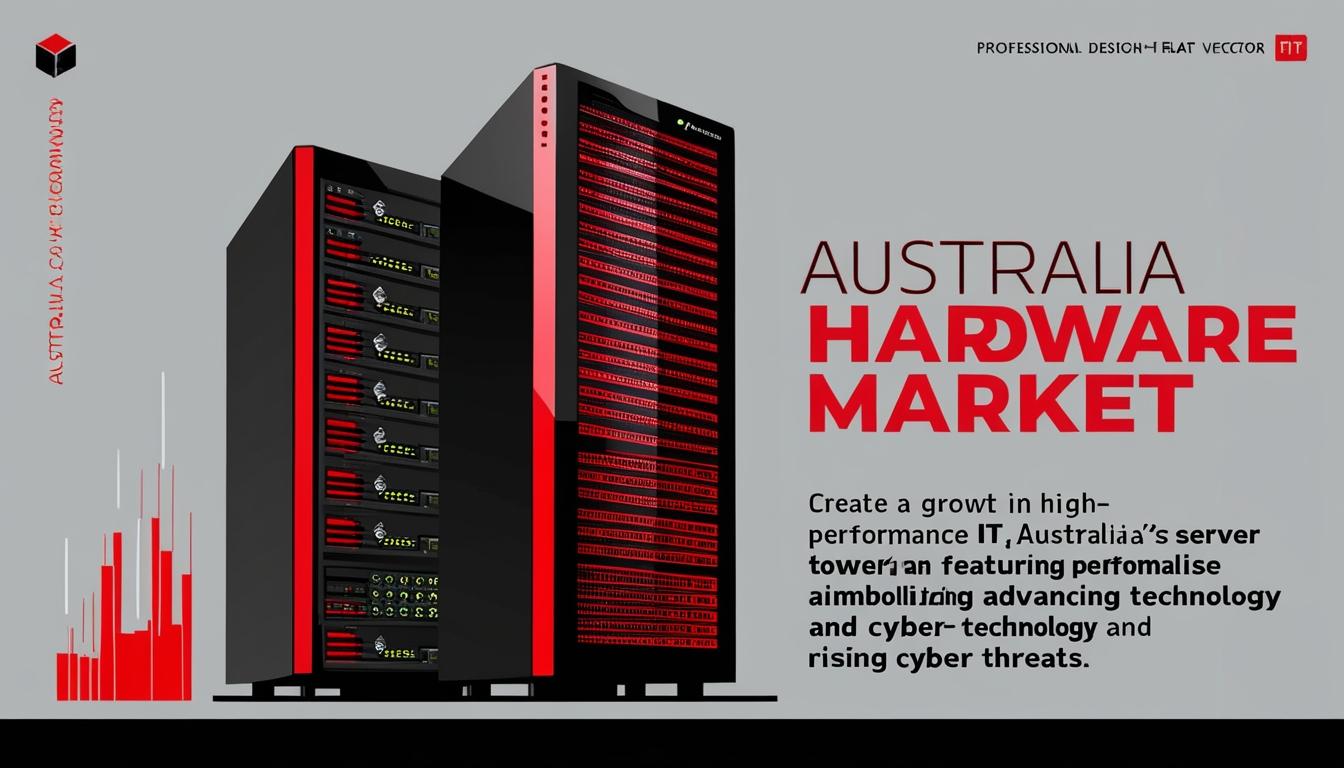
The Australian IT Hardware Market is poised for substantial growth over the coming years, with projections indicating an increase in market value from USD 2.70 billion in 2023 to USD 4.35 billion by 2029. This represents a compound annual growth rate (CAGR) of 8.10%, demonstrating a robust expansion trajectory for the sector. The report titled "Australia IT Hardware Market, By Region, Competition, Forecast and Opportunities, 2019-2029F", recently released by ResearchAndMarkets.com, highlights the integral role of IT hardware in underpinning modern digital infrastructures, supporting everything from personal computing to complex enterprise operations.
Driving this growth are significant advancements in technology, particularly in processing power, semiconductor technologies, and a surging demand for cloud computing and big data analytics. The report elaborates on how the rise of high-performance computing and artificial intelligence (AI) is increasing the demand for specialised hardware to manage intricate computations and handle large volumes of data, solidifying a positive outlook for the market.
A notable aspect of this expanding market is the escalating requirements for data centre solutions. As cloud computing services gain traction and data traffic increases, there is a pressing need for scalable data centre solutions. This trend is stimulating investments in the development and enhancement of data centres, subsequently driving up the demand for servers, storage systems, and networking equipment.
Moreover, the report addresses the rising cyber threats that are prompting businesses to invest more heavily in advanced IT hardware for security purposes. In response to these challenges, there is an observable increase in the procurement of security hardware, including firewalls and encryption devices, designed to mitigate sophisticated cyber threats and meet stringent data protection regulations.
Despite robust growth prospects, the report highlights several challenges facing the Australian IT Hardware Market. Supply chain disruptions, often influenced by geopolitical tensions and pandemic-related complications, have impacted the availability and pricing of essential IT hardware components. Additionally, the fast-paced evolution of technology creates a situation of obsolescence; hardware components experience rapid life cycles which necessitate ongoing innovation, presenting hurdles for both manufacturers and consumers.
Emerging trends such as the adoption of edge computing, which enhances performance by processing data closer to its source, along with the expansion of 5G infrastructure demanding upgraded IT hardware, are influencing the market's future. There is also a noticeable push towards sustainability and energy efficiency in IT hardware development, responding to growing environmental concerns and compliance requirements.
Regionally, New South Wales emerges as the leading area for IT hardware, housing numerous corporate headquarters, financial institutions, and technology firms, which collectively generate a dynamic market environment. Key players within this landscape include Hewlett Packard Enterprise Company, Cisco Systems Inc., and IBM Corporation, all of which are seen as instrumental in driving innovations and advancements in the industry.
The overall analysis by ResearchAndMarkets.com provides comprehensive insights into the Australian IT Hardware Market, which stands at the intersection of technological progress, rising demand, and strategic market dynamics, underscoring its critical position in the progression of Australia's digital ecosystem.
Source: Noah Wire Services