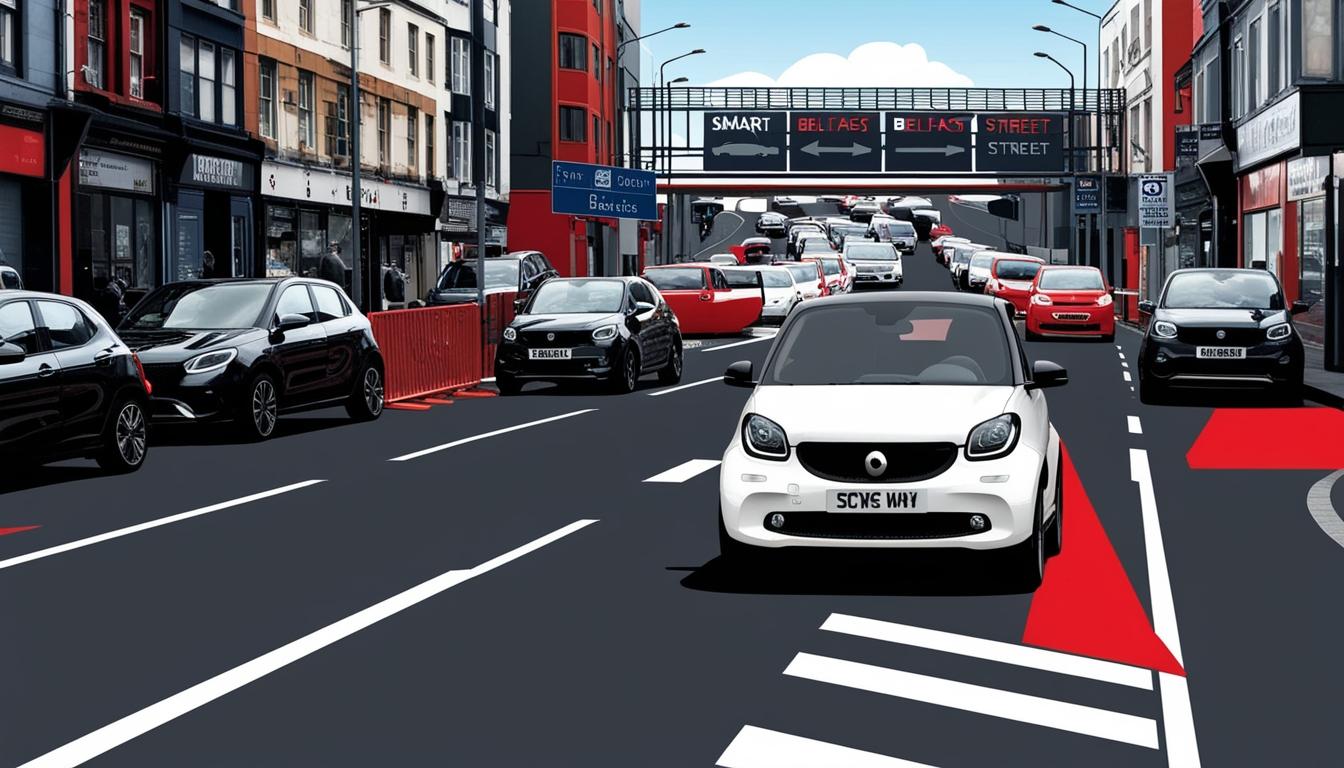
Belfast, Northern Ireland, is currently facing significant traffic congestion, which has become a major concern for commuters, local businesses, and the environment. As the city grapples with the ramifications of gridlock, there is a burgeoning interest in smart car technology, which aims to provide innovative solutions to improve urban mobility and reduce congestion.
Smart cars, which utilise advanced artificial intelligence and real-time data processing, have garnered attention for their potential to reshape traffic flow in urban areas. These vehicles have the capability to communicate with one another and with city infrastructure, enabling them to predict traffic conditions, adjust their routes, and optimise overall traffic management. Numerous pilot programs in cities such as Las Vegas and Singapore have demonstrated the effectiveness of this technology in alleviating traffic issues, showcasing the transformative promise it holds for metropolitan areas.
Despite the promising prospects of smart car integration, Belfast's readiness to adopt these advancements is accompanied by challenges. To effectively incorporate smart technology, the city requires significant upgrades to its infrastructure. This includes the development of extensive 5G networks and the installation of sensor-laden roads, which are crucial for a fully functional smart traffic system.
In addition to infrastructural concerns, there are prevailing public apprehensions regarding the adoption of such technology. Residents have expressed worries about privacy and safety, as well as the substantial costs associated with implementing smart car systems. To navigate these issues, it is essential for local government officials to engage in transparent communication with the public to address concerns and build trust. Robust public engagement initiatives will be vital as the city considers potential technological changes.
The discussion surrounding smart cars in Belfast also highlights both the advantages and disadvantages of integrating such advancements into its transportation model. On one hand, smart cars could enhance traffic efficiency, lead to decreased travel times, and even contribute to a reduction in emissions by alleviating congestion. On the economic front, smoother traffic flow has the potential to bolster productivity by minimising delays in transport and logistics.
Conversely, the integration of smart car technology is not without its hurdles. The necessary infrastructure upgrades demand a considerable financial commitment, which could place a strain on public budgets. Furthermore, addressing public concerns about privacy and safety will require comprehensive policies and measures that ensure citizens feel secure in their use of these advanced vehicles.
Looking ahead, experts suggest that the adoption of smart cars will likely gain momentum as technological advancements progress. If Belfast effectively positions itself, it could emerge as a model for smart traffic solutions within Northern Ireland. Such a shift could not only relieve current traffic challenges but also set a standard for sustainable urban development in comparable cities.
As Belfast stands at this crossroads, the decision to embrace smart vehicle technology could pave the way for a more efficient and productive urban environment. Residents and decision-makers alike are tasked with contemplating the necessary steps to facilitate this potential transformation while weighing the inherent challenges and benefits that it may bring.
Source: Noah Wire Services