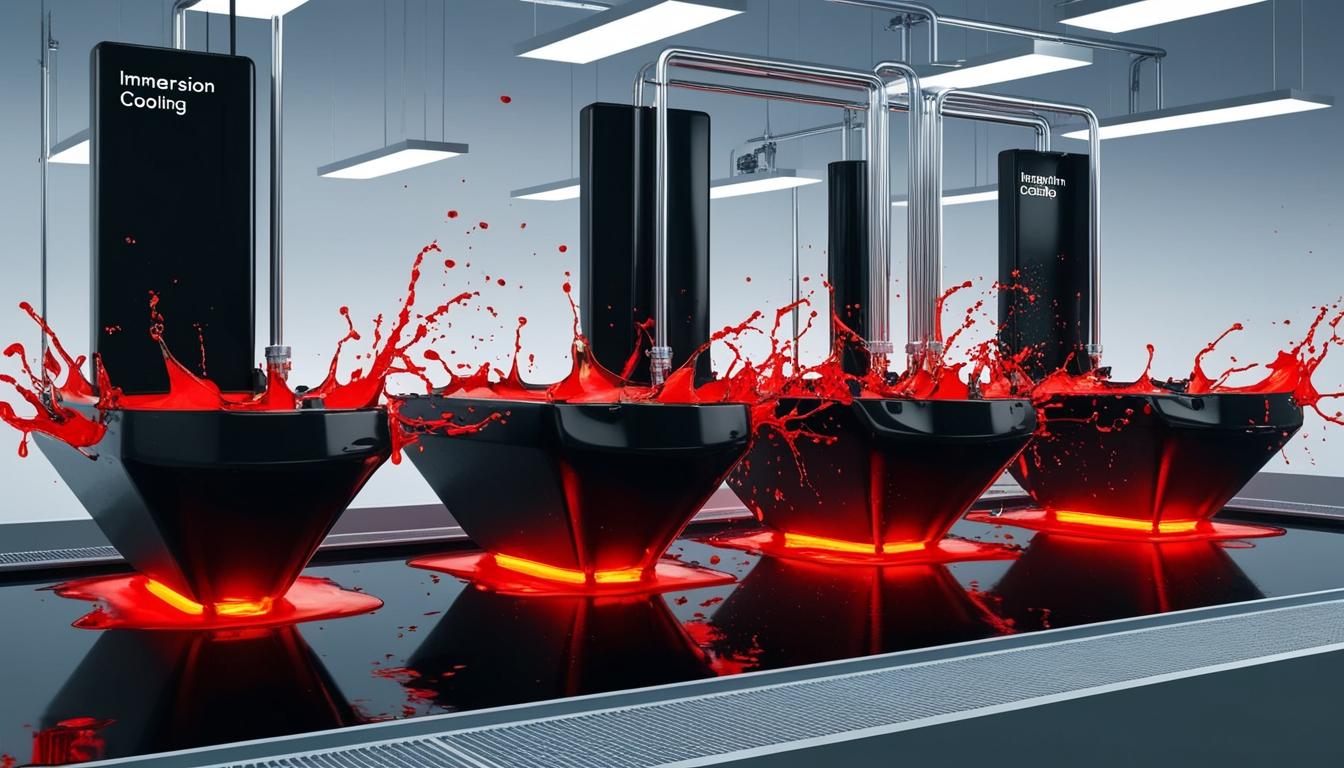
In a significant move towards sustainability and efficiency, Castrol, a subsidiary of BP, is set to enhance its role in the growing field of immersion cooling, a technology increasingly recognised as essential for the advancement of Artificial General Intelligence (AGI). The company, originally established in 1899 as CC Wakefield & Co. Limited, has a long-standing history of innovation in lubricants and has now turned its focus to developing advanced dielectric fluids specifically designed for immersion cooling systems.
Castrol is strategically placing itself at the forefront of this evolving technology, which involves submerging entire servers in non-conductive fluids. This method efficiently dissipates heat away from components, eliminating the requirement for traditional air-cooling methods, which can be both resource-intensive and less effective. “At the moment, about 40% of power consumption in data centers goes toward cooling. Immersion cooling can drop that figure to less than 5%, significantly lowering power and water usage,” stated Chris Lockett, Vice President of Electrification and Castrol Product Innovation at BP, in an interview with StorageReview.
The company’s specialised immersion cooling solutions are being developed at the Castrol ON Liquid Cooling Centre of Excellence, located in Pangbourne, UK. This state-of-the-art research facility focuses on customising liquid cooling technologies while rigorously testing fluid dynamics, material compatibility, and overall server performance. Recent observations by StorageReview highlighted some of Castrol’s advanced immersion tanks, showcasing the efficiency and adaptability of their liquid cooling products.
Castrol's ON range of single-phase dielectric fluids, including DC15 and DC20, is designed to operate at temperatures ranging from 40°C to 50°C, with certain systems capable of tolerating even higher temperatures up to 70°C. With data centres currently accounting for an estimated 2-3% of global power consumption, the transition to immersion cooling presents a transformative opportunity for the sector. Current innovations primarily target direct-to-chip cooling methods; however, immersion cooling could set a new benchmark for thermal management, yielding extensive benefits for energy efficiency and environmental sustainability.
In its commitment to driving this transformation, Castrol aims to position itself as a comprehensive partner in liquid cooling solutions for both current and future applications, anticipating increased demand as integrated smart city data centres continue to proliferate. The organisation's historical expertise in fluid engineering, combined with its innovative approaches, reflects a significant step toward aligning with emerging technologies and addressing the complexities of modern computing environments.
Source: Noah Wire Services