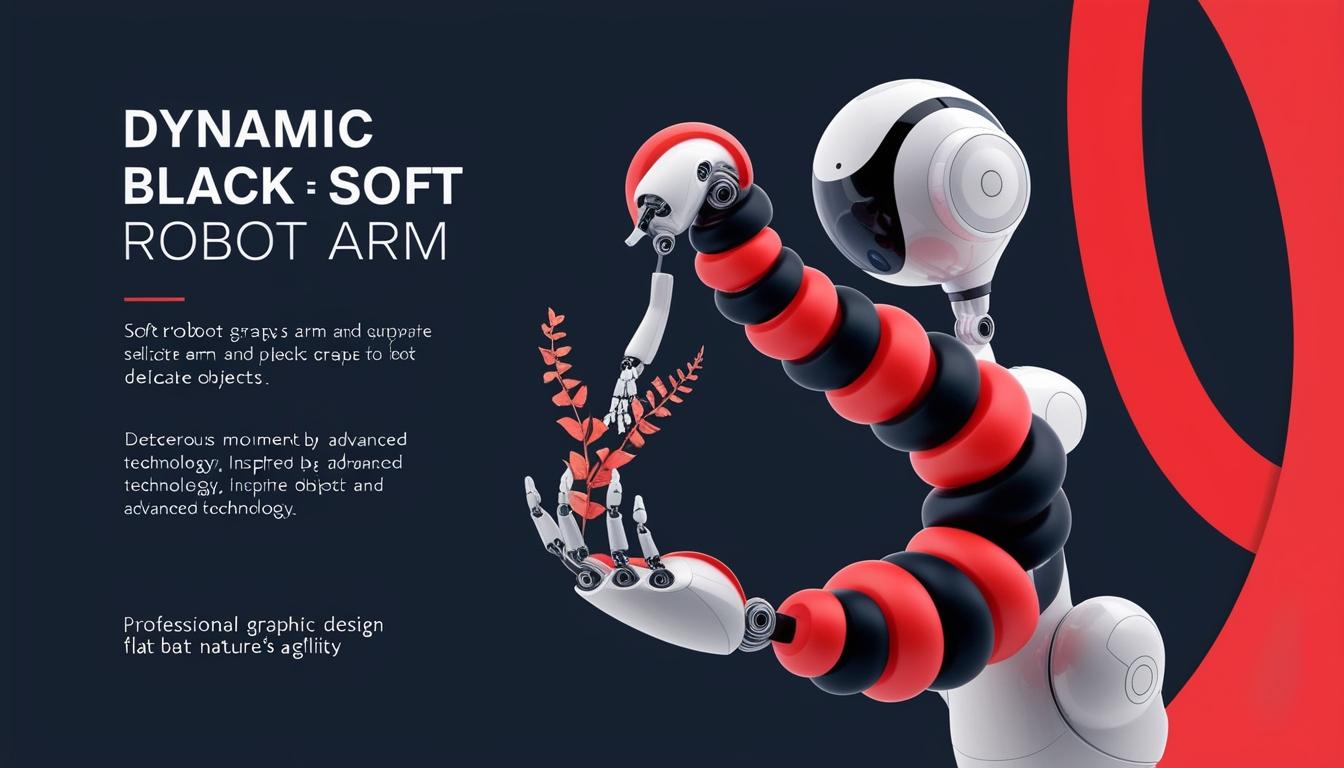
A team of scientists from the University of Science and Technology of China has achieved a significant advancement in robotic technology with the development of a highly dexterous spiral soft robot arm, which exhibits capabilities similar to that of the human hand. This innovation, aptly named SpiRobs, draws inspiration from the agility of natural systems such as elephant trunks and octopus tentacles and was unveiled in research published in the journal Device.
Leading the research, Nikolaos Freris and his team have created demonstration videos that highlight the robotic arm's remarkable ability to handle a variety of tasks. The arm showcases its finesse by effortlessly grasping delicate items including eggs, strawberries, and USB cables, as well as adeptly catching fast-moving objects like tennis balls and accurately paddling a ping-pong ball.
Employing advanced reverse engineering techniques, the researchers studied the logarithmic spiral-shaped flexible structures prevalent in nature, which informed their design of SpiRobs. The soft robotic system exhibits exceptional gripping capabilities, boasting a nearly 95 percent success rate with movements such as reeling, extending, winding, and grasping.
The design features a spiral gripper that operates using two or three cables, and it is capable of gripping objects with diameters spanning considerably larger sizes while supporting loads up to 260 times its own weight. This impressive strength and versatility position SpiRobs as a potential frontrunner in robotics applications.
The prototypes produced by the research team utilise 3D printing technology and are created from cost-effective materials such as polyurethane, resin, and paper. This approach to prototyping has resulted in models that vary in size from just a few centimetres to several meters, greatly enhancing their commercial viability.
In practical applications, a field test demonstrated the robot arm's capabilities when it successfully seized and lifted a water bucket while mounted on a drone, suggesting exciting possibilities for use in the low-altitude economy sector. The implications of such advanced robotics are significant, potentially transforming numerous business practices across various industries as technological integration continues to evolve.
This breakthrough in robotic engineering exemplifies the innovative spirit of research in China and its capability to transform fields through the application of natural principles in technology.
Source: Noah Wire Services