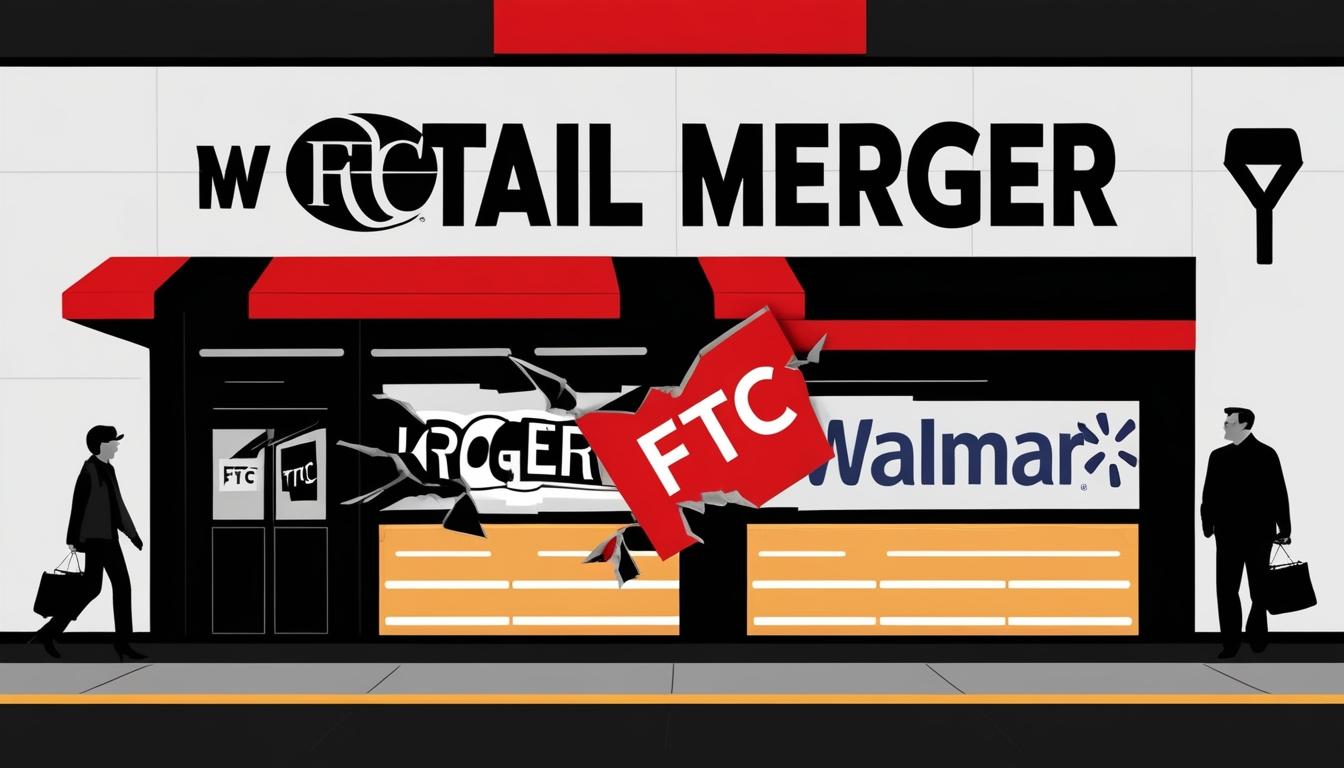
The Federal Trade Commission’s (FTC) recent decision to halt the proposed merger between Kroger and Albertsons has created significant upheaval in the retail industry, stirring widespread debate regarding the implications for mergers and acquisitions in the sector. The FTC's rationale for this intervention centres on consumer protection against potential price hikes and ensuring fair competition. However, some critics posit that this decision may inadvertently strengthen the positions of dominant market players such as Walmart and Amazon.
The blocking of the Kroger-Albertsons deal is perceived by many industry experts as indicative of an impending trend towards increased scrutiny of future retail mergers. Retailers that are navigating the complexities of extremely thin profit margins, a highly competitive landscape, and shifting consumer preferences might find it increasingly challenging to leverage mergers as a survival strategy. While some industry leaders regard consolidation as essential for competitiveness in a market heavily influenced by giants like Walmart and Amazon, the FTC's actions raise concerns that such advancements could now be stifled.
Historically, mergers have granted retail operators the opportunity to benefit from economies of scale, secure improved negotiations with suppliers, and invest in technological innovations aimed at enhancing the shopping experience for customers. Observers of this regulatory landscape are cautious that the FTC’s decision to block such mergers could hinder innovation and potentially drive smaller competitors out of the market, ultimately reducing consumer choice in the longer term.
In this scenario, Walmart and Amazon are poised to emerge as the likely winners. The monumental resources and expansive market influence wielded by these two corporations far surpass those of most competitors. With Walmart's extensive networks of physical stores complemented by Amazon's stronghold in e-commerce as well as their rapid delivery services, the FTC's decision could facilitate an environment where these retail titans consolidate their dominance over a more fragmented market.
As a result, smaller chains and regional retailers may find themselves hampered in their ability to effectively compete against the aggressive pricing strategies employed by Walmart or the technological advantages held by Amazon. In light of this, the FTC's enforcement stance could unintentionally exacerbate the market concentration that it seeks to combat.
For retailers, the future appears laden with obstacles. With mergers providing a pathway to navigate adverse economic conditions and bolster competitive stature, companies may now have to consider alternative approaches in response to these regulatory impediments. Potential strategies include forming strategic partnerships that allow for shared resources without fully merging, investing in technology such as artificial intelligence and data analytics to better understand evolving consumer behaviours, or focusing on niche markets to differentiate from larger competitors.
Yet, these alternative approaches come with their own set of limitations, particularly in an environment dominated by the remarkable scale of both Walmart and Amazon.
While there is merit in the FTC’s intentions to protect consumers from the perils of monopolistic practices, this raises critical questions regarding the unintended consequences of such interventions. For many retail players, seeking merger opportunities is not merely a quest for growth, but rather a matter of survival against larger competitors. Blocking potential mergers might inadvertently diminish consumer options by destabilising smaller retailers.
Additionally, commentators suggest that the FTC should contemplate the broader dynamics of the retail industry before imposing broad rejections of mergers. A more nuanced regulatory approach might enable the pursuit of mergers that produce tangible consumer benefits while sustaining competitive integrity.
The retail landscape currently stands at a pivotal juncture. As the FTC intensifies its scrutiny on mergers, retailers must recalibrate their strategies to thrive in a more challenging market environment. Nonetheless, the overarching concern lingers: will these regulatory initiatives effectively safeguard consumers, or will they inadvertently foster an environment of increased market concentration dominated by a select few?
As the evolution of the retail sector unfolds, it remains to be seen whether the actions of the FTC will yield the desired results or reshape the market dynamics in ways that could undermine the consumer protections they aim to reinforce. What is evident is that the implications of these developments are profound for retailers, regulators, and consumers alike.
Source: Noah Wire Services