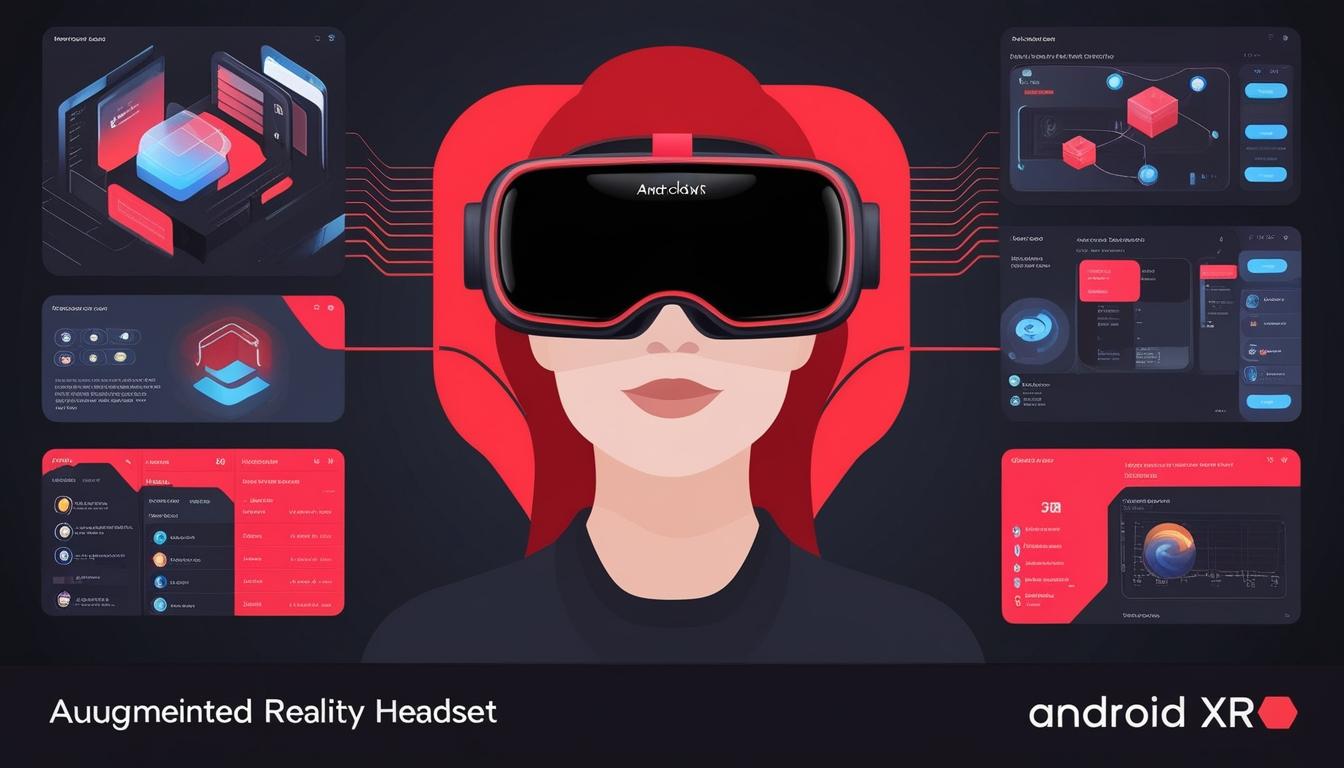
Google has unveiled its latest operating system, Android XR, designed to enhance the capabilities of augmented reality (AR) devices such as headsets and smart glasses. This new platform aims to create unique user experiences by integrating Google's AI assistant, Gemini, to understand user intent and assist in task execution.
Android XR builds upon the existing Android operating system, utilising essential components such as ARCore, Android Studio, Jetpack Compose, Unity, and OpenXR. This foundation is hoped to facilitate the development of applications that merge digital environments with the physical world. Among the proposed features are immersive experiences such as viewing YouTube videos on a virtual big screen and showcasing 3D images.
Real-world testing of prototype glasses equipped with Android XR is set to commence soon, involving a selected group of users. This initiative is designed not only to refine the products but also to ensure that user privacy is safeguarded throughout the development process.
Applications designed for Android XR will inhabit virtual spaces, incorporating 3D elements, spatial panels, and spatial audio to create an immersive environment. The platform promises multimodal interaction capabilities, allowing users to engage through both hands and eyes.
In an effort to support developers, Google has introduced the Android XR SDK, which provides a comprehensive array of tools for app creation. This includes Jetpack XR, a significant component of the SDK that features new libraries specifically tailored to XR applications, such as Jetpack Compose for XR and Material Design for XR. The SDK also accommodates app development using Unity and WebXR.
Furthermore, developers will have access to Android Studio Meerkat, which includes an Android XR Emulator. This emulator enables developers to simulate XR devices to test their applications, using keyboard and mouse navigation to explore virtual 3D environments.
Android XR will come with its own dedicated Play Store that will host applications specifically developed for the platform, as well as existing Android apps that will be spatialized without additional developer input.
The initial aim of releasing the Android XR preview is to provide manufacturers and creators with the tools to build a new ecosystem of devices and applications. Google anticipates that the first device powered by Android XR will be launched by Samsung in 2025.
Currently, both Android XR and its SDK are available in preview, and interested parties can apply for access to the platform as development continues.
Source: Noah Wire Services