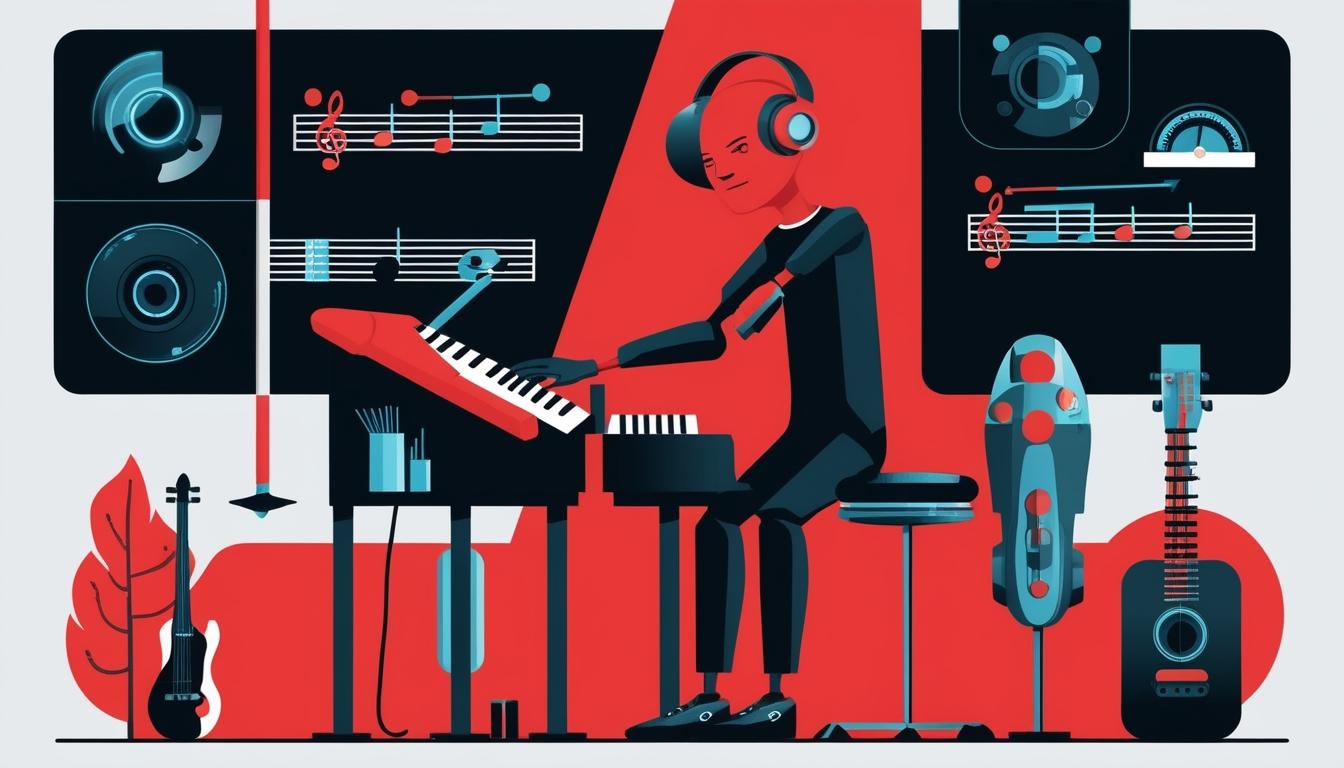
Artificial Intelligence (AI) is poised to significantly transform the music industry by the year 2025, introducing a level of sophistication that could alter how musicians approach their craft. The emergence of AI tools is expected to streamline production workflows and foster the creation of entirely new genres, setting the stage for an evolving landscape where AI functions as both a collaborator and potential competitor for artists.
As detailed by Elicit Magazine, the integration of AI in the music industry is progressing towards a point of omnipresence. In 2025, these technologies will revolutionise various aspects of music creation, making it easier and faster for musicians to produce high-quality tracks. Among the core functions of AI in this context are composition, production, and performance. AI will be capable of generating melodies, lyrics, and chord progressions tailored to specific moods or genres. Furthermore, advanced software such as LANDR and iZotope will automate processes involved in mixing, mastering, and sound design. The capability of AI to simulate live instruments and vocal performances will also enable musicians to create music that reflects astonishing realism, regardless of their performance skills or available resources.
The benefits of AI are significant for many musicians. For instance, from increasing accessibility through affordable professional-quality production to enhancing efficiency with automated processes, AI tools are enabling artists to amplify creativity and productivity. A notable illustration of this potential is the case of a bedroom producer who can now create orchestral soundtracks using AI-driven virtual instruments, saving both time and money in the production process.
However, as the integration of AI in music creation progresses, it also presents ethical and practical challenges. Key concerns include copyright issues regarding ownership of AI-generated music, questions surrounding the authenticity of AI-created compositions, and fears of job displacement for session musicians and audio engineers as automation continues to improve. It is recommended that musicians use AI to enhance their creativity rather than replace their artistic instinct, thereby developing a unique voice that distinguishes them from algorithm-driven compositions.
As indicated by Elicit Magazine, collaborations between humans and AI are expected to transition from novelty to a mainstream practice by 2025. This new partnership model will not only redefine music conception and production techniques but will also incorporate real-world applications such as co-writing songs, remixing, and enhancing fan interactions through AI chatbots and tailored playlists.
Independent artists, in particular, stand to benefit greatly from the advancements in AI. With limited resources, they can leverage these tools to compete more effectively with larger production houses. For example, an independent musician who utilised AI mastering tools successfully produced a viral professional-quality album without the resources of a big studio.
To prepare for the future of AI in music creation, musicians are encouraged to educate themselves about emerging tools, integrate AI thoughtfully into their workflows, and maintain a focus on the emotional and narrative aspects of their work. This approach ensures that while they harness the efficiency of AI, the core human experience and storytelling—the elements that resonate deeply with audiences—remain intact.
In conclusion, the continuing evolution of AI technology in the music industry is set to empower musicians and challenge existing workflows in 2025 and beyond. By addressing the accompanying ethical implications, artists can embrace new creative opportunities and keep pace with an industry that is rapidly transforming. No matter how advanced AI becomes, the essence of music creation will fundamentally rely on the human touch, a sentiment that resonates strongly in the current discourse surrounding AI's role in the arts.
Source: Noah Wire Services