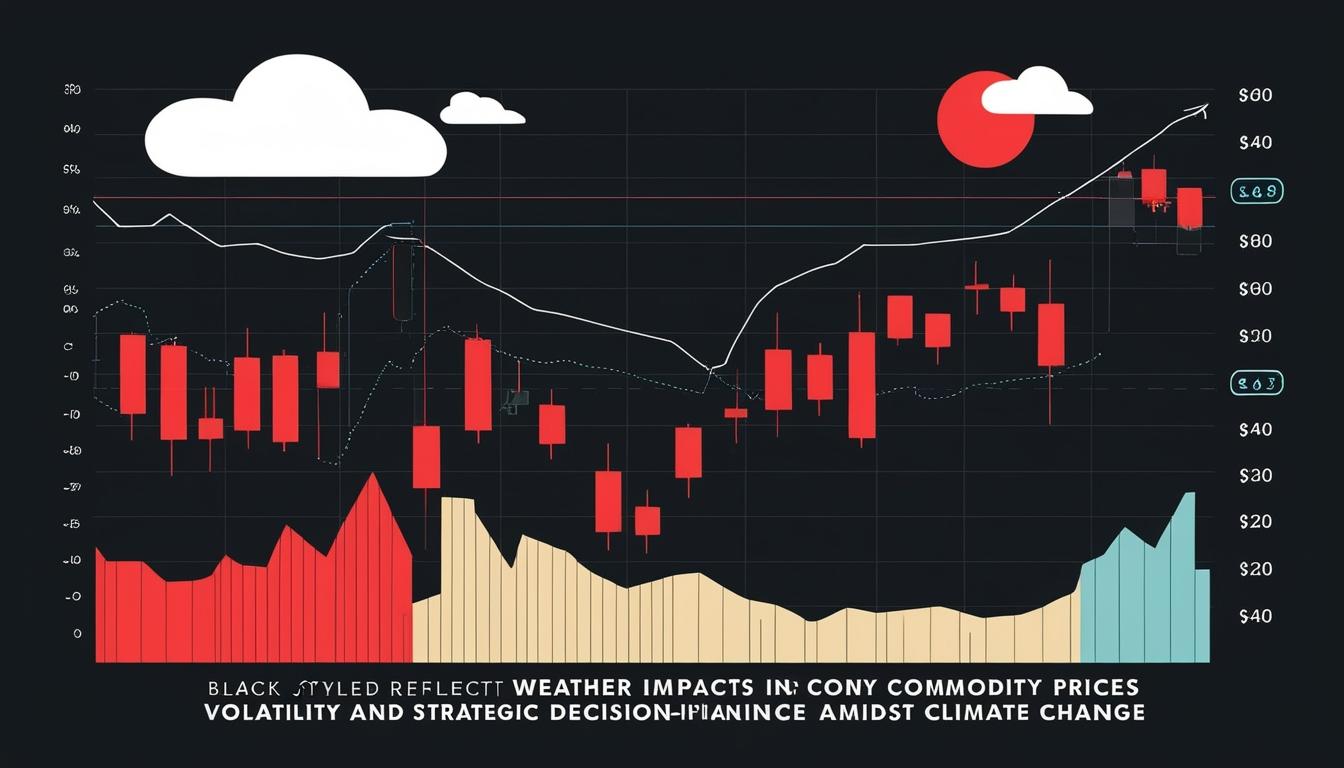
The financial sector is undergoing rapid transformation, driven largely by advancements in technology and the evolving dynamics of trading. A critical area that is gaining attention is the integration of weather data into financial decision-making, particularly in commodity markets. While weather influences numerous aspects of life and business operations, its potential in enhancing trading strategies remains significantly untapped.
Traders and asset managers who overlook the intricacies of meteorological data could face considerable financial setbacks. It has become increasingly essential for investors to adapt their methodologies to include climate science principles, allowing them to better analyse weather patterns and their consequent impacts on market behaviour. The Observer reports that this shift in perspective is not merely beneficial but necessary to remain competitive in a landscape defined by heightened market volatility and evolving environmental conditions.
The connection between weather phenomena and market fluctuations, particularly in the commodity sector, is evident. Crop yields are heavily influenced by conditions such as rainfall and temperature, where extreme weather events can severely disrupt production. The increased unpredictability of climate patterns has led to a surge in commodity price volatility, even surpassing the fluctuations traditionally seen in cryptocurrency markets. Since 2020, factors such as disrupted supply chains coupled with frequent extreme weather occurrences have contributed to dramatic price increases across various commodities.
However, an understanding of weather data alone is insufficient for successful trading. The capability to interpret and contextualise meteorological information is crucial for informed investment decisions. For example, knowledge of temperature or humidity does not inherently facilitate profitable trading. Instead, traders must discern how these factors impact yields, supply chains, and, ultimately, commodity pricing.
A recent instance exemplifies the strategic advantage of leveraging weather models in market operations. In August 2024, projections of impending frosts in Brazil led to a rise in coffee prices by approximately 8–9 percent. Traders who relied on mere speculation were caught off guard when weather models indicated minimal frost risk, allowing astute traders to capitalise on the misjudgment by opening short positions as the market corrected.
Furthermore, in assessing the effects of hurricanes on LNG production and transport on the Gulf Coast, satellite-derived GFS models provide critical insights. This data enables analysts to project potential impacts on gas prices in both Asia and Europe, paving the way for more informed investment strategies.
In navigating the complexities of market volatility, financiers are increasingly turning to sophisticated modelling tools. One such technique, Monte Carlo simulations, afford traders the opportunity to predict the likelihood of climate events, such as droughts, and their cascading effects on agricultural outputs and commodity prices. Scenario analysis utilises historical and predictive data to evaluate the repercussions of various weather conditions, making it particularly valuable in forecasting long-term risks, such as desertification or changes in climatic cycles.
A case in point is the significant decline in Robusta coffee production in Vietnam in 2023, which was directly linked to drought conditions exacerbated by the El Niño phenomenon. Such scenarios illustrate how a comprehensive understanding of weather-related risks can be instrumental in mitigating potential losses.
As climate change reshapes the market landscape, the investment community must embrace novel strategies that integrate climatic variables into their decision-making processes. Recognising the value of advanced models that synergise meteorological and economic data is becoming indispensable. Those who succeed in harnessing this wealth of information are positioned to lead the market in an era defined by climate volatility, turning challenges into lucrative opportunities.
Source: Noah Wire Services