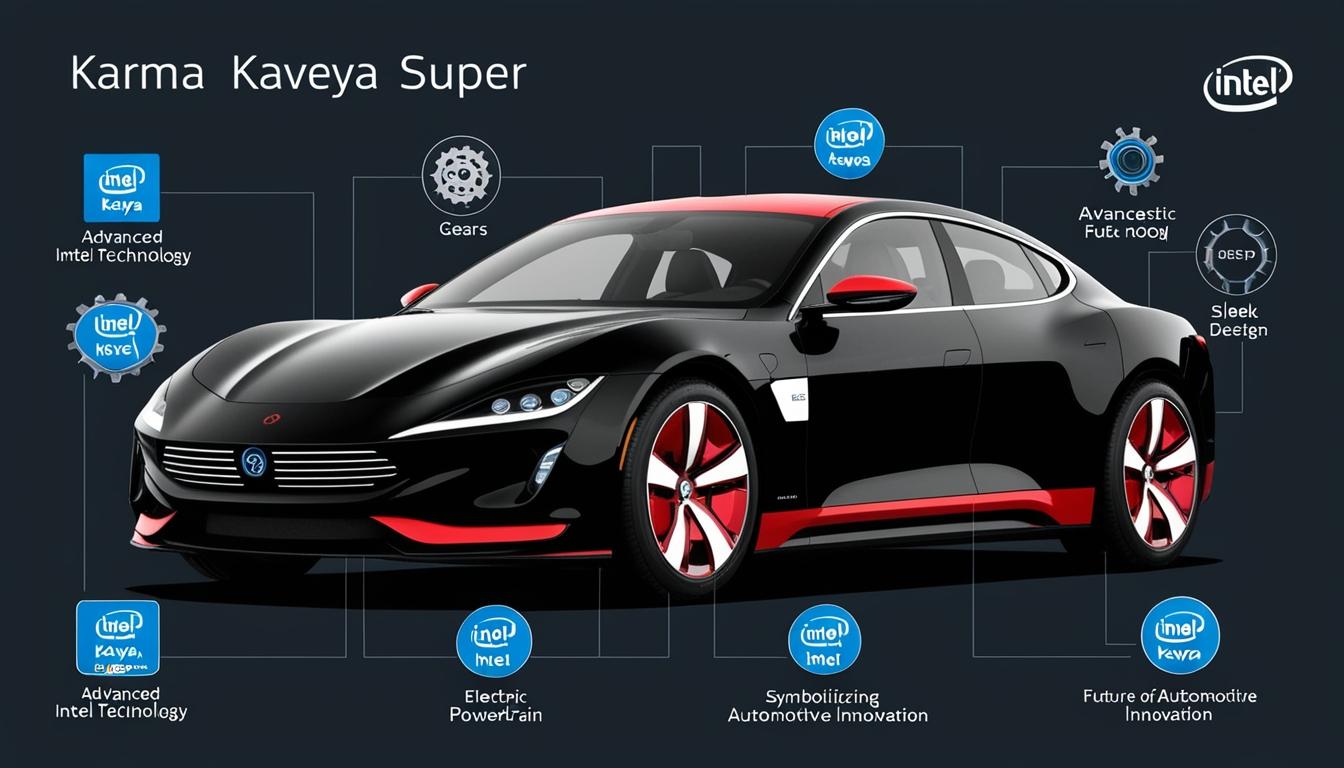
Karma Automotive, based in Irvine, California, has announced a strategic collaboration with Intel Automotive aimed at developing an advanced Software Defined Vehicle Architecture (SDVA). This initiative is set to underpin the capabilities of upcoming Karma vehicles, starting with the highly anticipated 2026 Karma Kaveya super-coupe. The collaboration marks a significant advancement in automotive technology, focusing on creating open standards that can be utilised across the industry to support the ongoing transformation of the automotive landscape.
The partnership is set to be showcased at the Consumer Electronics Show (CES) in 2025, where Karma Automotive plans to demonstrate the tangible benefits of SDVA, particularly in improving powertrain performance and range efficiency. Marques McCammon, President of Karma Automotive, will take the stage alongside Jack Weast, an Intel Fellow and Vice President of Intel Automotive. The duo will highlight how Intel’s cutting-edge technology—including AI-enhanced high-performance computing, intelligent power management, and software-defined zonal controllers—can contribute to a more sustainable and profitable future in automotive manufacturing.
Speaking about the collaboration, McCammon stated, “Developed in bilateral partnership with Intel Automotive, Karma Automotive’s SDVA technology will be a gamechanger for our vehicles starting with the 1,000HP+ Karma Kaveya due in 2026, offering unbeatable advantages across a wide range of fronts including computing speed and power, upgradeable functionalities and vehicle connectivity, ease of manufacture, vehicle safety, and, as we’re demonstrating at CES, powertrain performance and efficiency.” He emphasised the significance of creating an open ecosystem for SDVA in transforming software development practices, which could ultimately benefit the entire automotive sector.
At CES, held at the Venetian Hotel in Las Vegas, Karma will present its co-branded inverter developed with Intel. This device is responsible for converting the direct current (DC) supply from the vehicle's batteries into alternating current (AC), and it will showcase Optimal Pulse Pattern programming aimed at improving the efficiency of the vehicle's electric motors (E-motors). This demonstration will feature a simulated dynamometer test showcasing various driving profiles—including Highway, City, Park, and Charge—illustrating critical metrics such as wheel torque, wheel speed, power output, and overall efficiency.
The projected energy savings and potential range increases resulting from the application of these technologies will also be on display. Delving into technical specifics, renderings will depict the arrangement of Intel’s technology within the Karma Kaveya super-coupe, detailing the locations of essential components such as E-motors, inverters, batteries, wiring, zonal controllers, and high-performance computers.
Through these initiatives at CES and its collaborative efforts with Intel, Karma Automotive aims to lead the charge towards a more advanced and connected automotive experience as it navigates the complexities of future vehicle design and manufacturing.
Source: Noah Wire Services