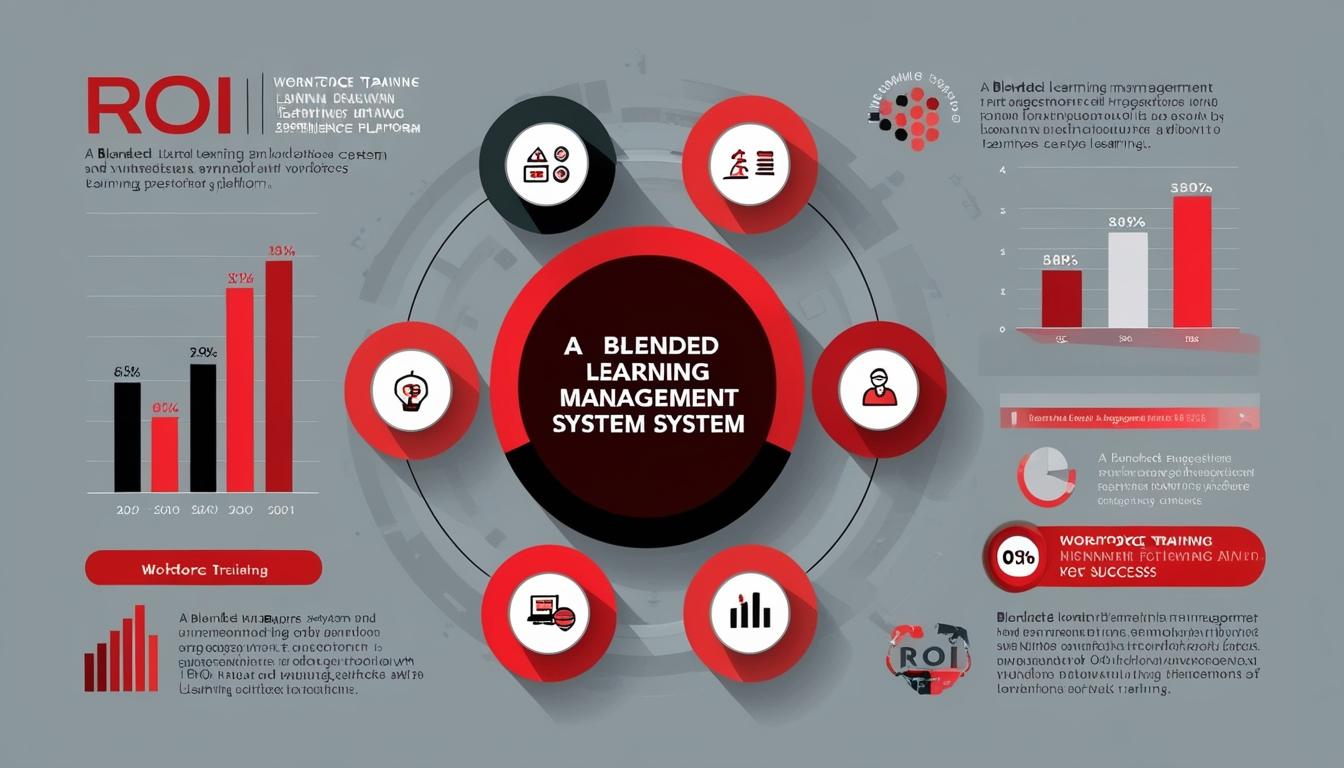
Organisations today are increasingly prioritising learning and development (L&D) as a crucial component for upskilling their workforce and enhancing overall business performance. The emergence of blended Learning Management Systems (LMS) alongside Learning Experience Platforms (LXP) marks a significant evolution in training methodologies, merging structured, compulsory training with flexible, learner-driven development pathways. This approach aims to improve business outcomes, including customer satisfaction, operational efficiency, and ultimately, profitability.
The interdependency of these systems raises the pressing question of measuring Return on Investment (ROI) effectively. Creating a well-defined framework is essential for organisations to connect their L&D initiatives with concrete business results.
To begin measuring ROI, it is crucial for organisations to first establish clear training objectives and success metrics. Key queries should focus on specific business challenges the platform aims to address—such as enhancing leadership skills, improving compliance, or bridging technical skill gaps. Furthermore, organisations need to track metrics like completion rates and learner engagement to evaluate success. For instance, should the objective be to improve leadership readiness, one might look at the rate of employee promotions following targeted training completion as a success indicator.
In addition, measuring training engagement and completion rates is pivotal. A blended LMS and LXP solution promotes enhanced learner engagement by offering a combination of mandatory LMS-driven content with more flexible, on-demand learning options provided by the LXP. Engagement metrics such as course completion rates, login frequencies, time invested in learning, and learner satisfaction scores yield valuable insights into employee buy-in for the training initiatives.
Another critical aspect in justifying ROI is linking training outcomes to job performance. The ability of the training to enhance employee performance directly influences ROI. This entails tracking improvements in productivity, accuracy of task completion, and error rates post-training. For example, Hampton Roads Transit successfully rolled out leadership training via their LMS while utilising the LXP for optional skills-based courses, resulting in noticeable improvements in leadership readiness and job performance across teams.
Evaluating cost savings and efficiency gains from the training initiative provides a direct measure of ROI. Key areas to examine include reductions in training costs attributable to online learning, decreased onboarding times, and reduced turnover rates linked to enhanced job satisfaction stemming from investments in employee development. For instance, calculating the cost benefits from a 20% reduction in onboarding time can illustrate the financial returns of streamlined training solutions.
Moreover, analysing employee retention and engagement offers valuable insights. A blended training solution fosters a learning culture that can enhance employee satisfaction and motivation, ultimately leading to higher retention rates. Tracking turnover and employee engagement metrics through surveys and performance reviews before and after the implementation of training solutions will help organisations quantify the impact of their investments.
The effective use of data and analytics is integral to proving ROI as well. Blended LMS and LXP systems generate actionable data points—like course completion rates, engagement levels, and skill progression—that organisations can leverage to create insightful ROI reports. For example, if leadership training results in a measurable increase in productivity, organisations can calculate its monetary impact on the bottom line.
Finally, demonstrating the long-term impact on organisational goals is an important aspect of showcasing ROI. Factors such as workforce agility, the ability to innovate and solve problems effectively, and maintaining a competitive edge by attracting and retaining top talent all contribute to the strategic value of investing in employee development.
In conclusion, while the landscape of L&D continues to evolve with the advent of blended LMS and LXP solutions, organisations have an opportunity to leverage these systems to drive meaningful results. Measurement of the ROI from such investments can provide a clearer understanding of their impact on business performance, aligning training initiatives closely with strategic organisational outcomes.
Source: Noah Wire Services