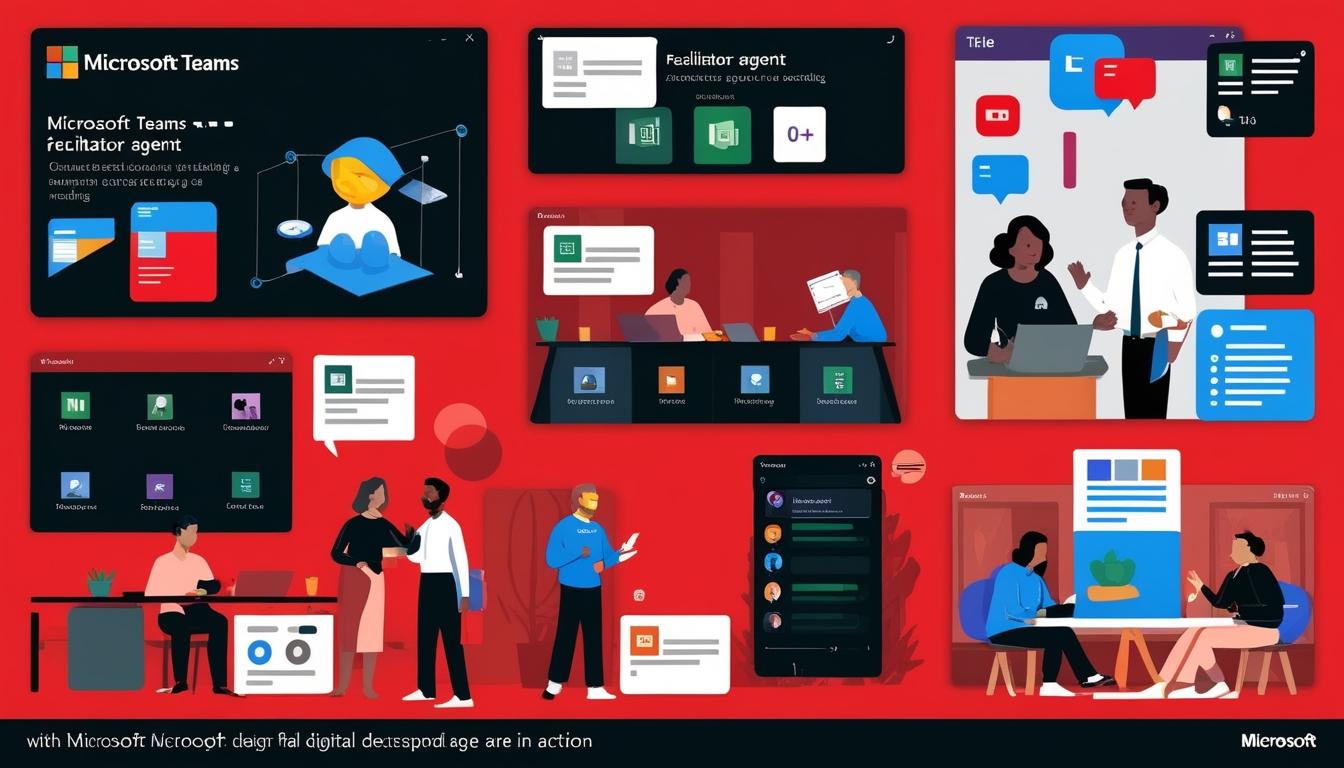
At the recent Microsoft Ignite 2024 event, the company showcased its commitment to enhancing productivity through artificial intelligence (AI) technology. Central to this initiative was the introduction of the Facilitator Agent, a new AI tool developed for Microsoft Teams, designed to streamline meeting processes and improve collaboration.
The Facilitator Agent is built to assist teams by automating note-taking during meetings and chats. It is part of a broader strategy by Microsoft to integrate AI tools into its products, aiming to reduce the manual effort associated with administrative tasks within organisations. As described by Microsoft, this agent leverages data from Teams and large language model technology to facilitate more productive conversations and interactions in the workplace.
Currently, the primary function of the Facilitator Agent is to take contextual notes during meetings, allowing participants to concentrate on the discussion at hand. Microsoft has indicated that by 2025, the agent will expand its capabilities to include managing meeting agendas and moderating discussions. However, as of now, this tool primarily serves as an intelligent notetaker, presenting updates to a shared notes panel rather than individualised notes.
In terms of functionality, the Facilitator is designed to identify different speakers and automatically update the notes as discussions unfold. This approach ensures that all ideas discussed in the meeting are captured and that final decisions are accurately documented in real-time. Nonetheless, the tool does come with certain limitations. For example, it is currently unavailable for use in external meetings and chats, and users are unable to apply retention labels to AI-generated notes.
To utilise the Facilitator Agent, users will need to meet specific prerequisites. A base Microsoft 365 licence with Teams access is required, along with a Microsoft 365 Copilot licence, which is priced at £30 per user per month. The technology is still in its “preview” phase, requiring users to join the Microsoft Teams Public Preview program, which allows for early access to new features.
For administrators, enabling the Facilitator Agent involves navigating to the Teams Admin Centre, where they can manage access for team members, ensuring that only certain users, if desired, can utilise this new tool. This functionality is crucial for organisations that may wish to control the rollout of AI capabilities among their teams.
Once activated, the Facilitator can be employed in both meetings and chat settings. In chat, it compiles a dynamic summary of discussions organised by topic, tracks decisions made and action items, and can provide a list of outstanding questions. Team members can easily access these notes through the Teams app, fostering collaborative efforts even outside of formal meetings.
When it comes to meetings, the integration of AI notes is similarly straightforward. The agent automatically updates and displays a shared notes panel, enabling all participants to edit and contribute information collectively. This feature requires that transcription be enabled throughout the meeting to capture content accurately.
Post-meeting, users can access their AI-generated notes through the chat section of Teams, where they will be stored alongside a full transcription of the meeting. These notes are saved in the Microsoft Loop page, allowing participants to review and amend them as needed.
Security and compliance remain a priority for Microsoft in the deployment of the Facilitator Agent. The solution is designed to align with company policies regarding data security and management, with audits and lifecycle retention policies in place to ensure compliance. However, some features offered by Microsoft Purview for compliance management are not yet supported for AI-generated notes.
In summary, the Facilitator Agent signals a significant move towards integrating AI into daily business practices. It aims to enhance the efficiency of meetings and collaborative efforts, reducing the time spent on administrative tasks and allowing teams to focus more on the content of their discussions. As this technology evolves, it is expected to offer even more robust features that could reshape how teams prepare for meetings, assign tasks, and progress on projects.
Source: Noah Wire Services