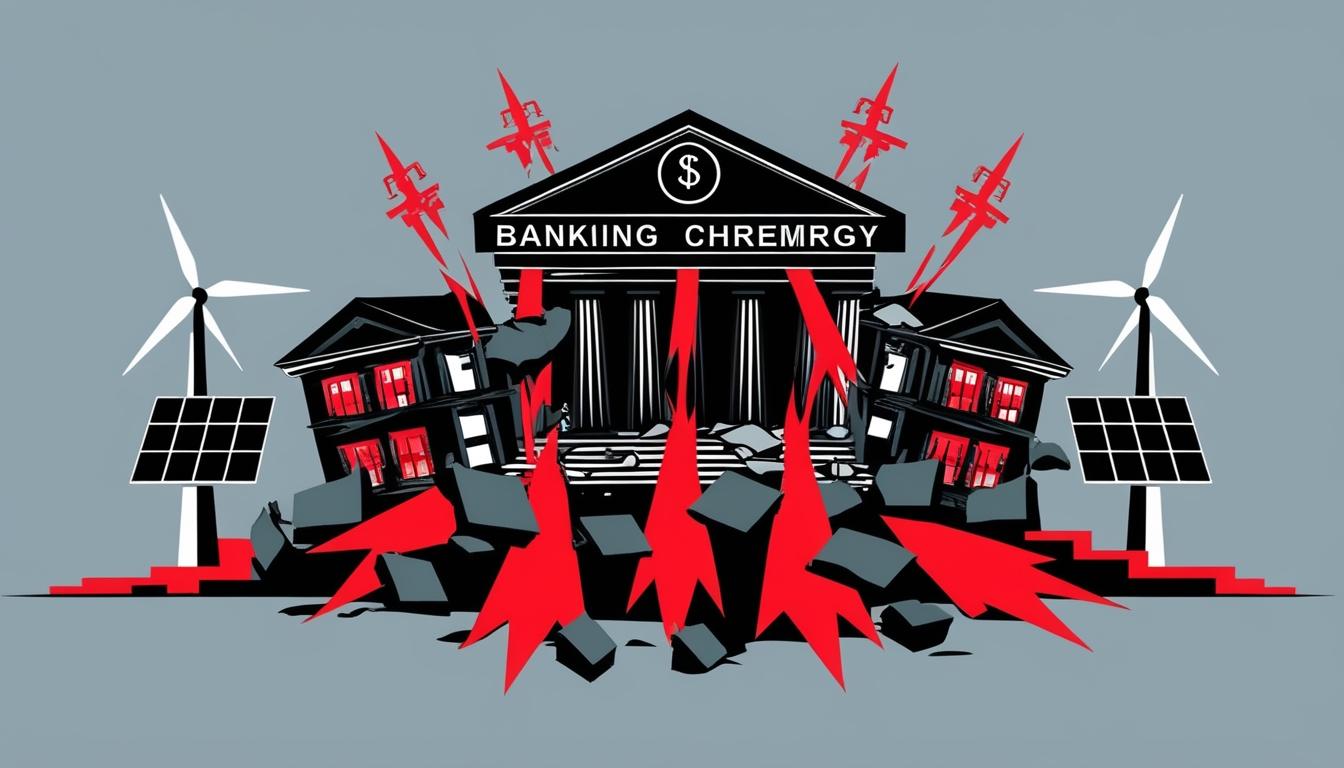
The recent developments surrounding bank oversight and energy policy in the United States highlight significant shifts in the financial and technological landscape. In 2010, Congress enacted the Dodd-Frank Wall Street Reform and Consumer Protection Act, intending to mitigate risks in the financial sector and avert another crisis. A critical component of this legislation mandated that the Federal Reserve conduct "stress tests" to evaluate the resilience of major banks under hypothetical crisis scenarios. However, the specifics of these tests remained largely opaque, leading to growing concerns within the industry regarding their fairness and transparency.
In July, a coalition of financial institutions raised alarms about the Federal Reserve's alleged non-compliance with the Administrative Procedure Act due to a lack of public consultation over its stress-testing models. On Christmas Eve, these concerns culminated in a lawsuit against the Fed, asserting that the current stress test process is fraught with inconsistencies, which result in unpredictable requirements for capital maintenance. The banks contend that clearer, more logical rules are necessary to foster a stable financial environment.
Responding to these pressures, the Federal Reserve indicated its intentions to enhance transparency around its models. Just prior to the filing of the lawsuit, the Fed announced forthcoming adjustments to its stress test programme, which will allow banks to provide feedback on the models utilised in these evaluations. The Fed's recent shift towards improving transparency has been partially attributed to an evolving legal landscape, influenced by recent Supreme Court rulings that have imposed greater scrutiny on bureaucratic practices.
Meanwhile, another area poised for transformation is the clean energy sector, particularly amid the transition to the incoming Trump administration. Concerns have emerged regarding potential cuts to clean energy investments implemented under President Biden’s Inflation Reduction Act. Nonetheless, an analysis by The Wall Street Journal posits that due to President-elect Trump’s focus on artificial intelligence (AI) and cryptocurrencies—both of which require immense energy resources—there could be an unexpected surge in clean energy investments. This prospect arises from the inherent demand for reliable energy sources capable of supporting these energy-intensive technologies.
The dynamics of the energy market may shift significantly, as traditional investment strategies give way to market-driven developments. AI proponents are reportedly eyeing nuclear energy solutions, while a workforce of electricians is gravitating towards regions experiencing an AI boom, indicating a potential fusion of technological advancement and energy production growth. This evolving narrative could reshape the environmental landscape, even as past administrations’ policies come under scrutiny.
The atmosphere in Washington, D.C., reflects the impending changes as the year comes to a close, leading some to describe the city as a "ghost town." Amidst these transitions, individual stories emerge, such as a personal note from staff at Reason Magazine, introducing a new puppy named Huckleberry amidst the quiet in the nation’s capital.
These events encapsulate a crucial moment for both financial regulation and energy policy, as more transparent banking practices could influence market stability, while shifts in clean energy investment strategies may signal a new chapter marked by an increasing reliance on technological developments.
Source: Noah Wire Services