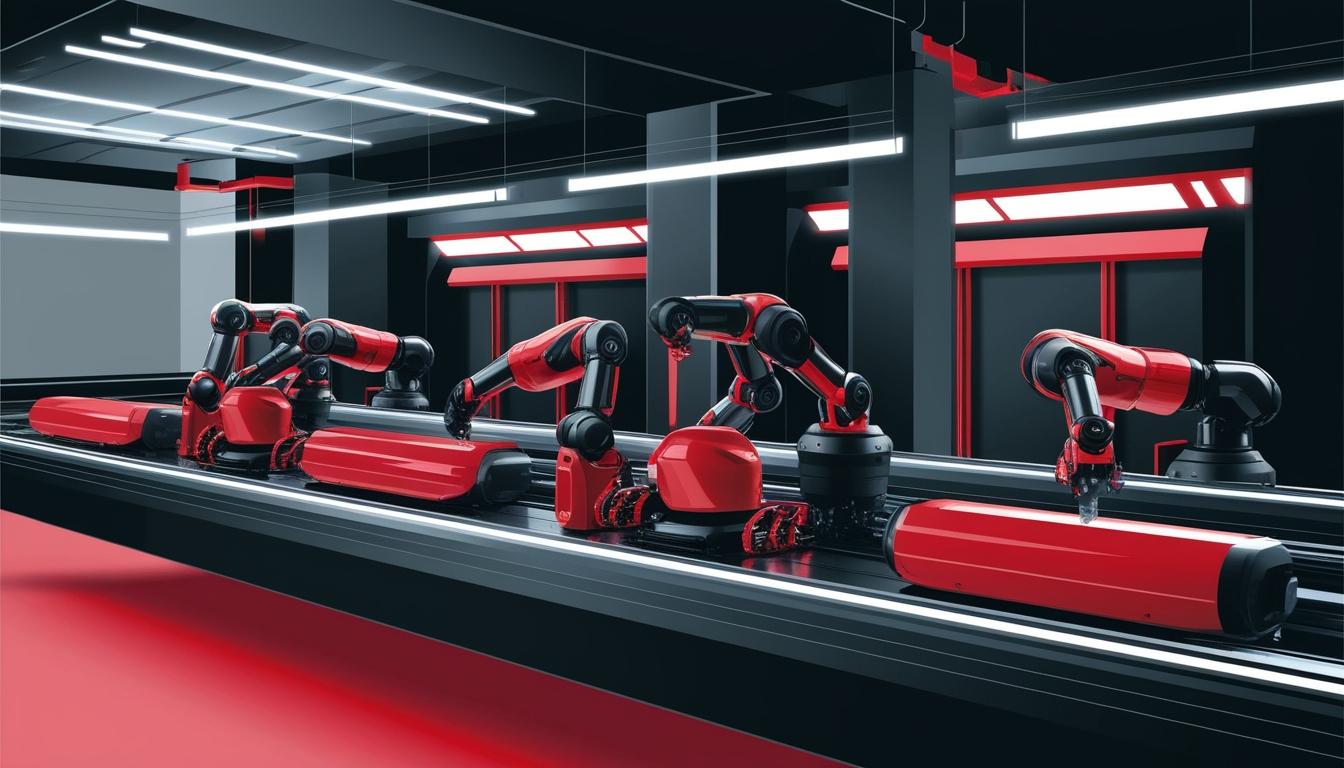
The landscape of motion control technology is undergoing significant evolution, propelled by the emergence of innovative solutions such as smart conveyance systems and machine-integrated robots. These developments are expected to create new opportunities for suppliers in the sector, despite facing economic challenges like high interest rates and sluggish demand over the past year.
Samantha Mou, a research analyst with Interact Analysis based in China, highlights the resilience of the global machinery industry amid these challenges. According to her insights, while the industry grapples with excessive inventories affecting the sales of automation components, particularly motion control systems, there remains a robust interest in emerging technologies.
The shift towards smart conveyance technologies (SCTs) is notable, with the market experiencing substantial growth. SCTs come in two formats: linear and planar systems. The linear smart conveyance market has surged from $237 million in 2020 to an expected $488 million by 2023, with projections indicating that sales will exceed $1.1 billion by 2029. The planar technology, although currently smaller in its sales figures, is in the trial stage, having generated nearly $20 million in 2023.
Mou's research indicates that the adoption of SCTs has intensified in sectors such as food and pharmaceuticals, with recent market dynamics showing a rapid penetration into the battery and electronics industries, particularly in Asia. The number of suppliers in the SCT market has also nearly doubled since last year, driven by the continuous innovation in this arena. Recent contributions include Taktomat, a German manufacturer which has introduced a new linear smart conveyor system powered by SEW Eurodrive components, targeting applications primarily within the automotive sector.
The growing competition and expansion of the supplier base for linear smart conveyance systems, particularly in the Asia-Pacific region, reflects ongoing research and development efforts. Interact Analysis' findings suggest a busy year ahead, with multiple companies planning to launch new SCT products.
Parallel to the advancements in smart conveyance systems, the market for machine-integrated robots is also poised for considerable growth. Defined as robots fully integrated into machine control platforms, these robots are allowing manufacturers to streamline production processes and improve efficiency. In 2023, nearly 20,000 machine-integrated robots were shipped globally, with the largest portions of shipments going to the EMEA region (41%) and the Americas (31%).
The market for these robots is anticipated to grow at a compound annual growth rate (CAGR) of 14.6% between 2023 and 2029, despite its current smaller size compared to standard industrial robots that see annual shipments exceeding 520,000. One significant driver of this trend is the chronic shortage of experienced engineers in the industry. By integrating robot and machine controllers, the complexity of programming is reduced, enabling a unified development environment attractive to engineers and operators.
Additionally, manufacturers and machine-builders are increasingly undertaking the creation of robotic systems in-house, allowing for customisation and potential cost savings. The trend has propelled partnerships across the sector, with notable collaborations such as Rockwell Automation's partnership with autonox Robotics and its prior agreement with Atom Robot. Siemens is also engaging in new cooperation agreements, expanding its portfolio of programmable robots.
As the demand for digitalisation, flexibility, and ease of use in manufacturing processes rises, both the smart conveyance technology and machine-integrated robots are expected to solidify their presence within the machinery industry. Suppliers are seizing the opportunity to implement strategies to navigate potential future growth cycles, positioning themselves to capitalise on demand when it returns.
With all eyes on these advancements, the motion control sector appears set to navigate its current challenges while exploring new avenues for innovation and market penetration.
Source: Noah Wire Services