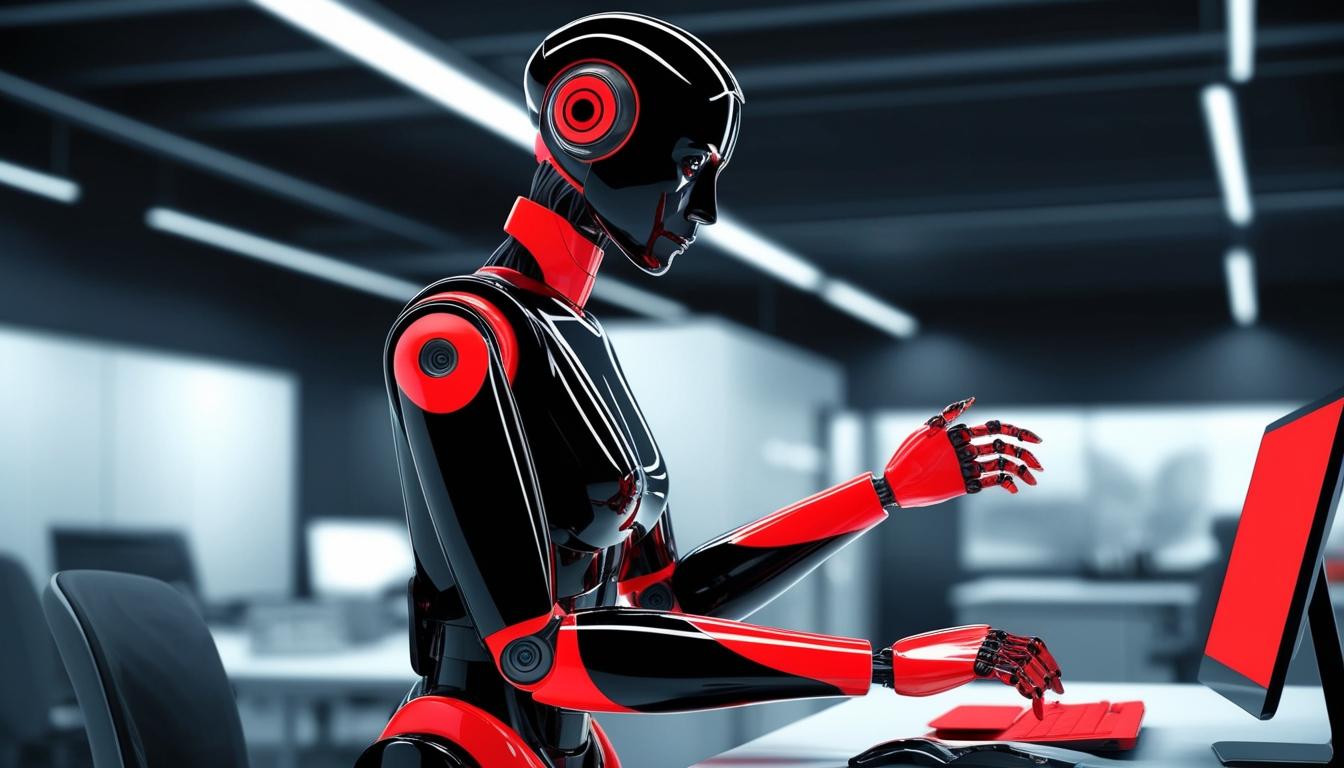
The landscape of humanoid robots is evolving rapidly as technological advancements promise to integrate them into various business sectors within the next few years. Recent insights from “Live Science” suggest that, while initial incarnations of these robots have been limited in functionality and market availability, the next generation is likely to witness significant enhancements in capabilities.
Presently, the market offers only a handful of humanoid robots, with their applications largely confined to menial tasks. Current commercially available models are described as slow and cumbersome, predominantly suited for lifting and moving heavy items. However, industry projections indicate a shift on the horizon, with expectations that by 2030, humanoid robots will become more adept, bringing higher reasoning abilities and increased efficiency to the workplace.
Experts in the field express both caution and optimism regarding these advancements. The report specifies that, despite decades of speculative advancements, many companies have struggled to deliver on their ambitious claims. Currently, only one humanoid robot from a comprehensive list is actively employed in a working environment.
As humanoid robots become more sophisticated, a group of seven notable models have been identified as front-runners in the push for commercial viability. These robots, distinguished by their unique features and proposed use cases, reflect a range of competencies and development stages:
Optimus Gen 2: Tesla's latest humanoid robot made headlines during the company’s “We, Robot” event in October 2024. This model showcased its capabilities by serving drinks to attendees, although it was later revealed that human operators controlled its dexterous hands.
Atlas: Developed by Boston Dynamics, Atlas is recognised for its remarkable balance and agility, capable of navigating various terrains and performing acrobatic feats. However, it remains in the prototype phase with no set commercial availability.
Ameca: Engineered Arts' Ameca stands out with its lifelike facial expressions and modular design, although it is not equipped for locomotion yet. Instead, it can be configured with wheels or sold as a torso and head combination.
Figure 02: This humanoid robot is notable for its conversational abilities, supported by OpenAI’s language models. Its capacity to learn from interactions marks it as one of the leading advanced humanoids, though its release date is still unclear.
Phoenix: Sanctuary AI’s Phoenix focuses on dexterity, with fingers intended for intricate tasks. Currently in the prototype stage, it has undergone limited piloting in retail environments.
Digit: Manufactured by Agility Robotics, Digit is already deployed in industrial settings, performing repetitive tasks such as moving boxes in warehouses. Its design emphasizes utility, albeit at the cost of a more aesthetically friendly appearance.
Apollo: A development from Apptronik, this humanoid robot is designed to adapt to various roles, from caregiving to industrial work. Currently at the prototype stage, collaborations with Mercedes-Benz to test its capabilities have begun.
The consensus among experts anticipates a commercial evolution in humanoid robots, with a blend of skills and applications emerging that harness advances in artificial intelligence. As technological breakthroughs continue to unfold, the integration of these humanoid robots into business practices is set to reshape the workforce significantly, promising efficiency gains and potential changes in job dynamics in the coming decade.
Source: Noah Wire Services