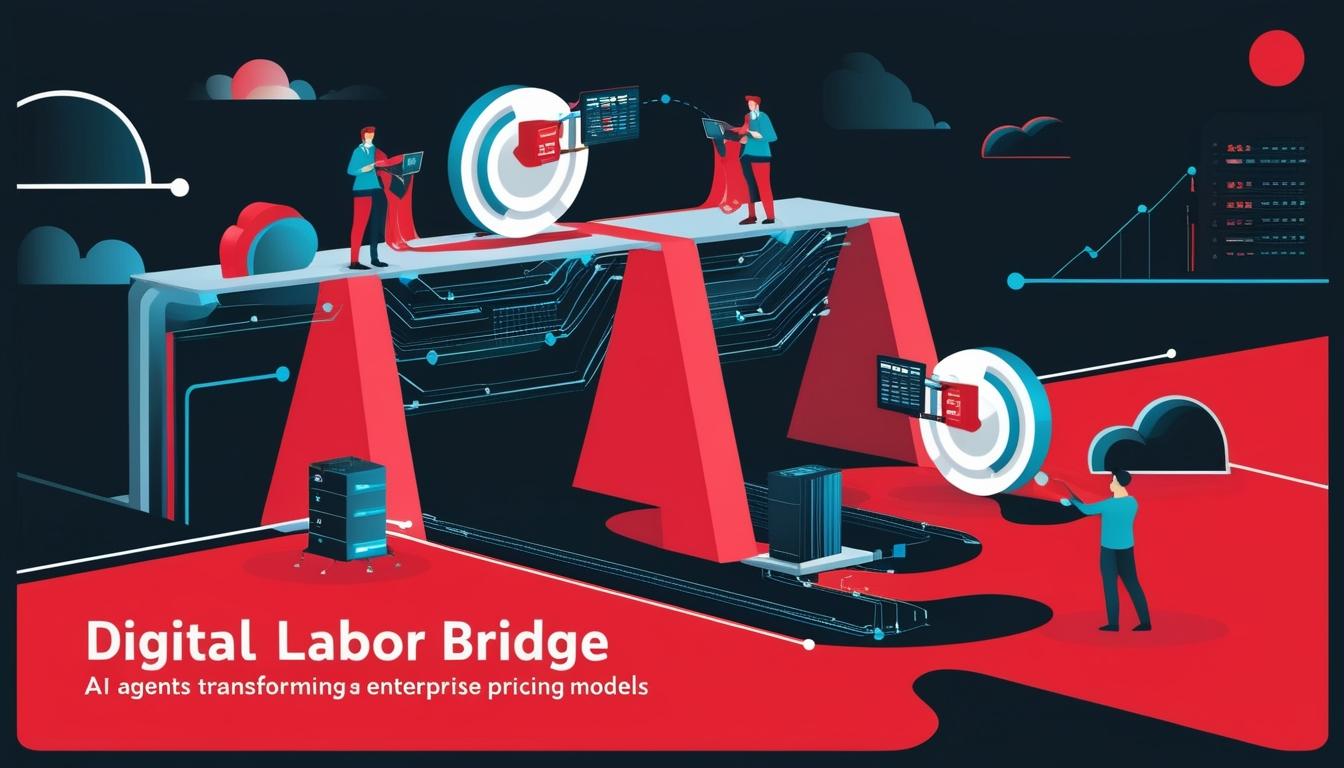
In a rapidly evolving technological landscape, industry giants such as Microsoft, Oracle, and Salesforce are racing to encourage their customers to embrace the latest developments in agentic artificial intelligence (AI). As the business world stands on the brink of a significant transformation, these companies acknowledge that failing to adapt to this trend could result in their obsolescence.
The integration of AI represents a paradigm shift comparable to the transition from on-premise software to cloud solutions, fundamentally altering the production and procurement processes in enterprise software. Notably, the introduction of generative AI threatens existing models, particularly the conventional per-user subscription fees that have dominated the Software as a Service (SaaS) market.
A significant catalyst for this shift was a discussion initiated by industry veteran Jeff Kaplan, who highlighted insights from software entrepreneur Chris Hart regarding the obsolescence of traditional pricing methods. Hart posits that AI's capabilities enable software businesses to pivot from user-based pricing to an 'outcome-based' model, which would see customers paying for successful interactions rather than a fixed seat count. As he elaborates, "This outcome-based pricing model aligns the success of [the] business providing the AI agent with the business buying the service."
Emerging applications of this model are evident in customer experience (CX) sectors, where some companies are implementing fixed fees based on the resolution of customer service tickets. A prominent example is Intercom's AI support agent, Fin, which charges $0.99 for each successfully resolved conversation. This pricing approach raises complex considerations, as vendors may be incentivised to prioritise volume over addressing underlying issues that could potentially reduce customer inquiries.
Aaron Levie, co-founder and CEO of Box, has explored various AI pricing mechanisms, emphasising that while per-outcome models could appear straightforward, they may entail intricate administration and tracking challenges. He suggests an alternative approach: pricing AI agents akin to traditional labour but at a reduced cost, asserting that this method establishes a clearer link between the services provided and the costs incurred.
Marc Benioff, Salesforce's CEO, contends that markets for AI agents could expand dramatically, suggesting that the Total Addressable Market (TAM) for digital labour extends well into trillions. He states, "We've already crossed the bridge. And what the bridge is, is this bridge to this new world of Digital Labor."
However, this optimistic perspective has drawn skepticism from various quarters. Critics caution against simplistic extrapolation of existing models, warning that the perception of all current labour as productive may be misguided. The transition to advanced technologies historically results in the emergence of inefficiencies, leading to job redundancies. With innovations, companies often pursue margin enhancements by passing savings onto consumers, complicating the narrative around job creation versus elimination.
Levie also mentioned alternative pricing strategies such as cost-plus models and maintaining traditional per-seat charges, with the caveat that disruptive potential hinges on the context of use cases within an organisation. He noted, "Depending on the use case — and how many seats the customer would need — this model could be quite disruptive."
Conversely, former SaaS product leader and current Venture Partner at Khosla Ventures, Nikunj Kothari, has challenged conventional pricing structures, declaring that per-seat models are ineffectual in an era dominated by AI agents. He argues that the impending shift to outcome-based pricing will likely be influenced by broader comparisons to the total cost of traditional software and personnel.
As these discussions unfold, it remains clear that the future of business could be reshaped significantly through AI utilisation. Kothari suggests that a zero upfront cost model, where organisations pay solely for outcomes, could redefine operational frameworks entirely. He asserts, "To me, this doesn't seem like yet another wave of enterprise software. This feels like a generational reset of how businesses operate."
Despite the enthusiasm regarding future possibilities, challenges such as the difficulty of quantifying and measuring outcomes consistently could hinder the widespread implementation of new pricing structures. Concerns regarding financial unpredictability have historically favoured the retention of fixed subscription models, which may continue to dominate in the near future.
As the enterprise applications industry braces for disruption, dialogue surrounding the anticipated impact of agentic AI and the associated pricing models will remain critical. Insights gathered thus far indicate substantial potential for transformation, making it essential for businesses to navigate these developments with careful consideration. The ongoing exploration of how AI agents will be packaged and monetised will be pivotal in determining the trajectory of this emerging landscape.
Source: Noah Wire Services