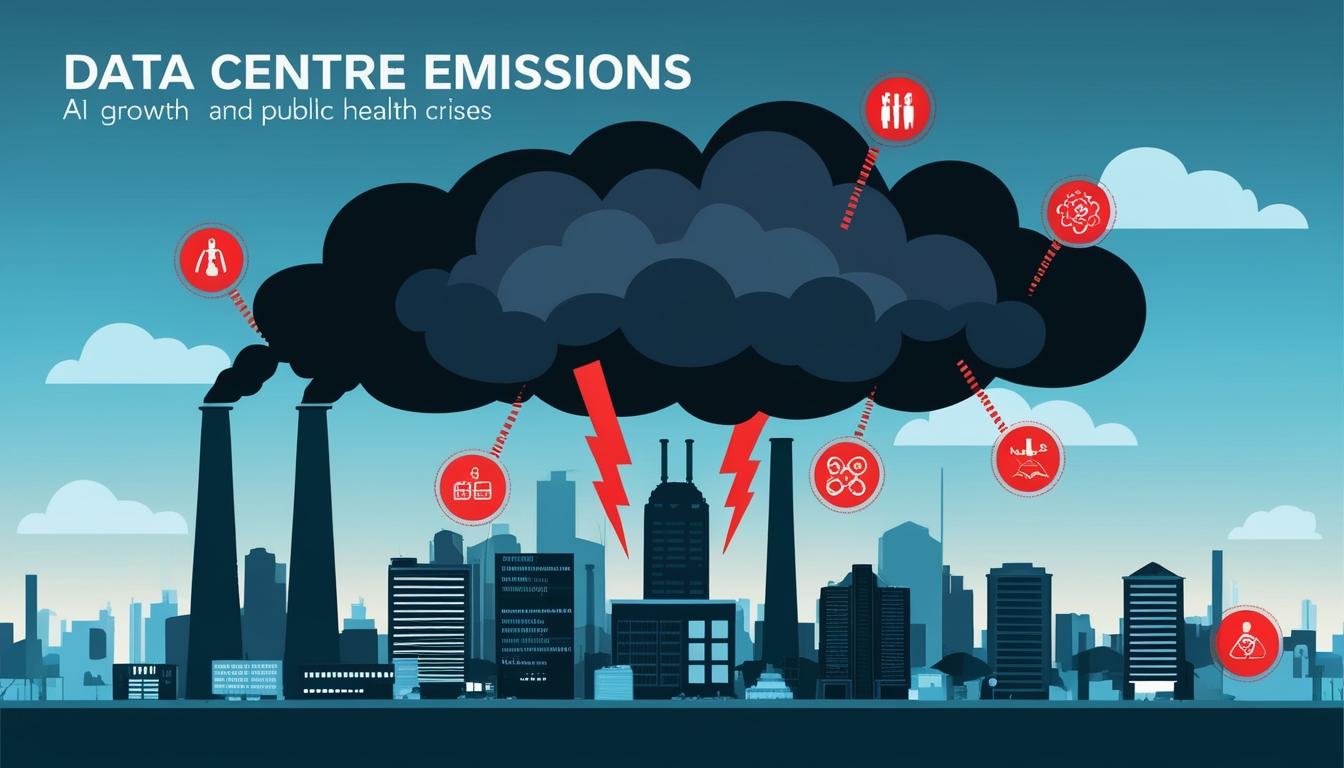
The burgeoning artificial intelligence (AI) sector may be contributing to a potential public health crisis in the United States, according to recent research led by Adam Wierman, director of Information Science and Technology at Caltech. As the number of data centres expands nationwide in response to skyrocketing computational demands, the environmental costs associated with these facilities may prove severe, leading to an estimated 1,300 early deaths annually by 2030, as reported in a study co-authored by Wierman and scientists from Caltech and UC Riverside.
The report underscores the pressing issue of air pollution generated by data centres, which are essential for powering the increasing computational power required by AI systems. The World Economic Forum indicates that computer power dedicated to AI is doubling every 100 days, necessitating a vast amount of electricity production largely reliant on fossil fuels. This energy production is linked to significant emissions of greenhouse gases, contributing to climate change and various health hazards, including respiratory illnesses and cancer-causing particulate matter.
Wierman articulated this concern, stating, "When we talk about the costs of AI, there has been a lot of focus on measurements of things like carbon and water usage. And while those costs are really important, they are not what’s going to impact the local communities where data centres are being built," in comments made to The Independent. The report details that air pollution from fossil fuel usage is a critical contributor to global health problems, affecting one in five individuals worldwide, as documented by a study from Harvard and UK institutions in 2021.
The impact of data centres has been profound, with last year's emissions estimated to rival those produced by the domestic commercial airline sector, at approximately 106 million metric tons. Additionally, generating the electricity necessary for advanced AI models, such as Meta’s Llama-3.1, has been likened to the emissions produced by more than 10,000 round trips between Los Angeles and New York City. Although some companies, including Meta, are exploring cleaner energy sources, the projected doubling or tripling of energy usage by data centres by 2028 poses significant concerns.
The report suggests regulatory recommendations, urging technology companies to disclose the air pollution related to their operations and power use. It also calls for compensatory mechanisms for communities adversely affected by the emissions. Notably, low-income populations are expected to bear a disproportionate share of the pollution's health impacts, with the researchers estimating the public health costs associated with data centres could reach approximately $20 billion annually.
The discussion surrounding the regulation of AI and its environmental impact follows ongoing debate in Washington, where the White House has recently faced pressure to expedite the construction of data centres. Although the administration has labelled some reports about this initiative as "inaccurate," a group of Senate Democrats have urged for stringent clean air and water standards to ensure technology companies do not overshadow the needs of the households they impact.
Shaolei Ren, a co-author of the report and associate professor at UC Riverside, emphasised the urgency of addressing these issues, stating, "If you have family members with asthma or other health conditions, the air pollution from these data centres could be affecting them right now. It’s a public health issue we need to address urgently."
As the AI industry rapidly evolves, the implications of data centres for public health and the environment highlight the necessity for balanced progress that considers both technological advancement and community wellbeing.
Source: Noah Wire Services