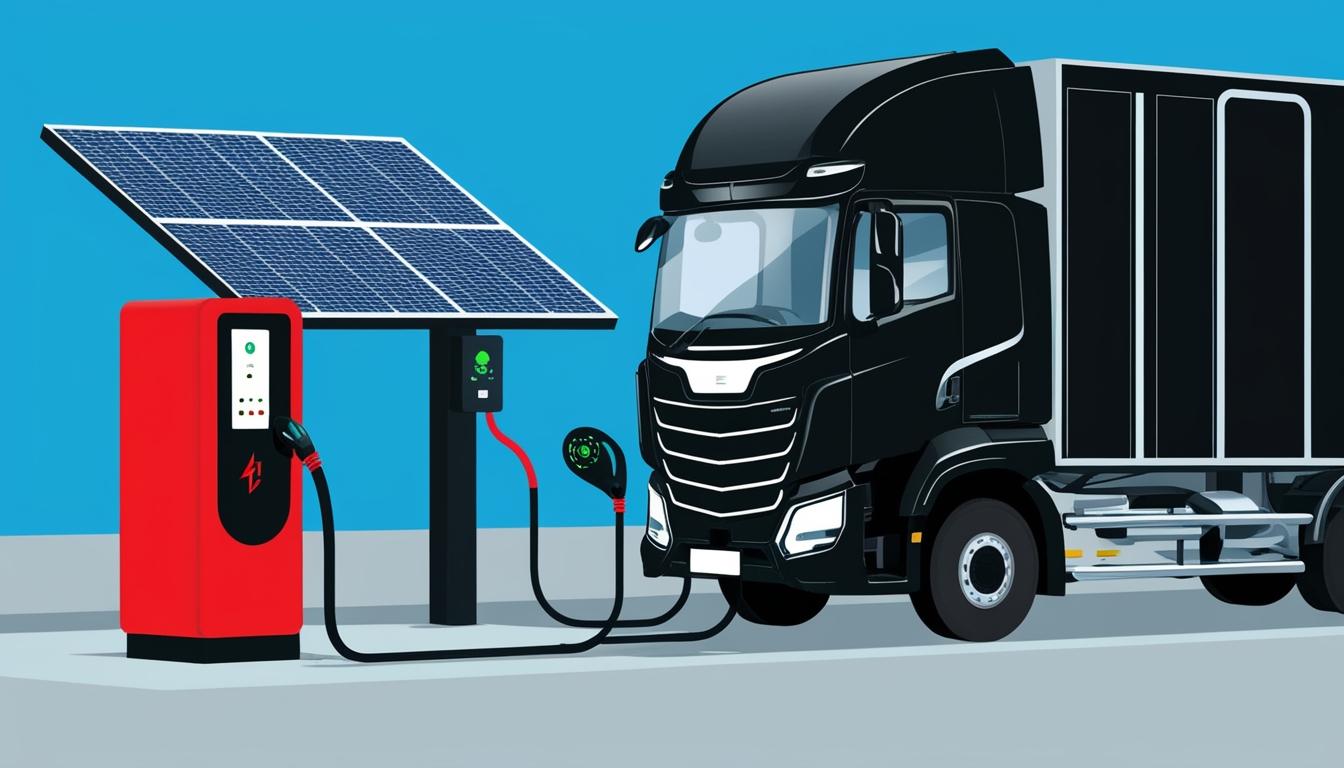
The evolving landscape of electric truck logistics is witnessing significant shifts, particularly with the adoption of solar-powered microgrids. Experts Rish Ghatikar and Michael Barnard, in a detailed analysis published in CleanTechnica, outline how early adopters within the trucking and logistics sectors can secure a competitive edge through innovative electricity pricing strategies and efficient energy management.
As major trucking logistics firms grapple with the escalating demands of electrification, they face a complex web of operational challenges and market pressures. The authors reveal that these firms, which often operate numerous depots and service locations, stand to gain significantly from microgrid technology. The concept of charging microgrids facilitates substantial cost savings through zero marginal cost energy from solar panels, enhancing profit potential for those who innovate early.
A notable emphasis is placed on the advantages of flexible energy pricing that a solar-powered microgrid provides. Currently, truck stops and logistics operations are tethered to the price volatility of diesel, operating within narrow margins of 1% to 5% on fuel sales. This constrains their capacity to boost profitability through energy sales. In contrast, charging microgrids allow operators to leverage the unique position of providing significantly cheaper, solar-derived energy, potentially below the cost per mile of diesel trucks.
The United States harbours over 577,000 registered motor carriers, with approximately 15,000 major logistics depots. However, it is estimated that only a quarter of these facilities currently possess on-site refueling capabilities. As electrification becomes more prevalent, the operational dynamics at these sites are shifting away from traditional diesel fuel towards integrated charging solutions, improving efficiency and reducing costs. The introduction of battery storage alongside solar generation at truck stops could charge around 200 vehicles daily, maximising the use of renewable energy.
Ghatikar and Barnard mapped out a hypothetical scenario for a large heavy-duty truck stop equipped with a range of technologies. This facility would effectively manage both electric and light-duty vehicles, capitalising on on-site solar energy production to significantly lower operational costs. The added benefit of battery storage systems allows for strategic energy management—charging during low-demand periods and utilizing solar generation during peak sunlight hours. This innovative setup can substantially reduce reliance on grid electricity, which often comes with higher costs.
However, the transition to electrification comes with hurdles. The authors identify that disparities in charging standards across electric trucks may limit flexibility in charging solutions. Furthermore, there tends to be apprehension regarding the charging infrastructure's ability to meet demand during less optimal weather conditions, particularly short, cloudy days in winter. To mitigate this, solutions may include augmenting battery capacity or leveraging existing diesel generators for backup power during critical operational periods.
The potential of vehicle grid integration services further complements the microgrid model, enabling trucks and logistics operations to interact dynamically with both microgrid infrastructure and the broader electric grid. This interaction could enhance grid reliability and enable renewable energy integration more effectively. With a forecast of 10% to 20% reductions in operating expenses for battery-electric trucking operators, as identified by industry leaders, the competitive landscape is set to shift dramatically.
In summation, the strategic implementation of solar-powered microgrids and energy management systems presents a paradigm shift for the truck logistics industry. By embracing these technologies early, firms could navigate the complexities of electrification more efficiently, enhancing competitive advantages and reshaping the industry's future. Both logistics firms and truck stop operators are encouraged to explore these innovations to better position themselves within the emerging landscape defined by renewable energy and electrification.
Source: Noah Wire Services