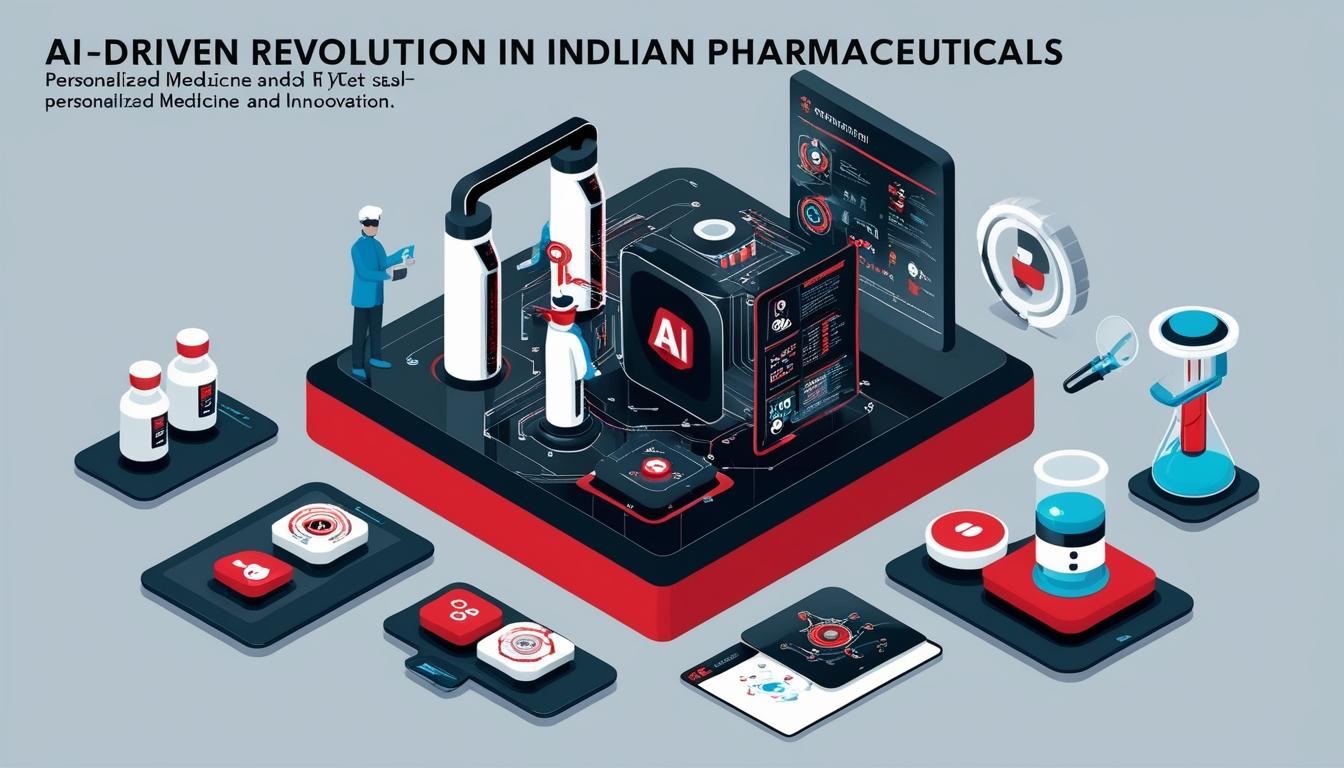
The Indian pharmaceutical industry is poised for a significant transformation as it increasingly integrates artificial intelligence (AI) and machine learning (ML) into its operations. This evolution is driven by a growing demand for personalised medicine, efficient drug discovery, and more streamlined manufacturing processes.
AI and ML technologies are set to revolutionise drug discovery and development by drastically reducing both the time and costs traditionally associated with these processes. By harnessing the power of vast datasets, these technologies can identify potential drug candidates, forecast molecular interactions, and even simulate clinical trials. This acceleration of research and development is crucial in an industry renowned for its lengthy and costly processes.
Pharmaceutical giants in India are already tapping into AI to facilitate the development of innovative treatments. For instance, generative AI models are being employed to design new drug molecules, while predictive analytics are enhancing the success rates of clinical trials. This integration not only improves efficiency but also establishes India as a formidable competitor in the global biopharma landscape.
In addition to drug discovery, AI-driven automation is transforming manufacturing within the pharmaceutical sector. The introduction of predictive maintenance solutions, real-time quality control measures, and process optimisation techniques is helping to ensure consistency in production while also minimising waste. Furthermore, machine learning algorithms are proving invaluable in demand forecasting, thereby optimising inventory management and strengthening supply chain resilience in a rapidly changing market.
The move towards personalised medicine also highlights AI's impact on patient care within the Indian pharmaceutical industry. Through the analysis of patient data, genetic profiles, and treatment outcomes, ML algorithms are enabling the development of therapies tailored to individual needs. This level of precision not only increases treatment efficacy but also enhances patient satisfaction, paving the way for value-based healthcare models.
However, the incorporation of AI and ML presents its own set of challenges. Data privacy concerns, the need for robust regulatory frameworks, and the imperative of upskilling the workforce are among the critical issues that must be addressed. Collaborative efforts involving technology companies, pharmaceutical firms, and governmental bodies will be vital to overcoming these obstacles and fostering an environment conducive to innovation in the sector.
As these trends unfold, the potential of AI and ML to reshape the Indian pharmaceutical industry is becoming increasingly evident, signalling a promising future characterised by enhanced efficiencies and personalised healthcare solutions.
Source: Noah Wire Services