Toyota Engineering & Manufacturing North America, Inc. (TEMA) has been awarded $4.5 million funding by the U.S. Department of Energy under the Advanced Research Projects Agency-Energy (ARPA-E) for a groundbreaking project aimed at enhancing the circular economy of electric vehicle (EV) batteries. The funding is allocated through the Catalyzing Innovative Research for Circular Use of Long-lived Advanced Rechargeables (CIRCULAR) Program, which seeks to establish a sustainable domestic supply chain for EV batteries, particularly in the context of reducing waste and maximising resource reuse.
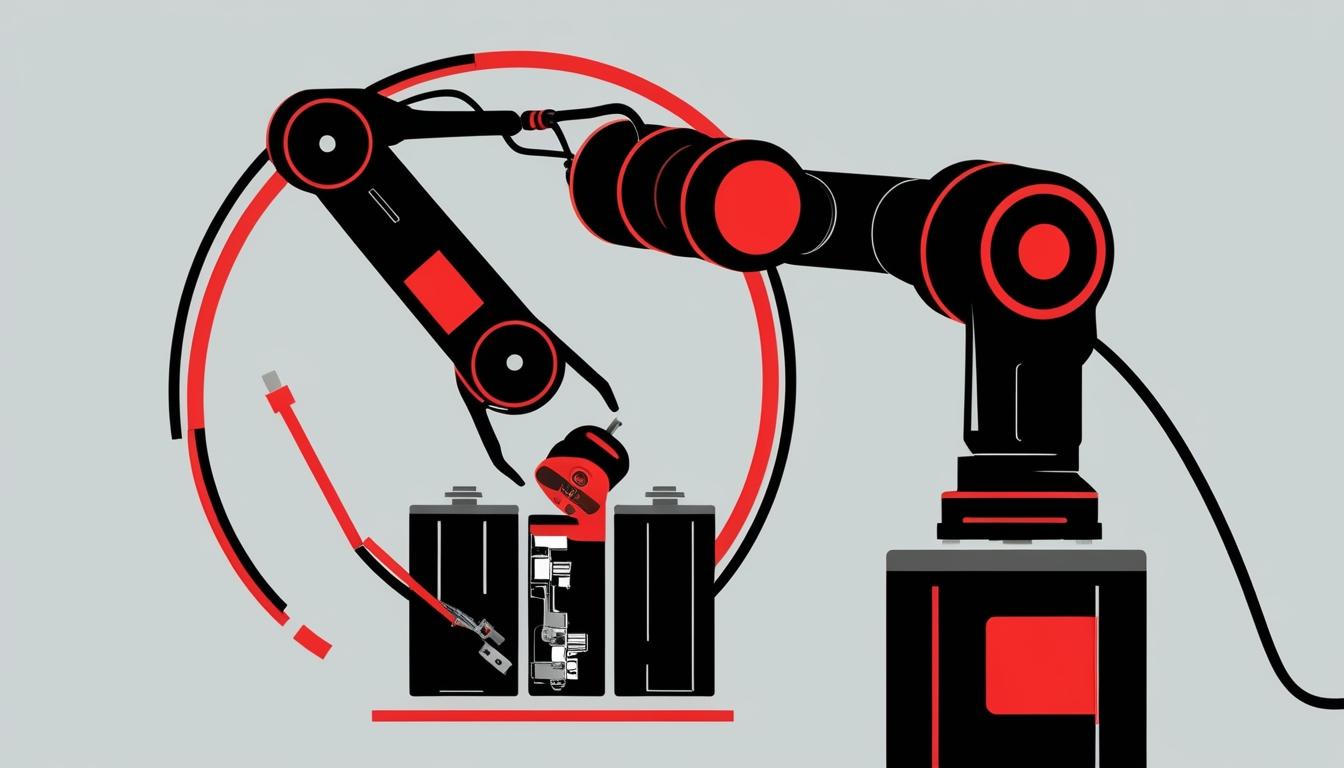
The initiative, named the Development of an Autonomous Robotic Disassembly Process for Applications in Battery Pack Circularity, will be spearheaded by TEMA's Toyota Research Institute of North America (TRINA) in collaboration with esteemed institutions including Oak Ridge National Laboratory (ORNL), the National Renewable Energy Laboratory (NREL), and Baker Hughes’ Waygate Technologies. The project's primary focus is to develop an autonomous system for disassembling spent battery packs, thereby addressing key challenges related to battery supply chain circularity.
As battery technologies evolve, the demand for efficient handling of end-of-life lithium-ion batteries is increasing. The project aims to create an industry-relevant template for a 3R facility—focused on Reduce, Reuse, and Recycle—by developing innovative tools and procedures. These will encompass an automated disassembly process, advanced diagnostic protocols for classifying battery modules and cells, and methods for refabricating used cells into new energy systems.
Nik Singh, a principal scientist at TRINA and Principal Investigator for the project, stated, “This project and program will highlight avenues for everyone to rethink their approach to battery circularity, and help prioritise the extension of battery life, facilitate battery reuse, and reduce battery waste while unveiling the appropriate pathways to achieve such priorities.” He emphasised the importance of collaboration among the teams involved, suggesting that this collective effort is crucial to the project's success.
In an effort to implement the concepts from this initiative to real-world settings, TEMA's Battery Lifecycle Solutions (BLS) Business Development Team will oversee the integration of these advancements into existing operations. Sarah Kennedy, BLS manager and lead on technology-to-market deployment, noted that this partnership represents a significant step toward developing sustainable solutions for the battery lifecycle. “By applying the innovations established from this project, we aim to create a framework that not only reduces battery waste but also enhances the circularity of our battery supply chain, supporting Toyota’s commitment to sustainability and mobility,” she said.
With the increasing volumes of end-of-life batteries expected in the near future, there is an urgent need for new methodologies to extend the useful life of battery components and reduce overall emissions per mile travelled by electric vehicles. Marm Dixit, co-lead for ORNL's contributions to the project, remarked, “We will generate processes to streamline reusing and refurbishing valuable battery cells and modules from end-of-life packs, without having to scan every single battery pack every single time.”
Both ORNL and NREL will play crucial roles in providing the technological expertise essential for achieving the project's goals. Ankit Verma, a staff scientist at NREL, described the laboratory's capabilities in advanced electrochemical analysis and machine learning, asserting that this expertise will facilitate rapid assessments of the state of health and remaining useful life of end-of-life battery components.
Contributing to the project, Neil Bloomfield, global battery segment leader at Waygate Technologies, remarked on the significance of the partnership: “This research partnership underlines our position as an inspection technology leader in the field of non-destructive testing,” he stated. With an emphasis on computed tomography and ultrasonic systems for battery inspection, Bloomfield noted the company's commitment to the energy transition, which aligns with the broader goals of this pioneering project.
As the automotive industry transitions towards more sustainable practices, the development of a robust circular battery supply chain stands to influence both environmental impact and economic feasibility within the sector. The collaborative efforts outlined in this initiative seek to pave the way for more efficient battery management, thus contributing to the overarching aim of a more sustainable future in mobility.
Source: Noah Wire Services