For over two decades, America has faced a divisive energy debate characterised by stark partisan lines: Republicans tend to back fossil fuels, including significant projects like the Northern Access Pipeline through western New York, while Democrats advocate for renewable energy sources. Nevertheless, the discourse appears to be shifting as a growing number of Republicans express support for clean energy initiatives, while some Democrats are resistant to necessary permitting reforms that could facilitate progress in this area.
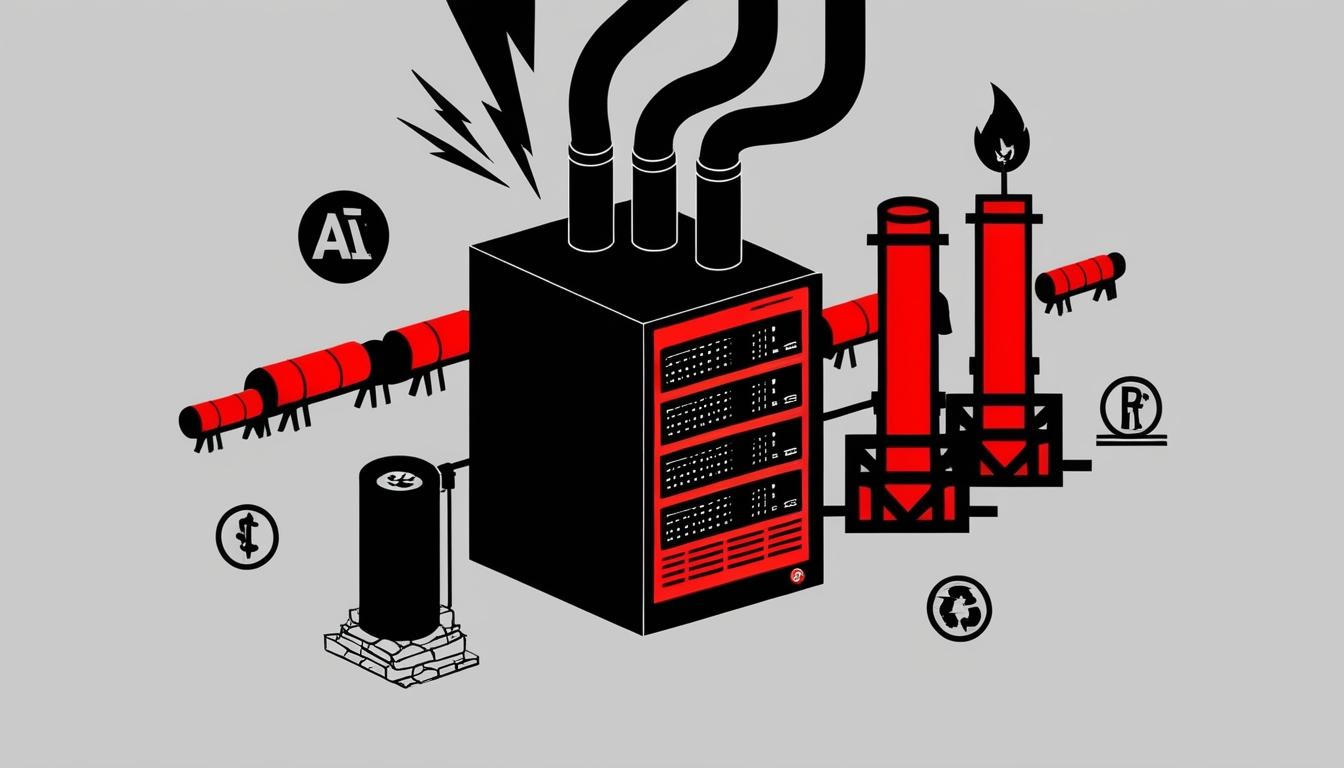
As attention turns towards the implications of artificial intelligence (AI), it becomes increasingly clear that the energy demands associated with this burgeoning technology are set to significantly alter the dynamics of the national energy conversation. AI systems are notoriously power-hungry, and projections illustrate the magnitude of this issue. According to a peer-reviewed analysis, NVIDIA, a leading provider of AI hardware, is anticipated to ship approximately 1.5 million AI server units by 2027. When operational at full capacity, these servers will collectively consume around 85.4 terawatt hours annually—exceeding the yearly energy consumption of both Switzerland and Greece.
It is important to note that not all of these servers will be deployed within the United States. However, as the country seeks to maintain its leadership position in AI, a goal that President-elect Donald Trump is likely to pursue, the US is expected to consume a significant portion of the AI chip and server market.
Despite having abundant energy resources, the current excess capacity in the US appears insufficient to meet the forecasted energy demands posed by AI technologies. The International Energy Agency (IEA) also highlights the growing energy consumption from cryptocurrency and data centres, which could potentially double their usage levels from 2022 by 2026. Additionally, the increasing prevalence of electric vehicles is projected to exacerbate the situation, thereby elevating the demand for electricity even further.
These developments have rendered the traditional energy debate largely irrelevant. Historical patterns show that American energy consumption has remained stable over the decades. This stability allowed conservatives to argue for heightened domestic fossil fuel production as a means of achieving energy independence without investing in renewable resources. In the current landscape, fossil fuels constituted approximately 84% of domestic energy production in 2023—close enough to meet the nation’s entire energy consumption needs.
Conversely, progressives have argued that the stability of American energy usage justifies investments in energy-efficiency initiatives and renewable energy sources to gradually phase out fossil fuels in favour of more sustainable, carbon-free alternatives. Gov. Hochul’s congestion tax has drawn criticism as an ineffective measure that burdens lower-income New Yorkers, despite notable advancements in fuel economy that have benefited air quality and urban living conditions.
In essence, both political factions have engaged in a debate about the optimal methods for filling a fuel tank of a certain size, each possessing valid points. However, the increasing energy requirements of AI demand an expansion of this proverbial fuel tank, a reality that negates the luxury of merely substituting one fuel source for another.
The current state of renewable energy technology has yet to meet existing demands, and natural gas production alone is inadequate to fulfil the projected needs. Consequently, the country must consider harnessing every available energy source at its disposal: natural gas, solar, geothermal, hydropower, energy storage, nuclear power, and beyond.
While some may view the aggressive expansion of energy capacity across all fronts as a formidable challenge, it remains an unavoidable necessity. AI transcends mere technological convenience—its implications extend to national security, influencing aspects such as cybersecurity, intelligence-gathering, and autonomous weapon systems. The stakes of the AI arms race are intensified by the prospect of communist China emerging victorious, fostering apprehension about living in a world where China dominates AI technologies.
In conclusion, the traditional energy debate appears to have reached its conclusion. With AI's staggering energy demands and the necessity of maintaining national security in a competitive technological landscape, the options are limited: harness all available energy sources or risk falling behind in the global race for dominance in AI technology. Neil Chatterjee, a former chairman and member of the Federal Energy Regulatory Commission, underscores the urgency of addressing this pivotal issue.
Source: Noah Wire Services