In 2022, grocery stores in the United States experienced significant food waste, throwing away approximately 5 million tons, with a noteworthy 35% diverted to landfills. The nonprofit organization, ReFed, indicated that over half of this waste—approximately 2.7 million tons—consisted of items past their expiration dates. The challenge posed by this waste has led to a potential technological solution, as revealed by recent research conducted at the Texas McCombs School of Business.
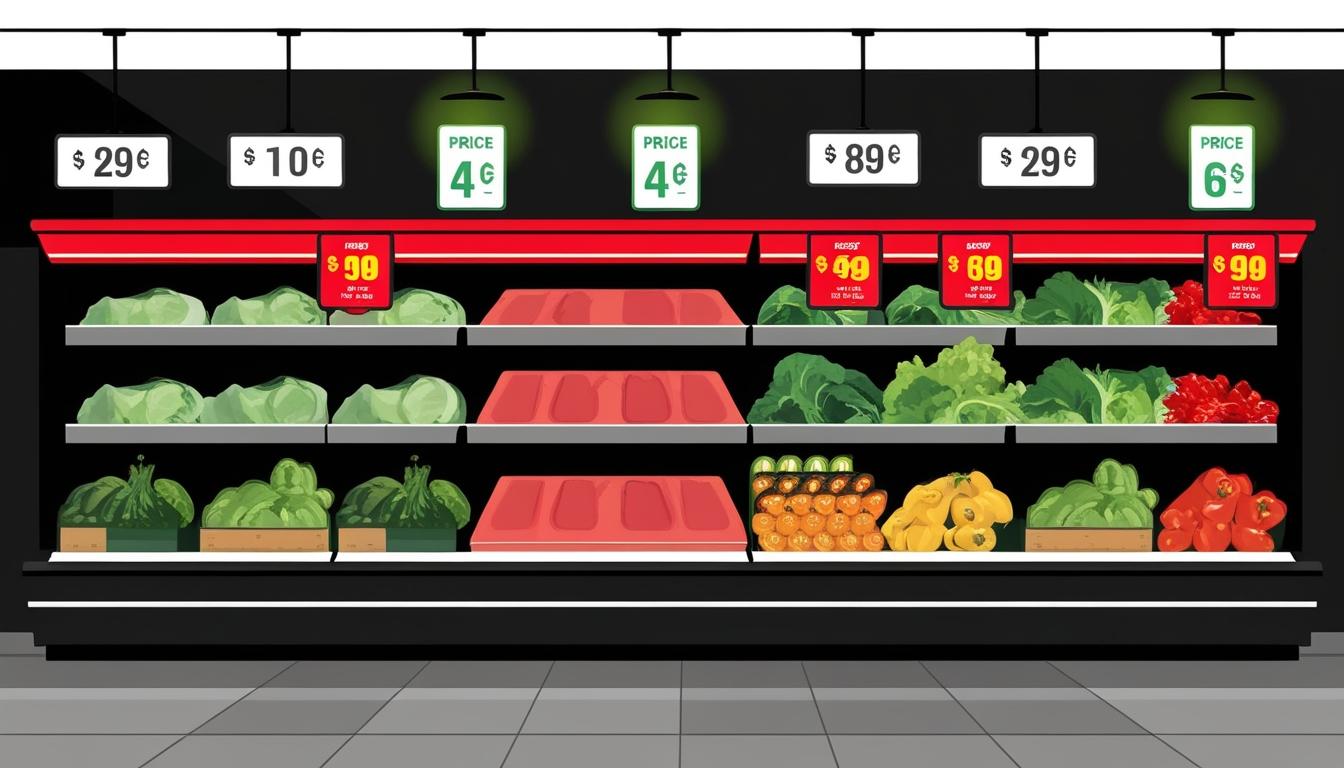
The study highlights the advantages of transitioning from traditional paper shelf labels to digital ones, known as electronic shelf labels (ESLs). This technological shift allows supermarkets to implement dynamic pricing, a strategy where prices can be quickly adjusted to move older stock before it goes to waste. Ioannis Stamatopoulos, an associate professor at Texas McCombs, detailed the benefits of this approach: “Everyone is better off when dynamic pricing is enabled. There’s less food waste and less emissions from food ending up in landfills.”
The efficiency of digital labels results in time and cost savings for grocers, as updates can be made almost instantaneously with minimal effort. In a study examining two unnamed European grocery chains during their transition to digital labels, researchers found significant increases in price adjustment frequency. One UK-based supermarket saw a 54% increase in the frequency of price changes for perishable goods. Meanwhile, a second grocery chain in the European Union, which also adopted expanded barcodes alongside ESLs, experienced an astounding 853% increase in price change frequency.
Expanded barcodes differ from standard barcodes, as they can encode a wealth of information, including packaging and expiration dates. This technology supports inventory management and allows retailers to apply discounts on items nearing their “sell-by” dates, a practice that benefits both consumers and business operations. Stamatopoulos noted, “If you’re a consumer who really, really cares about price, then you can buy the blueberries that will expire two days later and consume them today.”
However, while dynamic pricing presents promising long-term advantages, it is not without challenges. Stamatopoulos highlighted consumer apprehensions about potential price hikes during periods of high demand, echoing sentiments expressed when Wendy's announced a similar pricing strategy earlier this year, which drew public scrutiny. He observed that accurately predicting individual product demand in grocery settings is rather complex, rendering precise dynamic pricing difficult.
Investing in digital labels and the necessary infrastructure also presents a significant cost barrier for retailers. Notably, Europe currently leads in the adoption of these technologies, though the landscape is changing. Walmart recently disclosed plans to implement digital price labels across 2,300 of its stores by 2026, a move joined by other chains, including Amazon Fresh and Schnuck’s.
In related developments, the traditional barcode, a fixture in retail for over 50 years, is also on the verge of evolution. The global organisation GS1 has announced the introduction of advanced barcode systems that can incorporate sell-by dates and additional product information. Tesco has begun trialing these new QR-style codes, which promise to assist in more effective discounting strategies that could significantly reduce food waste for perishable items.
Renaud de Barbuat, president and CEO of GS1, remarked on the upcoming changes: “We’ve defined an ambition that by the end of 2027 all retailers in the world will be able to read those next generation barcodes.” The transitional challenges for traditional barcodes include adaptation costs and the ongoing utility of simple barcodes for non-perishable items.
Notably, while around 50% of UK retailers have updated checkout systems to accommodate newer multifunctional QR codes, experts such as Steven Gibbons from Electronic Reading Systems caution against prematurely discarding the conventional barcode. He remarked that although some products could greatly benefit from the added data in QR codes, items that do not require sell-by dates may continue using traditional barcodes for the foreseeable future.
By targeting food waste and enhancing inventory management through advances in pricing technology, grocers aim to navigate the complex landscape of consumer demand, sustainability, and operational efficiency.
Source: Noah Wire Services