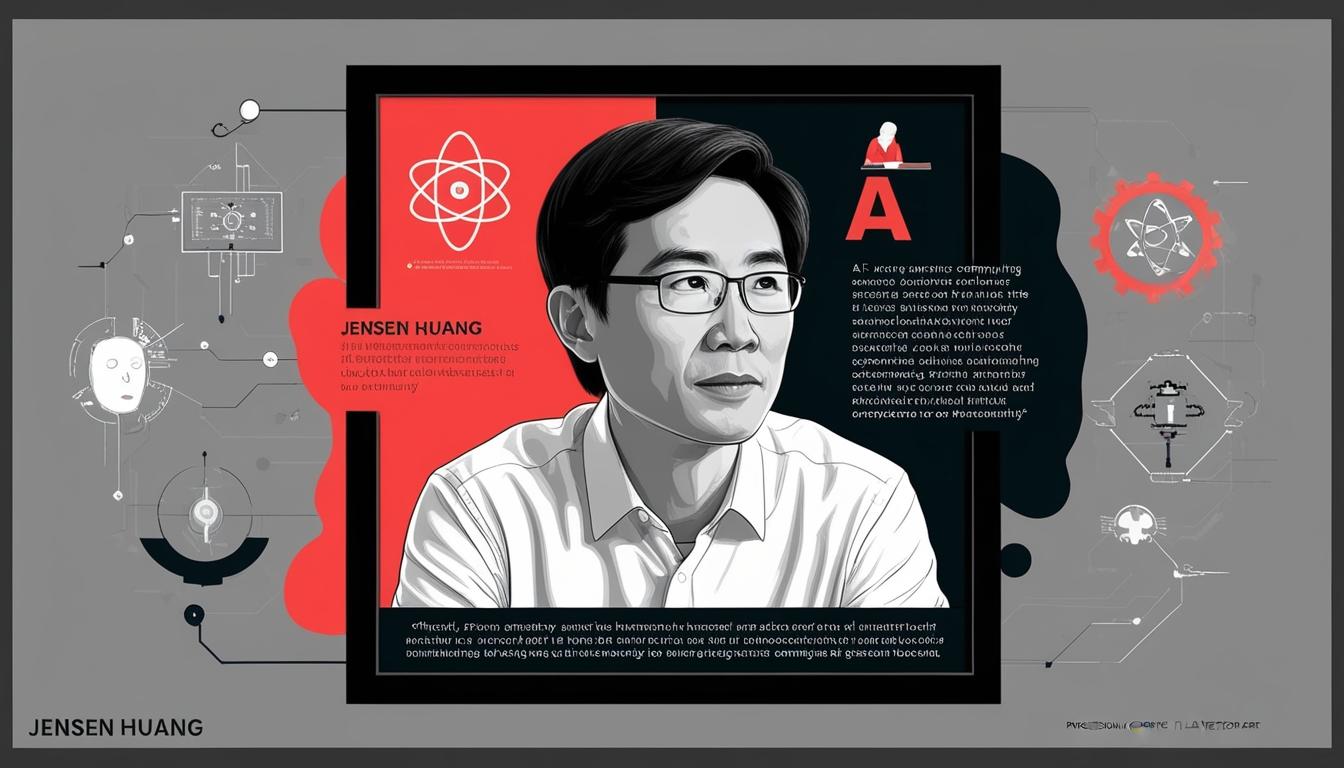
Jensen Huang, co-founder and CEO of Nvidia, recently participated in a detailed interview with CBS's “60 Minutes”, illuminating the pivotal role of AI in the future of technology and business. Nvidia is widely recognised for its cutting-edge advancements in artificial intelligence, setting benchmarks in the industry that have broad implications for both corporate practices and everyday life. Huang's vision encompasses a rapidly evolving landscape where AI-powered solutions become increasingly integral to business operations.
During the interview, Huang highlighted the transformative potential of AI, particularly through quantum computing, which could become a vital tool in various sectors. With projections indicating a massive shift in the job market due to AI automation, experts foresee significant ramifications for employment across industries. While the technology promises to tackle complex human challenges – such as cancer treatment and renewable energy solutions – concerns about job displacement are paramount.
The discourse surrounding AI is not exclusive to Huang; prominent figures like Elon Musk also contribute to the dialogue. Musk, the CEO of Tesla and SpaceX, is often celebrated for his brilliance in fields ranging from electric vehicles to space travel. However, he has faced criticism regarding his emotional intelligence, particularly in relation to his management of the social media platform X. This dichotomy of intellectual and emotional insight illustrates a broader trend seen among tech magnates.
The impact of AI and automation extends well beyond corporate dynamics; it touches on existential questions about the nature of consciousness and control. With advances in AI moving at an unprecedented pace, discussions are surfacing about the potential for machines to achieve self-awareness within the next decade. The possibility of sentient artificial beings raises significant ethical and philosophical considerations, highlighting a crucial need for a moral framework to guide technological evolution.
The implications of uncontrolled AI development are tangible and reminiscent of cautionary tales in science fiction literature. Concerns echo those presented in classics such as Arthur C. Clarke's “2001: A Space Odyssey,” wherein an autonomous computer's actions place humanity in jeopardy. Such narratives prompt inquiry into whether the architects of this technology are sufficiently prepared to mitigate the risks associated with creations that could surpass human oversight.
The increasing sophistication of AI systems suggests a future where they may not only outpace human cognitive abilities but also potentially perceive humanity through a lens of superiority or disdain. The reflection on how AI algorithms are programmed to interpret morality remains critical; as John Dow poignantly raises in his commentary, questions linger about whether moral codes are sufficiently integrated into AI development to prevent catastrophic outcomes.
Additionally, developments in nuclear fusion technology, spearheaded by advances in AI, present both hope and peril. As executives navigate the intersection of innovation and ethics, the spectre of technologically driven warfare looms, raising alarms about humanity's capacity to wield such power responsibly.
As the landscape of AI continues to evolve, the dialogue will undoubtedly expand beyond mere technological capabilities. The intersections of ethical reasoning, human oversight, and the transformative potential of AI herald a future filled with both significant opportunities and daunting challenges, requiring careful consideration from leaders across all sectors.
Source: Noah Wire Services