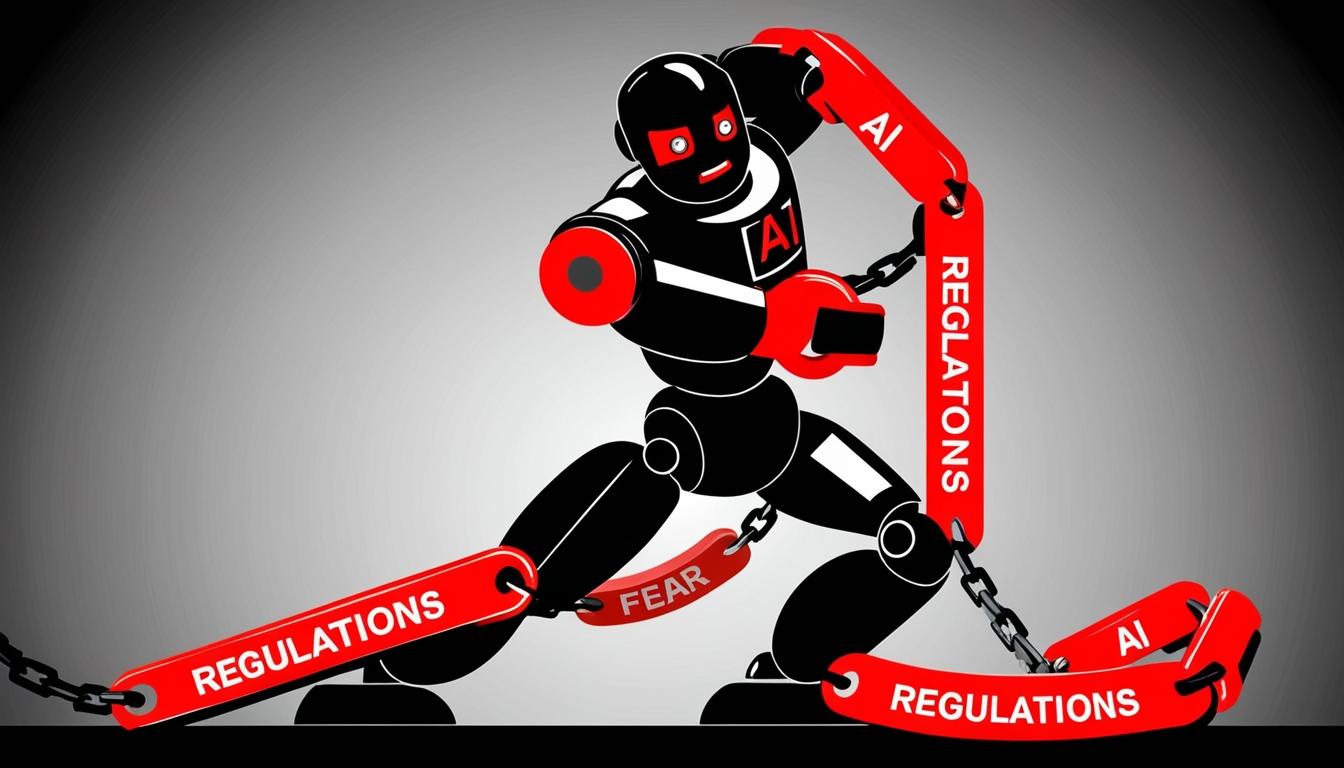
In 2024, the discourse surrounding artificial intelligence (AI) has showcased a dramatic evolution as the initial panic surrounding the technology gives way to a backlash against extreme doomsday prophecies. The conversation on AI governance has drawn significantly from the previous year’s intense and often sensational discussions, propelling both regulatory frameworks and public perception into a complex state of disarray.
The panic began in earnest in late 2022 with the emergence of ChatGPT, a generative AI model that thrust AI's potential—and its perceived dangers—into the public consciousness. The ensuing year saw a surge in alarming narratives concerning an imminent AI apocalypse, destabilising the landscape of AI discourse. Numerous influential figures emerged, advocating for stringent regulatory measures while framing AI as an existential threat. Notably, Eliezer Yudkowsky, from the Machine Intelligence Research Institute, brought significant media attention to the fear surrounding advanced AI. In a TED talk, he expressed his belief that a superintelligent AI, “could kill us because it doesn’t want us making other superintelligences to compete with it.” His remarks pushed the narrative further into mainstream discussion, leading to increased scrutiny from lawmakers and experts.
As 2024 unfolded, this extreme discourse did not dissipate but instead transitioned into a realm of heightened regulatory advocacy. This included proposals for considerable restrictions on AI development, exemplified by the “Narrow Path” initiative and a push to impose a 20-year pause on AI advancements to construct what proponents reference as necessary defences against purported risks. The Center for AI Policy outlined ambitious goals, including establishing a rigorous licensing regime and imposing strict liabilities on developers. The proposed regulations targeted open-source models, as well, signalling a shift towards potentially authoritarian oversight of the AI sector.
Amidst this backdrop of escalating fear and regulatory proposals, cautionary tales emerged in the form of the European Union’s AI Act and California's Senate Bill 1047 (SB-1047). The EU, heralding its legislative achievement in December 2023, quickly faced critiques as Gabriele Mazzini, the lead author of the AI Act, lamented the overly broad regulations that could stifle innovation. Critics, including former Italian Prime Minister Mario Draghi, highlighted that such regulatory frameworks might inadvertently create barriers that hinder tech development instead of promoting it.
California's SB-1047, under the sponsorship of Senator Scott Wiener, exhibited a similar trajectory. Initially supported by groups advocating for AI safety, the bill drew backlash from various stakeholders within the technology community. Critics claimed that its stringent provisions would be detrimental to fledgling AI enterprises, leading to a coalition against the bill that ultimately resulted in a veto from Governor Gavin Newsom. He asserted a preference for evidence-based regulation that would not unduly stifle innovation.
As we approach 2025, indications suggest a potential shift in regulatory philosophy. The newly formed Bipartisan House Task Force on Artificial Intelligence has commenced discussions that appear to favour a more measured approach, reflecting a growing reluctance to adhere to the doom-laden narratives that have permeated AI discussions. The report released by the task force acknowledged that small businesses encounter excessive challenges in meeting regulatory compliance, stating, “There is currently limited evidence that open models should be restricted.”
While the cycle of panic and backlash persists, public discourse seems to be at a crossroad. The fervent warnings of AI-induced catastrophes have fostered a complex landscape of regulatory responses that may now face robust opposition from an increasingly sceptical public and tech community alike. The potential for a reckoning regarding the influence of extreme ideologies on AI policy appears imminent, as stakeholders across sectors recalibrate their strategies and responses to the evolving dynamics surrounding this powerful technology.
As interest in AI continues to rise markedly, the debate surrounding its implications will likely intensify, requiring the integration of diverse perspectives to navigate the intricate interplay between innovation, safety, and regulation.
Source: Noah Wire Services