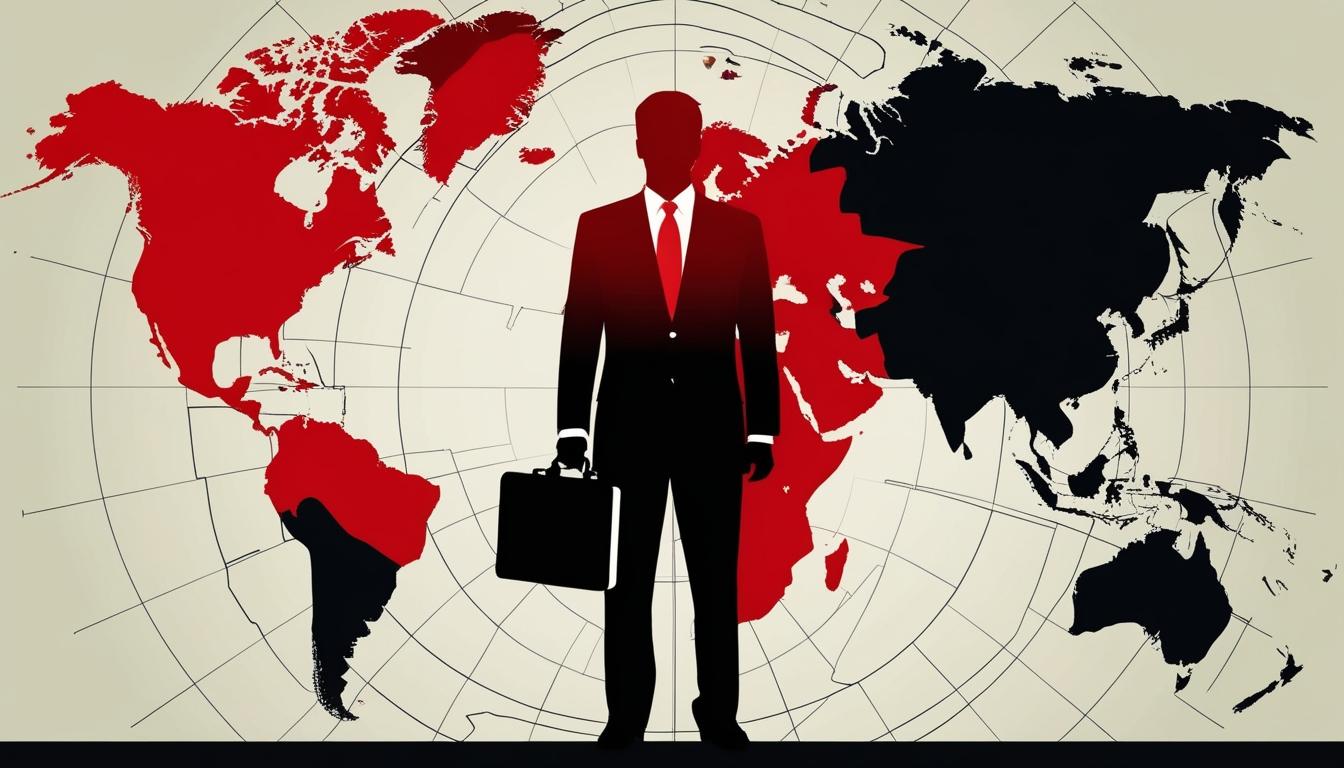
The business landscape is undergoing a significant transformation, moving away from the era of the "purposeful CEO" towards what has been termed the age of the "corporate diplomat." This shift is largely attributed to increasing geopolitical tensions, particularly between the United States and China, and the implications these developments hold for corporate strategy and operations.
In his 2022 annual letter to CEOs, Larry Fink, the CEO of Blackrock, underscored the need for business leaders to establish a clear purpose, stating that “putting your company’s purpose at the foundation of your relationships with your stakeholders is critical to long-term success." However, as the landscape evolves over the past two years amid persistent inflation and shifting political dynamics, the model of the purposeful CEO is being reassessed.
According to Marshall Manson, chair of corporate affairs at Fleishmanhillard’s UK office and author of a recent paper on this subject, the skill set for 2025's CEO must accommodate a heightened focus on international relations. “As divisions get greater on the geopolitical landscape, lots of CEOs will have to find themselves representing their company’s interest on the international arena,” Manson noted in an interview with City A.M. He implied that traditional diplomatic channels may not suffice and that corporate leaders need to craft their strategies to navigate the complexities of international trade and foreign policies, which are becoming increasingly unpredictable.
One of the catalysts for this shift is the potential re-election of Donald Trump to the presidency, with concerns that trade tensions with China could escalate further under his leadership. The situation has already seen significant actions from the Biden administration and previous government, including the banning of cotton imports from Xinjiang, China, due to alleged links to forced labour. Microsoft’s recent $1.5 billion investment, contingent on severing ties with Huawei, highlights the precarious position companies find themselves in, needing to align their operations with shifting regulatory landscapes.
A recent survey by Teneo revealed that a notable 64 per cent of executives believe Trump’s presidency will positively impact their businesses, while simultaneously, the importance of China within their corporate strategy has doubled. This dual focus presents a complex balancing act requiring CEO navigation of trade strategies that align with both their corporate interests and the geopolitical climate.
Manson pointed to the semiconductor industry as a prime example of the current challenges. With companies like Nvidia and Arm facing restrictive measures in exporting to China—one of their key markets—CEOs in this sector are under immense pressure to adapt their strategies to these rapidly changing dynamics.
Furthermore, the repercussions of these trade tensions extend beyond just high-tech firms. The alcohol industry, for instance, has experienced fallout from escalating tariffs, with significant impacts on European drinks giants facing steep penalties on exports to China. Manson describes some affected companies, such as those within the Australian wine sector, as “collateral damage” subjected to the wider geopolitical games in play.
Against this multifaceted backdrop, executives are likely to be pushed into roles more akin to diplomats, engaging in active dialogue with government entities to seek favourable conditions for their businesses. The stakes are high; ING economists have projected that Trump may impose universal tariffs that could cost American consumers upwards of $2,400 annually. Consequently, Manson suggests that response strategies could become more desperate as companies look for ways to explain potential price hikes to their consumers, even considering direct messaging about tariffs in future marketing campaigns.
As corporations brace for a period defined by increasingly complex international relations, the expectation of CEOs will pivot from merely crafting sustainable and socially responsible strategies to actively managing their positions within these broader diplomatic challenges. In the evolving corporate environment, adaptability, diplomacy, and strategic engagement will likely become critical attributes for business leaders navigating the geopolitical complexities of the coming years.
Source: Noah Wire Services