In the evolving world of cryptocurrency, the emergence of AI agent tokens is poised to make a significant impact on market dynamics through 2025, although analysts predict a decline in popularity by 2026. This outlook comes from Haseeb Qureshi, managing partner at Dragonfly Capital, who shared his insights in an interview with FXStreet.
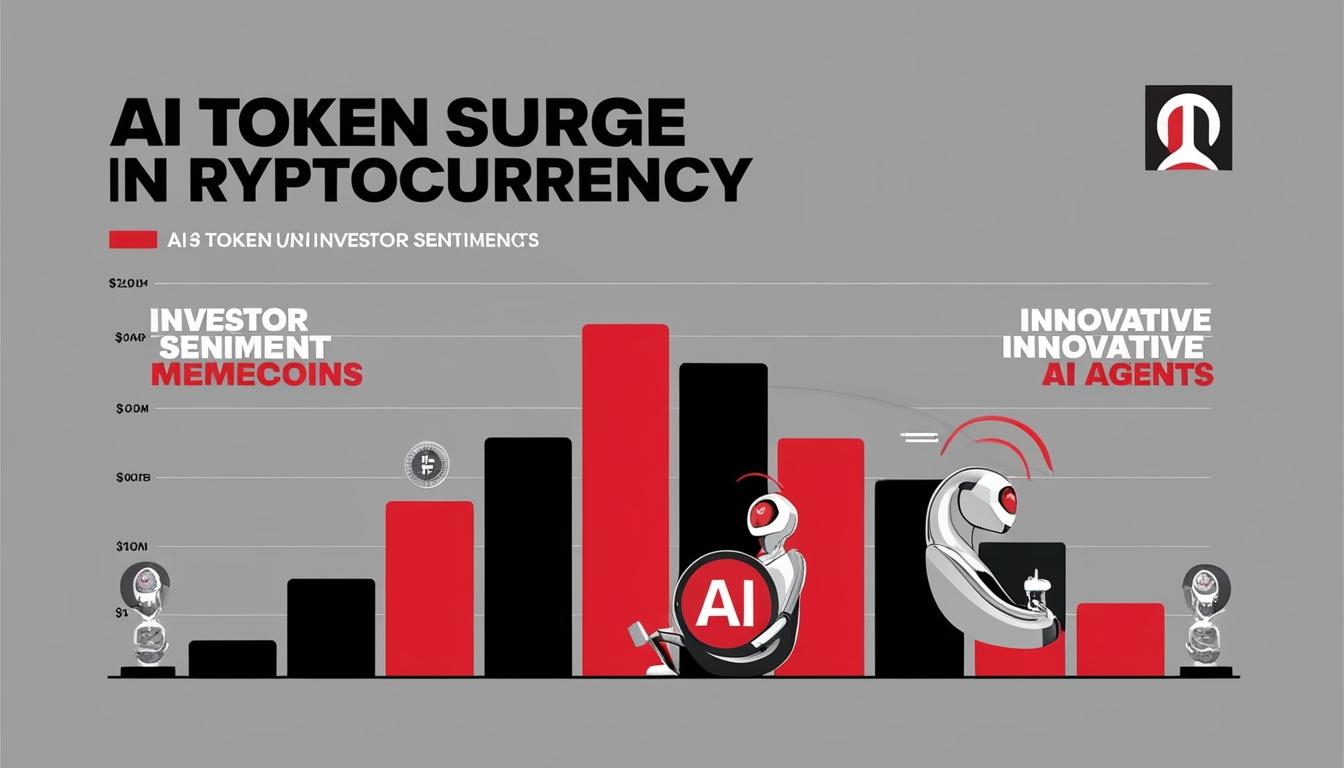
Qureshi highlighted the trend of “financial nihilism” giving way to “financial over-optimism,” delineating a shift in investor focus from memecoins to AI agent coins. He remarked, “Memecoins will continue to lose market share to ‘AI agent’ coins,” indicating a clear migration in investor sentiment towards technologies that leverage artificial intelligence for practical applications within the crypto landscape. Despite this surge, Qureshi cautioned that the enthusiasm for AI agents may not be sustainable, suggesting, “It will die off eventually.”
AI agent chatbots have gained traction within the crypto sphere for their ability to provide insights and market price predictions. Recent data from CoinMarketCap reveals notable market trends: while the total trading volume for memecoins plummeted by almost 21.5% over a 24-hour period, trading volume among leading AI and data tokens saw a notable increase of 7.95%. The market capitalisation for top AI and data tokens currently stands at approximately $54.4 billion. In a broader context, the previous month witnessed a slight dip of 1.66% for AI tokens, coupled with a more significant decline of 17.7% for memecoins.
Despite the optimism surrounding AI agents, Qureshi pointed out vulnerabilities inherent in current technologies. He warned that these agents can be easily manipulated, potentially leading to reputational damage. These risks include unfortunate miscommunications or more serious breaches, including theft of resources.
Qureshi provided specific commentary on the AI agent chatbot named “Aixbt,” which he described as “already pretty good at aggregating data about different projects.” However, he expressed uncertainty about its long-term sustainability, noting, “By next year and the next generation of agents, maybe Aixbt will hallucinate a little less, go a little deeper, have a little smarter takes. But how much will you even notice?” This implies that while advancements may occur, the general user experience may not significantly improve enough to maintain high levels of engagement.
Looking ahead to 2026, Qureshi anticipates a “sudden reversal” in sentiment towards AI chatbots, arguing that the novelty will wear off as they become ubiquitous. He stated, “Crypto takes a while to get bored of the shiny thing,” proposing that as familiarity with chatbots increases, enthusiasm may decline.
Amidst these developments, notable AI tokens have shown impressive performance recently. Virtuals Protocol has surged by 57.3%, while Bittensor and Theta Network have risen by 10.6% and 6.11% respectively. Adding to the discourse, crypto trader Mckenna, in a post to 94,700 followers, stated, “I’m confident we will see a whole new array of AI liquid opportunities that emerge in 2025,” indicating anticipated growth within this segment of the market.
Furthermore, Hunter Horsley, CEO of Bitwise, drew a parallel between the current rise of AI agents and the dawn of the corporate era in the 19th century. He argued that just as corporations were able to enter contracts and own assets independently, AI agents could similarly transform business practices and economic interactions in the modern landscape.
The discussions surrounding AI automation and its implications for business practices are ongoing, with both excitement and caution prevalent among industry experts. The evolving relationship between AI technologies and cryptocurrency markets will undoubtedly continue to attract attention in the coming years.
Source: Noah Wire Services