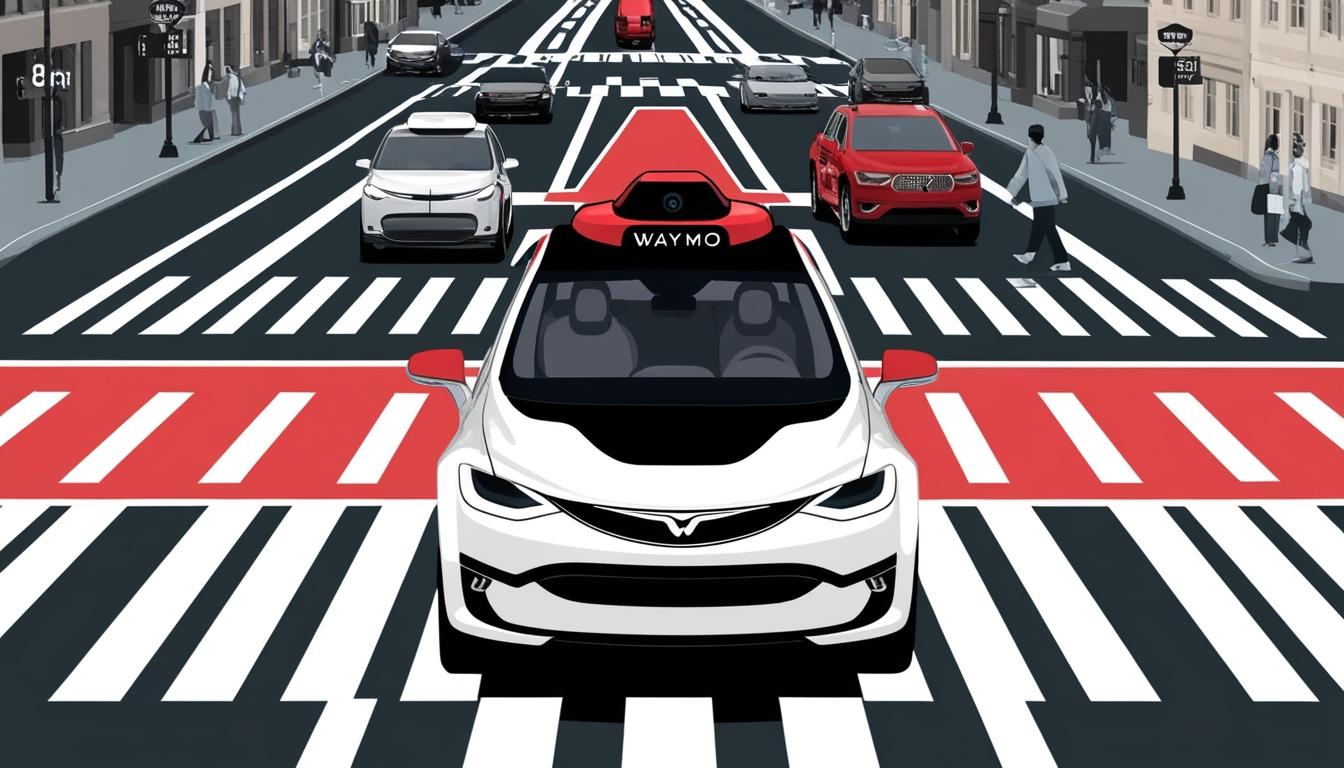
In San Francisco, autonomous vehicles, particularly Waymo's self-driving taxis, are becoming an integral aspect of urban mobility. These robot taxis, part of the same parent company as Google, will soon expand their presence to six additional U.S. cities. Observers in the city note that during peak traffic hours, numerous Waymo SUVs equipped with sophisticated cameras and sensors navigate the streets.
For some residents, including technology columnist Geoffrey Fowler, riding in these self-driving cars has generally been a pleasant experience. However, concerns have emerged regarding the interactions between these vehicles and pedestrians. Fowler has documented instances where Waymo taxis failed to yield at crosswalks, leading him to feel unsettled and unsafe when attempting to cross streets. In his articles for The Washington Post, he describes how, at his local crosswalk lacking a stop sign, the robot taxis would only yield occasionally, about 30% of the time.
The State of California has clear regulations stipulating that vehicles must yield to pedestrians in crosswalks, a rule Fowler sought clarification on after witnessing repeated violations. The California Department of Motor Vehicles affirmed that autonomous vehicles are subject to the same laws as human-operated vehicles. In response to Fowler's concerns, Waymo spokesperson Ethan Teicher stated that the company's cars are designed to follow traffic regulations but acknowledged the need for improvement in the nuanced interactions between pedestrians and self-driving technology.
Though no pedestrian injuries have been reported involving Waymo vehicles, incidents are rising that draw attention to the complexities of AI decision-making on the roads. The National Highway Traffic Safety Administration is currently investigating Waymo for its driving patterns, which have raised concerns about unpredictability, especially near traffic control devices.
Waymo's Anne Dorsey, a software engineer with the company, explained that the yielding behaviour is influenced by what the AI interprets as a pedestrian's intent to cross. This assessment includes judging movements and looking patterns, which raises questions about the technology's reliability. Critics, such as Phil Koopman of Carnegie Mellon University, emphasise that unlike human drivers, AI systems do not face legal repercussions for failing to adhere to road safety rules.
Experts hypothesise various factors contributing to the Waymo vehicles' behaviour. Some suggest that pressure to be competitive leads to uncharacteristic aggression in driving, as noted by engineering professor Missy Cummings. Waymo has stated that safety remains its primary focus, but the company is noted to be evolving its driving behaviour in response to social dynamics and norms.
In an effort to improve communication between pedestrians and autonomous vehicles, Waymo has introduced a system allowing for interaction via a screen mounted on the cars. However, Fowler highlights that without precise yielding behaviour, such technology is not beneficial for ensuring pedestrian safety.
Apart from vehicle communication, the necessity for infrastructural adjustments has also been mentioned, with suggestions for implementing tools like flashing light beacons at crosswalks to indicate pedestrian intent more clearly. However, city officials in San Francisco have declined to prioritise these enhancements at this time.
While Waymo vehicles are equipped with sophisticated sensors designed to perceive their environment more effectively than human drivers, pedestrians like Fowler remain cautious, preferring not to rely solely on technology for their safety. The complexities surrounding the interactions between autonomous vehicles and pedestrians continue to unfold, positioning San Francisco as a focal point for evolving discussions on AI automation in urban environments.
Source: Noah Wire Services