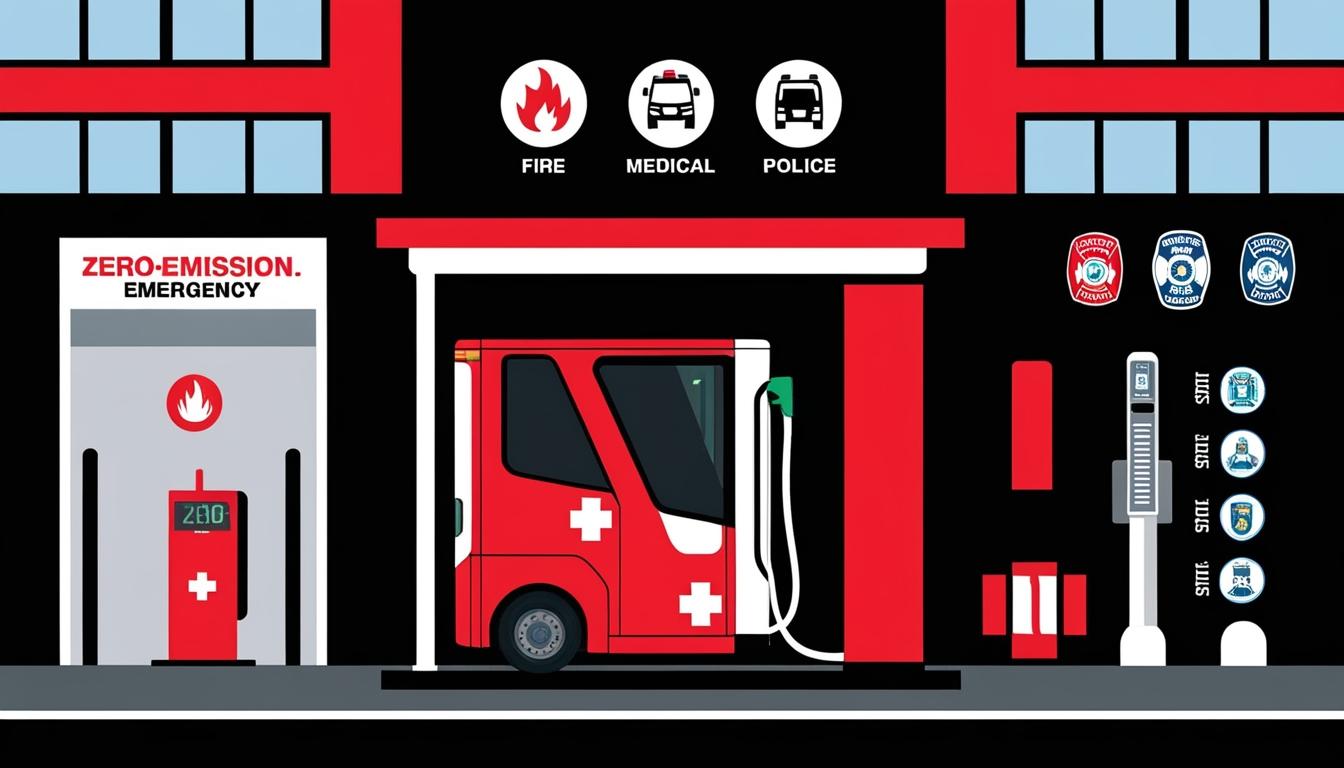
A recent discussion surrounding the decarbonisation of emergency service fleets has highlighted critical steps needed to promote a transition towards zero-emission vehicles and infrastructure. The conversation, initiated by Catherine Levin in December, underscores the significance of adopting a coordinated approach at the local level to effectively address environmental impacts.
Amid rising concerns over climate change, emergency service operations are facing the imperative of setting realistic goals and expectations. It is crucial for these fleets to establish long-term objectives along with interim targets, ensuring that the Executive Team and Heads of Department have clear understandings of what is achievable, the duration of the transition process, and the financial implications involved.
The importance of comprehensive data collection is another focal point in this transition. Emergency services are encouraged to collate accurate, up-to-date information regarding their fleet operations and infrastructure sites. Essential data sources include vehicle telematics, reliable fuel records, and information pertaining to site power supply from Distribution Network Operators (DNO) and energy suppliers.
Keeping abreast of the latest developments in government policies and technological advancements is vital for decision-makers in emergency service fleets. Fleet and operations managers are urged to stay updated with the Zero Emission Vehicle (ZEV) Mandate, vehicle supplier commitments, and the evolving specifications of low-emission vehicle technologies. Additionally, estates managers should monitor fleet transition plans alongside the latest charging and refuelling technologies that could impact their services.
Identifying 'quick wins' within existing fleet operations is also essential for a smooth transition. Many fleets may already possess vehicles that can be efficiently converted to battery electric models without disrupting essential operations. However, tailored solutions must be devised for more complex applications such as fire engines, double-crewed ambulances, and marked police vehicles.
Moreover, the establishment of an electric vehicle (EV) charging strategy and infrastructure plan is critical. All emergency service fleets are encouraged to create long-term infrastructure strategies that detail where and how vehicle charging or refuelling will occur, be it on-site or via public and private infrastructure networks.
Practical experience, through rigorous testing and pilot schemes, is invaluable for ascertaining the practical capabilities of zero-emission response vehicles. A coordinated programme of trials will enable emergency services to gather evidence and demonstrate the operational roles that these vehicles can fulfil presently and in the future.
Finally, it is suggested that emergency service fleets adopt a step-by-step approach while collaborating with one another. An iterative process of updating fleet and infrastructure strategies annually will allow for the integration of new vehicles and technologies as they become available. Sharing knowledge and operational experiences with peer organisations can foster innovation and facilitate shared charging and refuelling infrastructures, enhancing overall efficiency in transitioning to greener operational practices.
For further insights into these critical conversations, readers can access the full interview with Carl, which elaborates on the need for a nationally coordinated approach to fleet decarbonisation in emergency services.
Source: Noah Wire Services