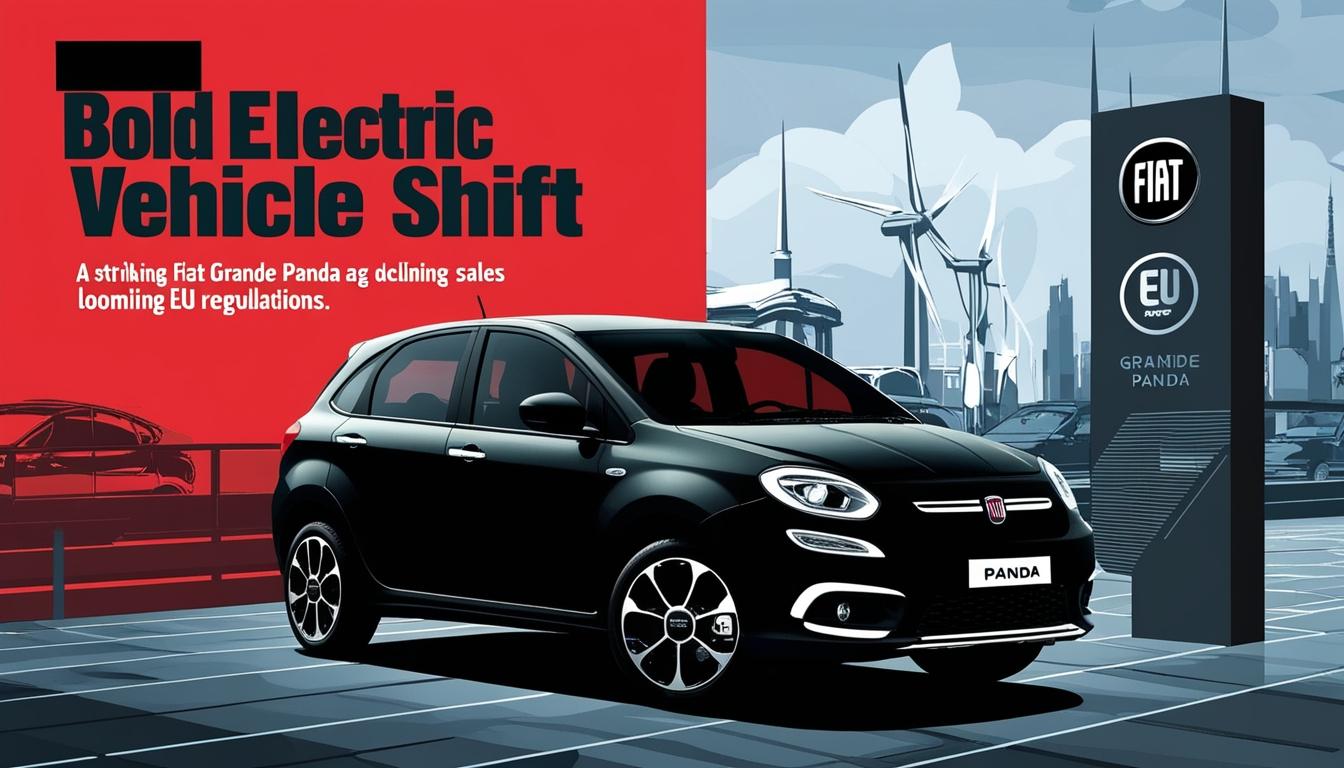
In recent months, the European electric vehicle (EV) market has seen a noteworthy shift, with the introduction of a range of affordable electric family cars, a significant departure from previous years when options were scant. Notably, new models such as the Fiat Grande Panda, Citroën ë-C3, Hyundai Inster, Dacia Spring, and Renault 5 have emerged, providing buyers with increased choices. According to a report by the campaign group Transport & Environment, there were no EU-made electric models available for under €25,000 (£20,740) throughout 2022 and 2023, highlighting how recent releases have altered the landscape.
This surge in affordable offerings coincides with the impending EU carbon emissions targets, which will take effect on 1 January 2024. These regulations will compel car manufacturers to sell a higher proportion of electric vehicles or face substantial penalties. The introduction of stricter rules has prompted various stakeholders in the automotive sector to advocate for either relaxation of these standards or stricter adherence, with environmental advocates pressing the European Union to maintain the regulatory framework.
The automotive industry is grappling with challenges, including dwindling demand for both EVs and internal combustion engine vehicles. Matthias Schmidt, an electric vehicle analyst based in Berlin, has reported an anticipated decline of 1.4% in sales across the 18 largest western and northern European markets. Factors influencing this downturn include the withdrawal of generous subsidies in Germany, which has historically been a robust market for electric vehicles. Will Roberts, the head of automotive research at Rho Motion, noted that the cessation of incentives, previously amounting to €5,000 per car, has significantly impacted consumer purchasing behaviours.
While some manufacturers are facing difficulties, others have reported positive performance. Brands such as BMW and Stellantis have indicated that they are not troubled by the new emissions targets, contrasting with the struggles of Ford to market its electric models produced in Cologne. Notably, electric-only brands like Tesla and Polestar are well-positioned, having already surpassed the targets, allowing them to sell ‘credits’ to competitors.
The timing of the decline in vehicle sales has raised concerns among policymakers. Major automotive firms have cited regulations as a reason for announcing factory closures, including Volkswagen's plans to potentially shut down up to three facilities in Germany. Meanwhile, Ford is set to reduce its workforce in Europe by 4,000 positions, and Stellantis has temporarily ceased assembly operations in Italy and announced the eventual closure of its van plant in Luton, UK.
In the UK, car manufacturers have successfully lobbied for leniency concerning fines, and there is a growing sentiment for similar provisions to be implemented in the wider EU context. The European Automobile Manufacturers Association (Acea) is advocating for a definitive political pledge from the European Commission by the end of 2024 to reconsider emissions regulations to protect jobs within the sector.
There are indications that EU policymakers may be responsive to these calls. The president of the European Commission, Ursula von der Leyen, is slated to initiate a “strategic dialogue” focusing on the European car industry in January. Similarly, Italy’s right-wing government under Giorgia Meloni has been vocal in pushing for relaxed emissions standards. Germany’s Chancellor, Olaf Scholz, has also suggested a willingness to ease fines, especially as he prepares for re-election amid a shifting political landscape.
Sigrid de Vries, director general of Acea, has articulated concerns that the existing rules pose a threat to the ongoing transition towards electrification, stating, “Nobody expected us to be in such dire straits when it comes to the transition now.” Acea’s proposals include options such as allowing manufacturers to compensate for missed targets by achieving higher electric sales in subsequent years and establishing a phased approach to target deadlines.
Luca De Meo, the CEO of Renault and president of Acea, has highlighted that the automotive sector could potentially face a loss of up to €16 billion in investment capacity if the current conditions persist, primarily due to penalties imposed for exceeding carbon dioxide emissions targets.
Nonetheless, this figure has been contested. Lucien Mathieu, director for cars at Transport & Environment, argued that it is based on projections that may be misleading and do not adequately represent actual performance potential. De Vries has acknowledged that the €16 billion figure represents a broad estimate rather than an exact forecast.
The ongoing evolution of the electric vehicle market has also introduced significant discounts, benefiting consumers as manufacturers navigate falling profits. Following the initial surge in electric models in 2020, a similar trend is anticipated as more EV variants are planned for release in the forthcoming years. Roberts has suggested that some carmakers may strategically delay the launch of new models until 2025 to meet future regulatory targets, while Mathieu echoed the notion that companies are holding off on affordable model releases until the forthcoming year.
However, there is apprehension among industry analysts and environmental advocates that calls for relaxed emissions standards may ultimately jeopardise the industry’s long-term competitiveness. Mathieu cautioned that weakening the targets could further entrench Europe’s struggles in the face of a rapidly advancing Chinese EV market. China's entry into the sector, supported by substantial government backing, poses a formidable challenge, as EU tariffs on Chinese cars are unlikely to deter their growing appeal among European consumers.
Source: Noah Wire Services