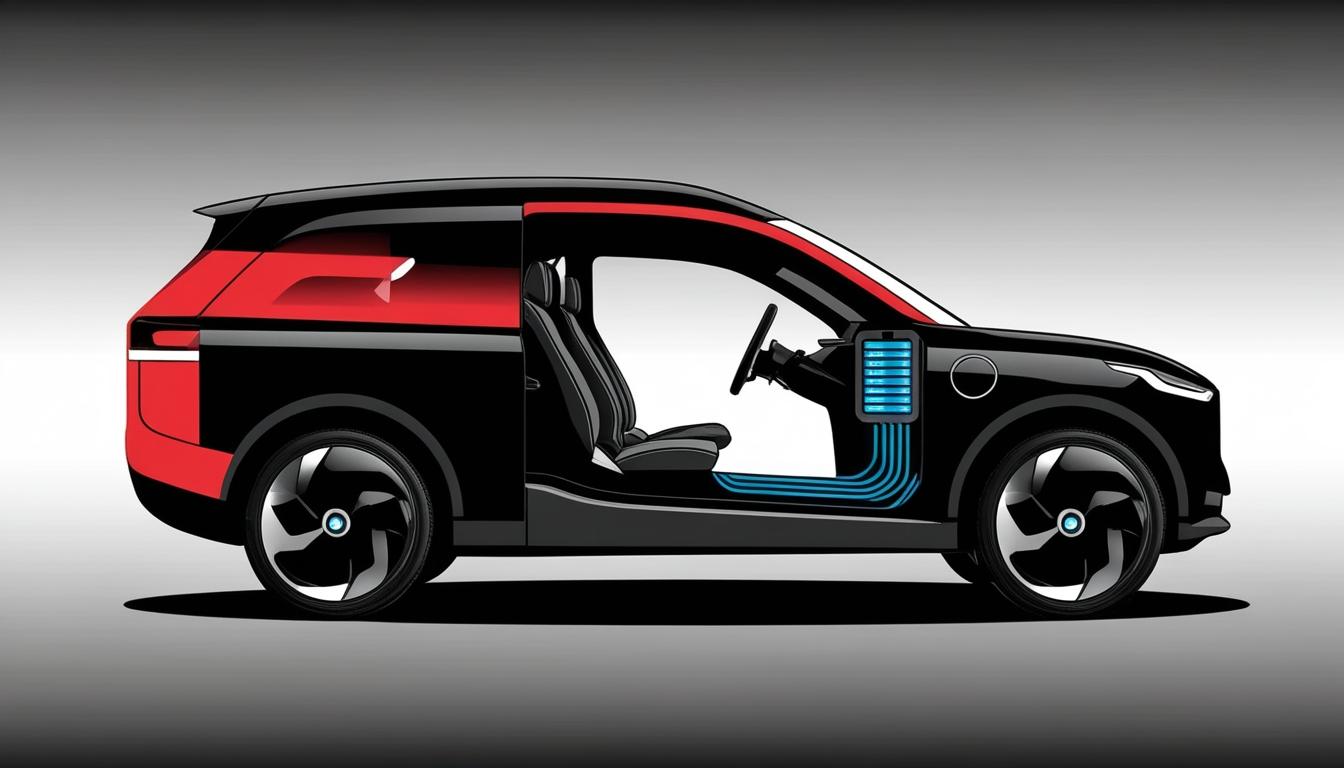
Mercedes-Benz has taken significant strides towards revolutionising the automotive industry with its new battery technology, recently showcased at an event in Stuttgart, Germany. This emerging technology is positioned to transform electric vehicle (EV) capabilities and align with the company’s vision for future urban mobility, which includes concepts such as robo-taxis and bicycle motorways, along with extensive integration of artificial intelligence.
Markus Schäfer, an official at Mercedes-Benz, articulated the company’s commitment to innovation in an official news release. "We believe progress means developing innovative technologies in dialogue with society. It’s how we maintain our innovative power and create a new kind of automotive experience," he stated. This sentiment underscores the automaker’s goal to not only advance technology but also to engage with the community on the implications of such innovations.
A key feature of the new technology is a groundbreaking power converter that enhances control via a remote, wireless system. According to InsideEVs, the cell-integrated converter facilitates individual control over each cell pair within the battery, which allows for more precise management of charging. As InsideEVs’ Andrei Nedelea explained, this innovative setup necessitates the cells being connected in parallel rather than in series, leading to numerous enhancements in battery performance.
The technology promises several advantages, including improved problem detection for individual cells, which can help isolate issues before they escalate into more significant malfunctions. The modular design could also reduce costs and improve voltage control, making batteries more efficient and reliable.
The potential for diversified battery cell chemistries is another facet of Mercedes-Benz's research. Schäfer expressed the company’s interest in utilising both lithium-iron phosphate (LFP) and nickel-manganese-cobalt (NMC) cells. These chemistries are part of ongoing research aimed at identifying more affordable, safer, and higher-performing alternatives to traditional lithium-ion batteries. As he indicated in the report, “Yes, this is exactly the idea, to mix and match,” highlighting the utility of combining LFPs and NMCs that complement each other’s strengths. LFPs are known for rapid charging capabilities, while NMCs offer superior energy storage, which is advantageous for long-range EVs.
The advancements in battery technology align with broader trends in the automotive industry aimed at reducing emissions and environmental impact. By facilitating the adoption of electric vehicles and renewable power sources, this technology contributes towards diminishing carbon footprints, addressing climate change, and fostering a sustainable future. As emphasised by the Massachusetts Institute of Technology, the potential exists to significantly limit pollution-related issues through widespread adoption of EVs and related technologies.
Moreover, Mercedes-Benz has hinted at integrating innovative materials into their future automotive designs, including high-performance silk, leather sourced from recycled plastic, and even solar paint capable of powering a vehicle for approximately 7,450 miles annually.
Schäfer concluded, "For us, innovation only makes sense if it offers our customers real added value," indicating that the company's approach prioritises not just technological advancement, but practical benefits for consumers.
As the automotive industry continues to evolve, the future of vehicle technology at Mercedes-Benz promises not only enhancements to performance but also a significant step towards a low-emission and environmentally friendly automotive landscape.
Source: Noah Wire Services