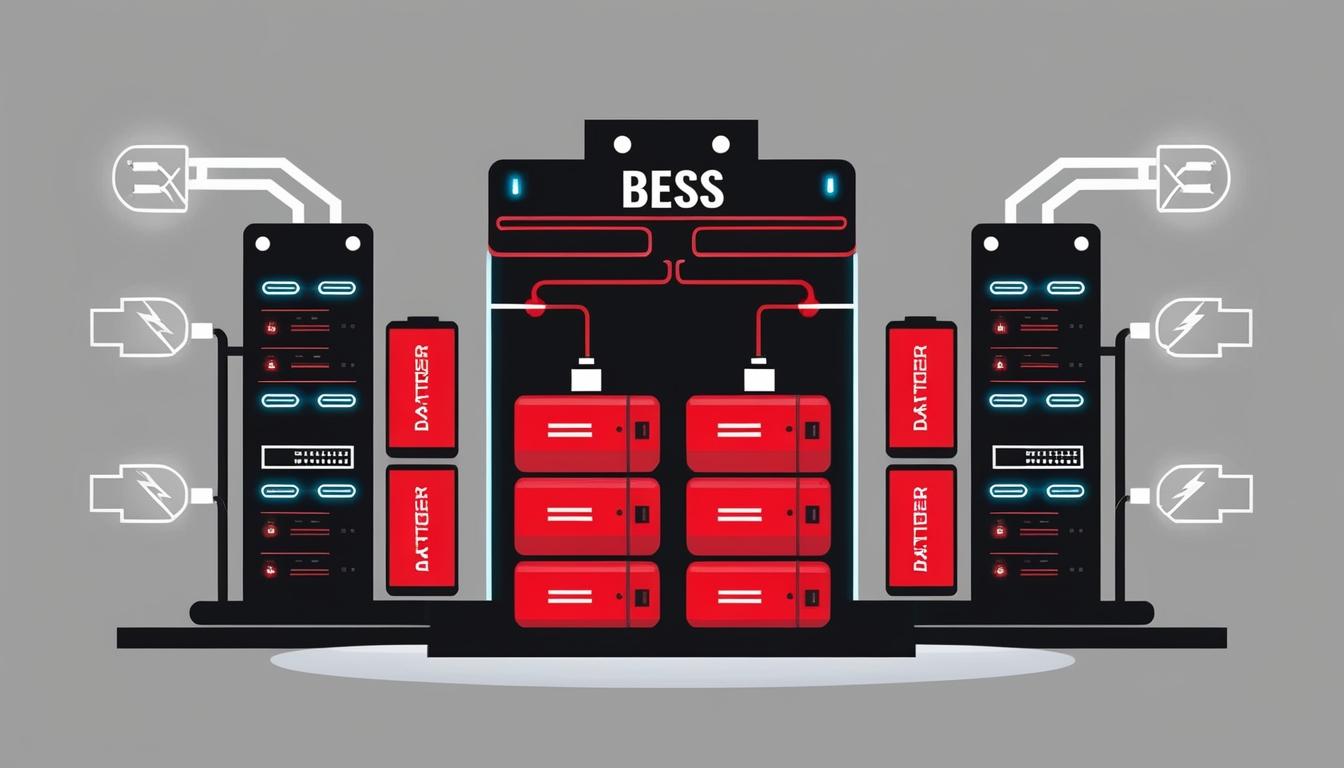
The increasing demand for electricity from hyperscale data centres in the United States is leading to significant advancements in Battery Energy Storage Systems (BESS) and related power equipment. As the proliferation of data centres continues, particularly with the rise in artificial intelligence (AI) applications, industry organisations are responding with the development of new standards and performance expectations.
The National Electrical Manufacturers Association (NEMA) is taking active steps to assist data centre developers and end users by establishing a comprehensive framework for evaluating BESS products. This initiative aims to enhance the reliability and resilience of power systems, thereby fostering economic development across the nation. Patrick Hughes, Senior Vice President of Technical Affairs at NEMA, shared insights on this critical development, stating, “An upcoming NEMA study projects that U.S. data center electricity demand will double, or potentially even triple, by 2030… If the United States wants to lead the world in AI, we need tools like energy storage that will help create a reliable supply of electricity to power new data centers.”
In response to the rapid developments in the field, NEMA is introducing the BESS Testing and Performance Measurements Standard. This standard offers a uniform methodology for assessing key performance specifications of BESS, thus facilitating the selection of products that align with specific operational needs. The users of this framework span a broad spectrum, including data centre developers, manufacturers, consumers, utilities, policymakers, researchers, and analysts—all of whom will benefit from the standardised approach to performance measurement.
The standard delineates various testing methods aimed at measuring critical factors such as rated input/output active power, energy capacity, roundtrip efficiency, cross-checking auxiliary power consumption, and assessing self-discharge rates under varying temperature and state-of-charge (SOC) conditions. Moreover, it incorporates specialised tests for evaluating functionalities like duty cycle efficiency and voltage management during black start transitions.
To ensure consistency and comparability across different manufacturers, the BESS Testing and Performance Measurements Standard adopts established testing criteria and parameters, referencing the IEC 62933-2-1:2017 standard for its testing protocols. Additionally, a format for reporting results is defined, promoting transparency and facilitating easier evaluations of differing BESS equipment.
As the energy demands of data centres grow in tandem with advancements in AI technology, the structured approach established by NEMA is expected to play a crucial role in guiding the deployment of energy storage solutions that not only enhance system performance but also support the broader economic framework of the United States.
Source: Noah Wire Services