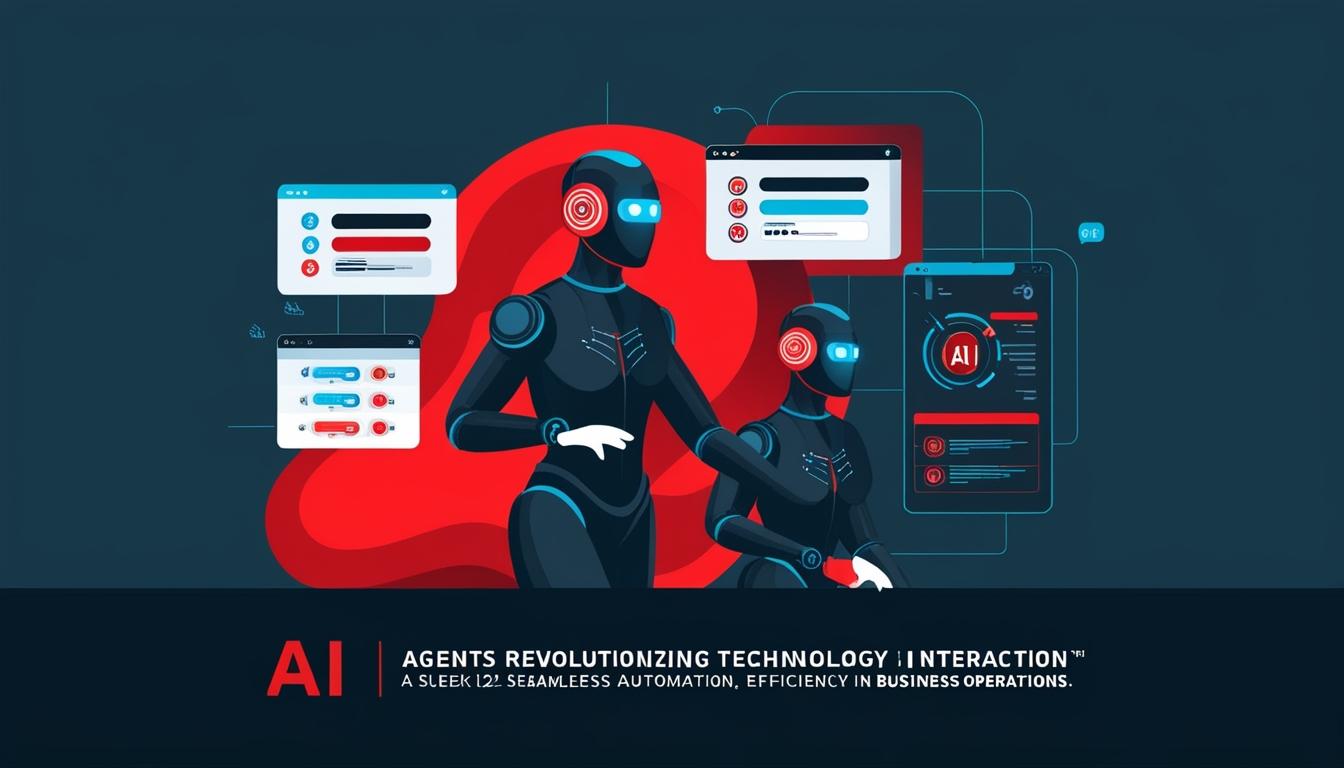
In a series of transformative predictions, Microsoft CEO Satya Nadella has articulated a vision for the future of software that could significantly alter the landscape of technology, software development, and how businesses operate. His insights, delivered during a recent discussion, focus on the transition towards AI automation, positing a shift from traditional software applications to intelligent AI agents that could redefine user interaction with technology.
Nadella boldly stated that “the notion that business applications exist—that’s probably where they’ll all collapse, right in the agent era.” This perspective suggests that traditional software, characterised by its reliance on complex user interfaces, is on the verge of obsolescence. Instead, he advocates for a future dominated by AI agents that directly engage with databases and provide streamlined access to information.
The implications of this shift are profound. Nadella noted that conventional software functions as “fancy wrappers” for basic database operations such as creating, reading, updating, and deleting data. By moving away from these outdated tools, users could achieve efficiencies that allow for immediate data retrieval and analysis with simple, conversational requests. For instance, instead of navigating through Excel to develop a graph, users might simply instruct an AI, “Show me a visualisation of our top five customers by revenue,” and the AI would autonomously handle the rest.
This advancement not only suggests a significant boost in productivity but also heralds a new era in which individuals are freed from menial tasks and empowered to focus on complex problem-solving and innovation. Nadella elaborated on this transformative potential by emphasising the simplicity of AI agents in handling operations, which could significantly increase workplace efficiency while minimising human error.
Nadella's vision extends to the complexity of business processes, with assertions that AI agents will not only manage straightforward tasks but also undertake intricate operations, including coding. He described scenarios in which an AI agent could automatically pull customer data from a CRM, analyse trends, and adjust marketing campaigns in real-time, showcasing the potential for these agents to integrate seamlessly across various systems.
He further highlighted the opportunity for software developers and Software as a Service (SaaS) companies in this forthcoming landscape. Rather than viewing the shift to an agent-driven model as a threat, Nadella suggested it presents an opportunity for innovation. Developers can establish tools catering to AI agents or specialise in creating agents themselves, subsequently positioning themselves as key players in this evolving ecosystem.
Nadella also addressed the critical issue of security in an increasingly automated world. He stressed the importance of establishing trust systems around data management and artificial intelligence. As he pointed out, “First, it’s not our data—it’s our customers’ data… There has to be a trust system around Microsoft 365.” His comments underscore the need for robust security frameworks that allow users to maintain control over their data while encouraging confidence in AI technologies.
Additionally, Nadella’s remarks on AI memory systems were particularly noteworthy. He explained that enhancing an AI's ability to remember interactions would enable it to provide more personalised and proactive solutions, marking a significant evolution in customer relations and service-based industries.
In summary, Satya Nadella's predictions signify a major shift in the approach to software and technology within businesses. By moving towards an agent-driven future, organisations may unlock unprecedented levels of productivity, creativity, and efficiency. His vision lays the groundwork for an innovative paradigm where intelligent AI agents could significantly enhance how technology is leveraged in daily operations, presenting new opportunities and challenges within the tech industry. The insight that technology should serve as an enabler rather than a barrier has the potential to foster a new era of collaboration between humans and machines.
Source: Noah Wire Services