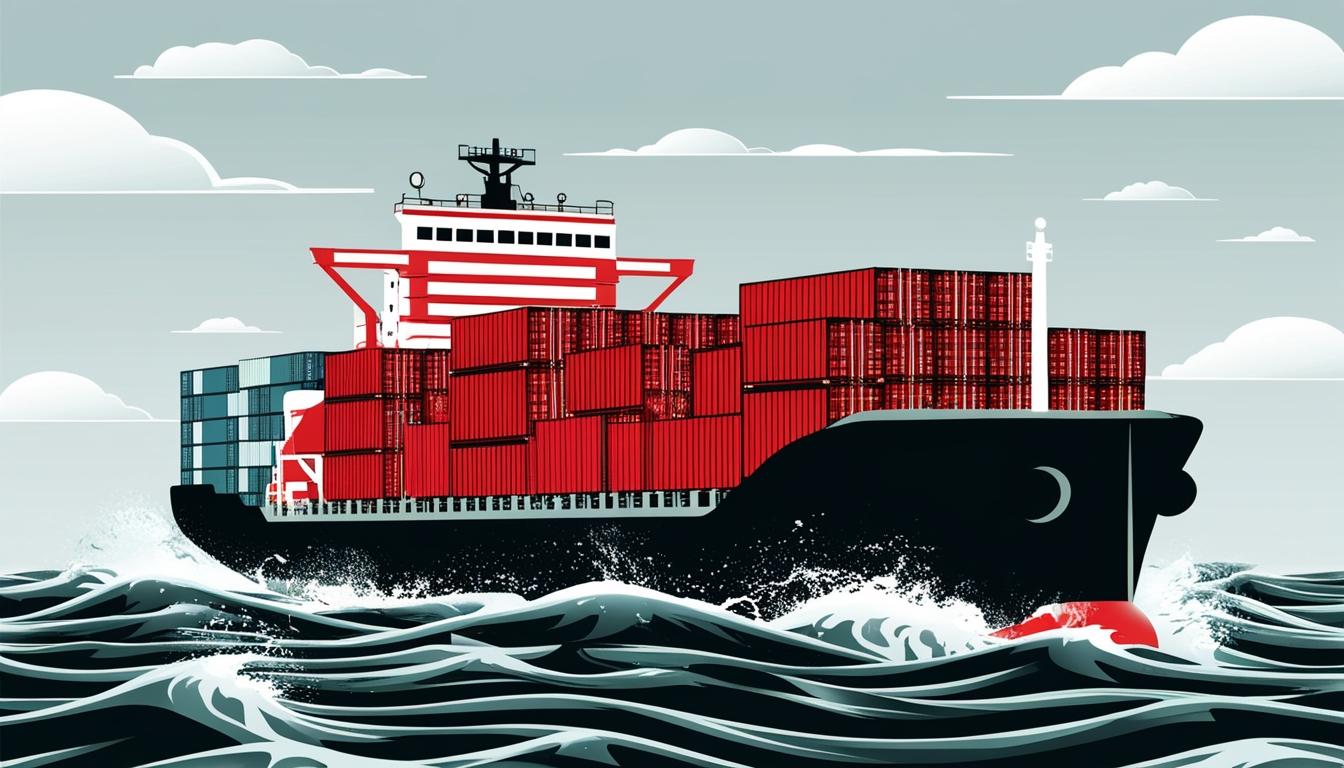
The global shipping industry is undergoing a significant transformation in response to shifting trends in international trade, particularly influenced by geopolitical tensions and environmental considerations. As global trade routes are rerouted from China to other ports in Asia, shipowners are increasingly moving away from ordering large container vessels, opting instead for mid-sized and smaller ships.
Recent data from shipbroker Braemar indicates a stark decline in the construction of ultra-large container ships, with only six vessels capable of carrying more than 17,000 twenty-foot equivalent units (TEUs) set for delivery in 2025, a dramatic decrease from 17 ships delivered in 2020. This trend is mirrored by a surge in the demand for mid-sized vessels, with 83 units expected to be completed in 2025, nearly five times the number from five years ago. Jonathan Roach, a container market analyst at Braemar, stated, "The 16,000-TEU ship will become the popular workhorse for liner companies," reflecting a broader shift in demand due to "tepid" global trade conditions and a saturation of larger ships.
Several factors have contributed to this pivot in the shipping market. Environmental regulations and operational disruptions—such as last year's attacks on ships in the Red Sea—have impacted the demand for the bulkiest carriers. Supply chain dynamics are also changing; Peter Sand, chief analyst at shipping market tracker Xeneta, observed, "We definitely see increased interest away from sourcing only your products from China," indicating a redistribution of manufacturing to countries like India and Vietnam.
The industry is also grappling with the implications of potential political shifts, notably the anticipated return of Donald Trump to the White House, which may come with increased tariffs on imports from China. A senior executive from a major Asian container shipping line acknowledged this shift, suggesting that the expectation of filling the largest vessels in just a few ports is becoming less feasible.
While the demand for vessels exceeding 18,000 TEUs has experienced a resurgence in recent months—66 ships were on order in early December, a rise from 45 a year prior—challenges remain. Mediterranean Shipping Company, the leading player in the industry, ordered 10 ships measuring 21,000 TEUs in September amid these changing conditions.
Recent maritime conflicts, particularly the attacks by Yemen’s Houthi militia near the Suez Canal, have highlighted the volatility of global shipping routes. With these disruptions leading to increased operational costs due to vessel diversions, the need for flexibility in shipping logistics has become apparent. William MacLachlan, a partner at law firm HFW, pointed out, "Smaller ships can respond to macroeconomic events more readily," as these vessels are often more agile in navigating critical passages like the Panama Canal, which may not accommodate the largest ships.
Additionally, shipowners are facing uncertainty regarding compliance with future regulations from the International Maritime Organization, particularly the targets for net-zero emissions by 2050. MacLachlan speculated that this dilemma is causing smaller shipowners to reconsider investments in ultra-large vessels, noting that the lower financial commitment of mid-sized ships reduces the perceived risk. With the shipping industry's landscape evolving rapidly, these trends signify a pivotal moment for global trade practices and shipping strategies.
Source: Noah Wire Services