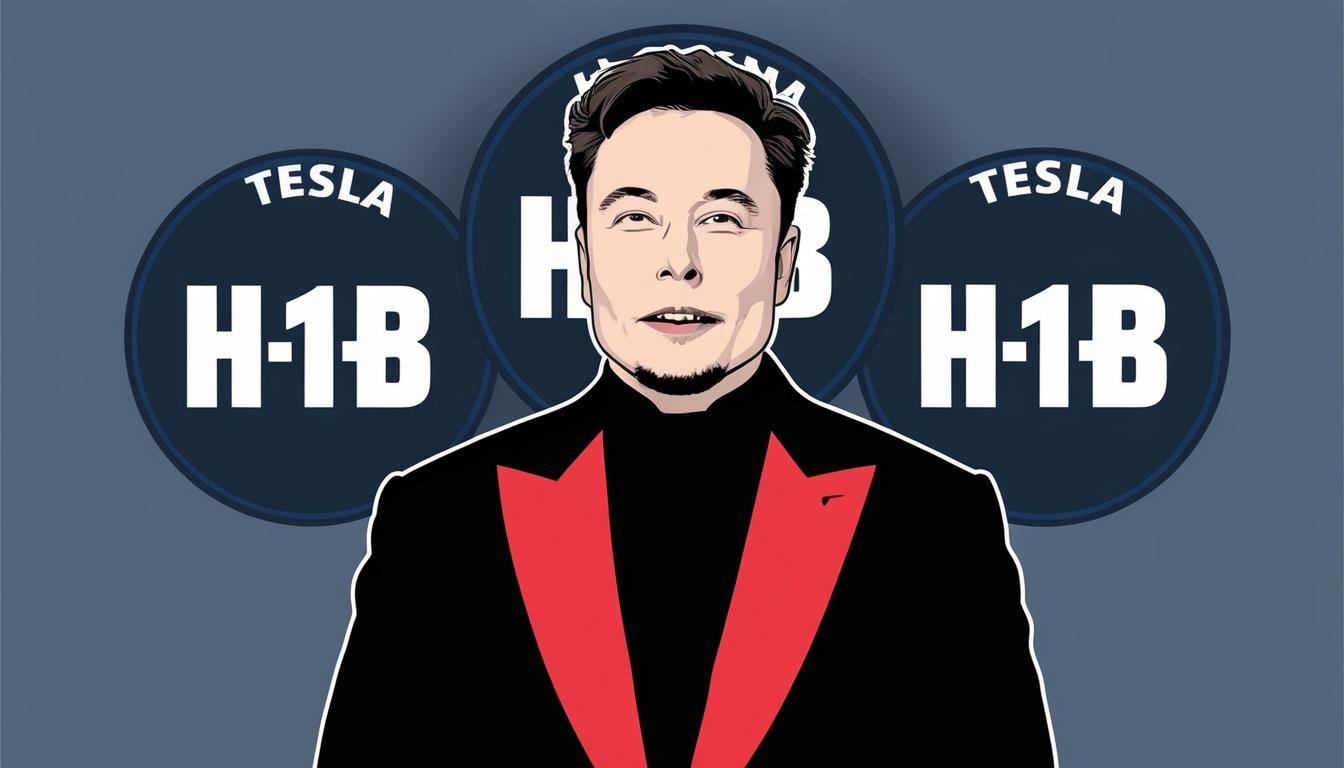
Tesla Inc., the notable electric vehicle manufacturer, is reportedly redirecting its hiring strategy to employ foreign workers on H-1B visas while simultaneously reducing its workforce in the United States. This unexpected pivot has emerged after the company laid off approximately 14% of its over 120,000 employees across its U.S. operations earlier this year.
The H-1B visa programme, which allows U.S. companies to employ foreign professionals with specialized skills, has ignited a significant debate in the context of Tesla's recent actions. Critics of the programme assert that it undercuts job opportunities for American workers, fueling ongoing controversies regarding immigration policies. The company’s decision has intensified scrutiny on the use of these visas, raising questions about the implications for local employment amidst an economic landscape in flux.
Elon Musk, the CEO of Tesla and its largest shareholder, stands firmly behind this new hiring approach. Musk, himself an immigrant who entered the United States on a student visa, has been vocal about the necessity to expand H-1B visa quotas. Alongside Vivek Ramaswamy, co-chair of the Department of Government Efficiency (DOGE), Musk has faced considerable backlash from supporters of President-elect Donald Trump and the MAGA (Make America Great Again) movement, who argue that such practices are detrimental to the job market for U.S. citizens.
In a post on social media, Musk expressed his unwavering advocacy for H-1B visa expansion in a forceful manner, highlighting his and Ramaswamy’s perspective that their successes with companies such as Tesla and SpaceX were significantly aided by the opportunities provided through these visas.
In an interesting twist to the narrative, it has come to light that Musk and his brother were operating in the United States illegally when they launched their first business, Zip2. This detail has further fueled criticism against Musk’s stance, as detractors point out an apparent contradiction in his advocacy for a visa system while having previously benefitted from a different immigration context.
The ongoing discourse around Tesla's hiring policy and the broader implications of H-1B visas is not confined merely to the automotive sector. The discussions it has sparked are interwoven with critical issues surrounding political ideology, immigration reform, and economic growth strategies in America. Given Tesla’s high-profile status and the outspoken nature of its CEO, this controversy is poised to have significant repercussions.
As Tesla continues to navigate the responses to its recruitment strategy, the potential backlash from the MAGA movement, alongside the views of others in the business and political realms, may yield important insights into future immigration policies. Understanding the impacts these visa programmes have on local job opportunities will be essential for crafting balanced and effective policy solutions. As the conversation evolves, it seems likely that this contentious issue will remain a focal point in discussions about immigration, workforce dynamics, and the economy in the weeks to come.
Source: Noah Wire Services