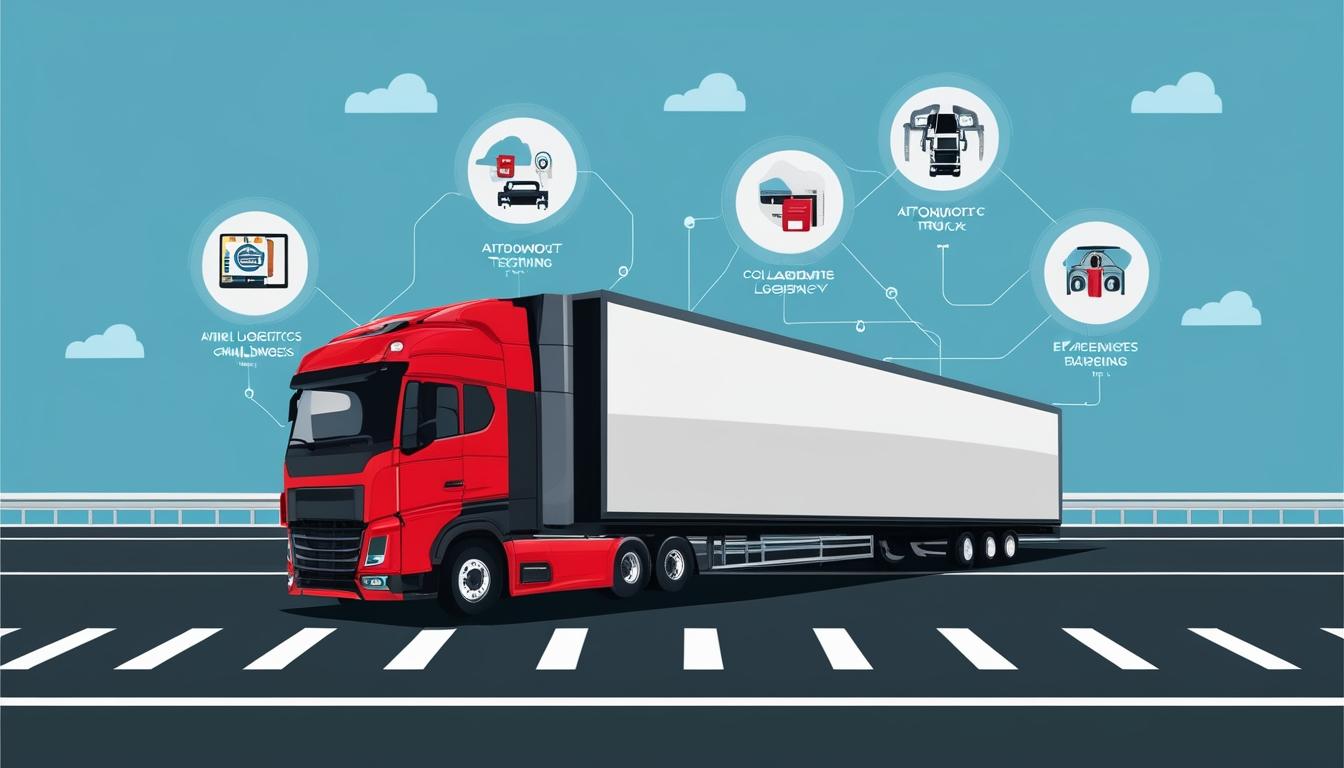
The trucking industry is witnessing a significant evolution with the ongoing advancements in autonomous trucking technology. As companies explore the intersection of automation and transportation, vital questions regarding operational processes, liabilities, and partnerships are now at the forefront of industry discussions.
In a recent collaboration, Volvo Autonomous Solutions and DHL Supply Chain are testing the capabilities of an autonomous Volvo VNL truck, designed for middle-mile freight transport between Dallas and Houston. The process begins with a manually operated truck that delivers its load to an autonomous Aurora terminal. Here, the trailer is switched to an autonomous truck fitted with a safety driver, which then autonomously transports the freight along the highway to another terminal. The operation concludes with the reverse process for the final leg of the journey.
Sasko Cuklev, head of on-road solutions at Volvo Autonomous Solutions, highlighted the crucial nature of teamwork in this initiative, stating, “We don’t have all the answers, and neither does DHL. By joining forces, along with other stakeholders, we can figure it out together.” This collaboration represents not only a technological advancement but also a paradigm shift in the approach taken by trucking firms as they navigate the complexities of integrating autonomous systems.
A successful autonomous operation entails more than just deploying the vehicles. It requires the establishment of a detailed ecosystem that includes terminal infrastructure and a network of service and maintenance vendors. Processes around pre-trip inspections, roadside assistance, and emergency protocols are essential to ensuring safety and reliability within this new framework. Jason Gillespie, senior director of continuous improvement and innovation at DHL Supply Chain, emphasized the need to maintain operational performance alongside new infrastructure. “We ensure that this additional infrastructure doesn’t detract from what we do well today,” he explained, highlighting efficiency as a primary objective.
The drive towards autonomous trucking is also being shaped by ongoing driver shortages, which have intensified due to increasing demand for freight transport. Gillespie noted that meeting this demand with human drivers alone has become increasingly challenging. Autonomous trucks are viewed as a viable solution, addressing this shortfall while offering enhancements to safety. Unlike human drivers, autonomous systems are less affected by fatigue, distractions, or emotional stress, which may compromise their performance.
As Volvo and DHL continue to advance their testing initiatives, they are focused on learning from the processes involved. Cuklev remarked, “We test the ecosystem now—everything from backup solutions to dealer engagement—so that when we go fully driverless, every player knows their role.” This forward-thinking attitude extends to public perception, which will play a significant role in the widespread acceptance of autonomous technology. Gillespie pointed out the importance of transparency and consistent demonstration to foster trust in autonomous systems, envisioning a future where public attitudes shift to view these vehicles as safe and reliable.
For heavy-duty truck equipment managers, the developments illustrated by the Volvo-DHL collaboration offer critical insights into the strategic adoption of autonomous technology. The emphasis on partnerships, infrastructure investment, safety, and efficiency highlights the path forward in the industry. As Gillespie aptly encapsulated, “It’s about proving the ecosystem works.” The journey toward fully autonomous trucking appears poised for further exploration, marked by innovation and a commitment to addressing the evolving needs of the sector.
Source: Noah Wire Services